

A career change therapist in Ventnor, NJ can help you work through career confusion, job loss, a poor fit at work, or a major life transition. Look for support that fits what you’re facing and helps you clarify your needs, strengths, and possible next steps. You don’t have to know exactly what comes next to begin exploring change.
Career uncertainty can affect more than your job. It may also touch your confidence, relationships, and sense of direction. It’s understandable to want support that recognizes the whole picture rather than treating your career as a problem with one simple answer.
This article explains what career-focused therapy can help with, how to identify a therapist whose approach fits your circumstances, and what to expect as you consider support. Whether you’re rebuilding after a job loss or wondering if your current path still reflects your values, you’ll find practical ways to begin moving toward greater clarity.
Key Takeaways
- Match a therapist’s focus to what’s weighing on you, whether it’s career confusion, job loss, or a difficult life transition.
- Separate what feels wrong about your current work from what you want more of in your next chapter.
- Use therapy to explore self-doubt and emotional stress alongside practical questions about possible career changes.
- Consider individual therapy when career uncertainty is affecting your confidence, well-being, or relationships.
Career confusion and adjustment issues
Career confusion can show up as dread before a shift, difficulty choosing between job offers, or feeling disconnected from work that once mattered. A career change therapist in Ventnor, NJ can help you examine these reactions without assuming you need to quit. Persistent stress, for example, may point to workload, workplace relationships, values, or a larger change in purpose. Naming the specific pressure makes the next conversation more useful.
Adjustment issues can surface after a promotion, a move, caregiving responsibilities, or a change in income. Each shift can affect routines and expectations, even when it brings opportunities. Counseling can help you separate the event itself from the meaning you’ve attached to it. If a promotion brings responsibility but little satisfaction, you can explore whether the strain comes from the role, the environment, or uncertainty about what matters now.
A practical first step is to describe one difficult workday in detail. Note what happened, what you felt, and what you needed in that moment. A meeting that leaves you tense, for instance, may reveal a need for clearer expectations or a stronger boundary. This turns a broad concern, such as “I hate my job,” into specific questions that can guide reflection and decisions.
- Track the pattern: Record situations that increase stress, such as unclear tasks or tense conversations with a colleague.
- Name what matters: Identify whether purpose, stability, creativity, flexibility, or connection feels absent from your current work.
- Choose a small experiment: Test one manageable change, such as asking for clearer priorities or setting a boundary around work messages.
These steps can help distinguish a temporary adjustment from a deeper career misfit. If stress rises mainly with a new responsibility, support may focus on adapting to that role. If the same concerns appear across different jobs, you may want to explore recurring needs and values. A therapist can help you reflect on career interests, skills, and motivations, then consider possible next steps.
Career uncertainty can also affect relationships. You might withdraw after work, feel impatient at home, or avoid discussing a decision with someone close to you. Bringing one example into counseling can show how work concerns spill into daily life. If tension between partners centers on a career decision, shared conversations may help clarify each person’s concerns and priorities.
Clarity doesn’t require a complete career plan at the start. Begin with one question, such as what you want more of in a typical workday. Then examine the evidence: which tasks engage you, which drain you, and what conditions help you feel steady? These concrete observations can make a difficult transition easier to understand and give your next decision a clearer foundation.
Career change and career misfit
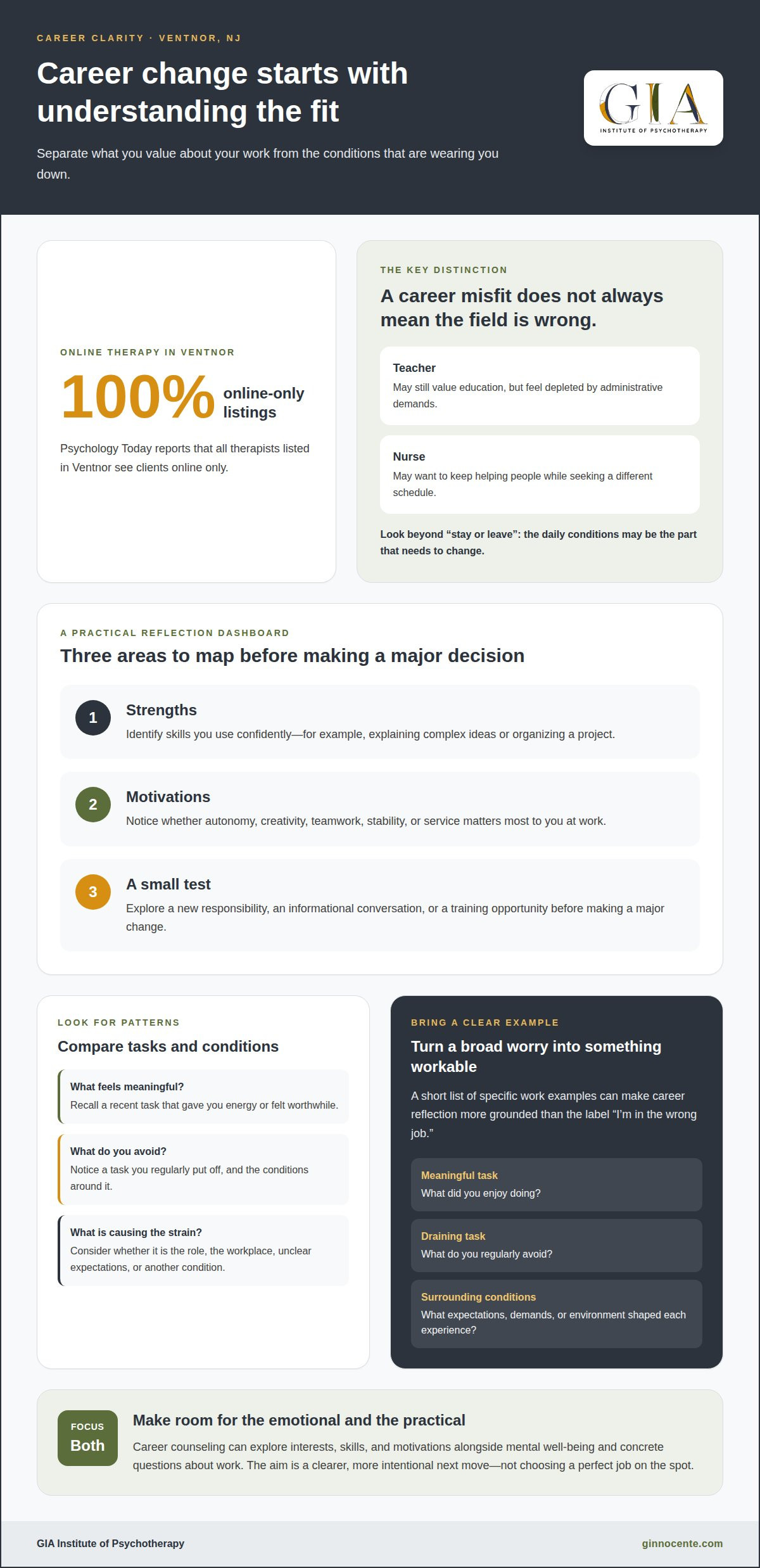
Online therapy is a practical option for Ventnor residents considering a career change. Psychology Today reports that 100% of therapists listed in Ventnor see clients online only. In counseling, you can explore career interests, skills, and motivations, then identify possible next steps. A session might focus on whether your current role clashes with your values or whether a specific workplace condition is the main strain.
A career misfit doesn’t always mean you chose the wrong field. A teacher, for example, may still value education but feel depleted by administrative demands. A nurse might want to keep helping people while seeking a different schedule. Separating the profession from its daily conditions can reveal more options than an all-or-nothing choice between staying and leaving.
Begin by comparing the work you do with the work that gives you energy. Write down a recent task that felt meaningful, one you regularly avoid, and the conditions surrounding each. Did you enjoy helping a customer but dislike constant interruptions? Did independent projects feel satisfying while unclear expectations caused stress? Specific examples make career reflection more grounded than a broad label such as “I’m in the wrong job.”
- Map your strengths: Identify skills you use confidently, such as explaining complex ideas or organizing a project.
- Notice your motivations: Consider whether autonomy, creativity, teamwork, stability, or service matters most in your work.
- Define a small test: Explore a new responsibility, informational conversation, or training opportunity before making a major decision.
These steps can turn uncertainty into questions you can work with. If you enjoy planning but dislike managing people, for instance, you might explore roles that use organizational skills without constant supervision. Counseling can help you weigh that possibility against practical needs, emotional readiness, and the responsibilities you want to keep. The goal isn’t to select a perfect job on the spot, but to make a clearer, more intentional next move.
Career decisions can also shape conversations at home. Someone considering a lower-paying role may worry about shared plans, while a partner may feel anxious about a sudden change. Naming each person’s concern can help separate emotional reactions from the decision itself. If a career transition is creating recurring conflict, couples counseling can offer a setting to discuss priorities and listen to each other.
Finding an approach that fits your concern matters. Look for counseling that makes room for both mental well-being and concrete questions about work, including what you value, what you can offer, and what you want to change. Bring a short list of examples to an initial session. You can begin with one question: what would need to be different for work to feel more sustainable?
Job loss and career uncertainty
Losing a job can unsettle more than your work routine. It may bring anxiety about income, identity, and what comes next. Someone whose role ended after a company restructure, for example, might question skills they used confidently for years. Therapy can help separate the loss itself from harsh conclusions such as “I have nothing to offer.” That distinction supports clearer decisions as you plan your next steps.
Career counseling can address emotional strain alongside practical reflection. Cognitive behavioral therapy can help people reframe self-doubt, reduce avoidance, and build confidence around job stress. If you keep postponing applications because rejection feels certain, you can examine that prediction and choose one manageable action. Updating a résumé section or identifying a former colleague to contact can make the process feel more approachable.
Start with three separate lists: what changed, what remains within your control, and what support would help today. A layoff is a change; your experience and skills remain part of your background. A next action might be reviewing one job description, while support could mean asking someone you trust to listen. This exercise can keep one painful event from defining your entire career story.
- Stabilize the immediate picture: Write down urgent practical concerns, such as upcoming commitments or a disrupted daily routine.
- Describe the emotional impact: Note whether worry, shame, anger, or relief is strongest after the job loss.
- Choose a forward step: Select one action, such as listing transferable skills or setting a time to review openings.
You don’t have to decide on an entirely new career right away. A project coordinator who lost a role might first identify skills used across different industries, such as scheduling, communication, and problem-solving. Therapy can help connect those abilities with interests and motivations, then consider options that fit current needs. This process gives career uncertainty structure without treating every decision as urgent.
Notice when job-search challenges intensify anxiety. Repeatedly rewriting an application, for instance, may signal fear of being judged, while avoiding calls may reflect exhaustion. Bringing one specific example to a session can help you examine the thought behind it and plan a response. Progress can mean taking a sustainable step forward, not forcing yourself through every task at once.
If job loss is affecting your confidence or making next steps feel difficult, explore support for your next career chapter.
GIA Institute of Psychotherapy: Adult Individual Psychotherapy
GIA Institute of Psychotherapy offers Adult Individual Psychotherapy for adults facing career uncertainty alongside other life transitions. Sessions provide space to explore how work changes affect confidence, relationships, and emotional well-being, while developing practical strategies for moving forward. You might bring questions about a job loss, a persistent mismatch, or the pressure of choosing a new direction.
Therapy can help you understand what feels difficult and identify changes that fit your needs and values. If career concerns are affecting your relationship, Couples Counseling may also support more open conversations. You can start with the concern you want to work through, even without a fully formed career plan.
If you’re ready to explore support, visit ginnocente.com to contact GIA Institute of Psychotherapy.
Take the Next Step Toward Work That Fits
You don’t need a complete career plan before seeking support. A useful next step is naming the question that feels most pressing, whether it’s how to rebuild confidence, decide what matters in your work, or manage a transition alongside family needs. Finding a career change therapist in Ventnor, NJ means looking for support that makes room for both emotional well-being and the choices ahead.
GIA Institute of Psychotherapy offers Adult Individual Psychotherapy for adults working through personal concerns and life transitions. Individual Therapy for Children and Teens and Family Therapy can also support family members when change affects home life. You can start with a conversation about what you’re experiencing and what you hope to understand.
When you feel ready, contact GIA Institute of Psychotherapy to take a thoughtful next step. You can move toward greater clarity one decision at a time.
Frequently Asked Questions
How do I find a therapist who treats my specific concern?
Describe the concern in everyday terms, then explain what you’d like help changing. For example, you might say that interviews trigger intense worry, or that a new role has made it hard to sleep. GIA Institute of Psychotherapy uses an intake call to help match you with an appropriate therapist. Sharing the situation, its impact, and your goals can make that conversation more focused.
How quickly can I start therapy?
Begin by completing the client contact form and scheduling an intake call. The call lasts 15 minutes and helps match you with an appropriate therapist. Have a brief description of your main concern ready, along with any preferences that matter for your care. The intake process is the first step toward identifying a suitable therapeutic fit.
What happens in work and career therapy?
Therapy gives you time to examine how professional concerns affect your thoughts, feelings, and daily choices. You might discuss a difficult conversation with a supervisor, uncertainty about an interview, or fear of disappointing people who depend on you. With a therapist, you can explore patterns and practice strategies for responding to those situations more intentionally.
What therapists in Ventnor, NJ specialize in career change or career counseling?
A career change therapist in Ventnor, NJ should be a good fit for the emotional concerns behind your decision. GIA Institute of Psychotherapy offers Adult Individual Psychotherapy for adults working through life transitions. The practice serves Ventnor, Ocean City, Linwood, Margate, Egg Harbor Township, Upper Township, and Galloway, with in-person therapy available locally and virtual counseling for New Jersey residents.
How do I choose a therapist for anxiety, burnout, or stress related to changing careers?
Choose support that addresses both your emotional strain and the circumstances connected to work. Think about what you want help with first, such as setting boundaries, managing worry before interviews, or understanding why a role feels draining. GIA Institute of Psychotherapy uses approaches including CBT, DBT, EMDR, and Internal Family Systems in its therapeutic services. Share your priorities during intake.


