

Empty nest syndrome can describe the grief, uncertainty, or loss of purpose a parent feels when a child leaves home after at least 18 years of family life revolving around them. Empty nest syndrome counseling in Margate, NJ can offer a supportive space to make sense of this transition and consider whether ongoing symptoms may point to depression instead.
If the change feels harder than you expected, that doesn’t mean you’re failing to adjust or that you love your child too much. A quieter home can shift daily routines, family roles, and your sense of identity, even as you feel proud of your child’s next step.
This article explains what empty nest syndrome can involve, how it may affect everyday life and your sense of self, and how it differs from depression. You’ll also learn how open communication can help you stay connected with your child, and when individual therapy may help you find steadier ground through this life change.
Key Takeaways
- Recognize that a child leaving home can bring grief and pride at the same time; mixed feelings don’t mean you’re handling the transition poorly.
- Notice how changing routines and parenting roles may affect your sense of identity, then make space for interests and connections beyond daily caregiving.
- Keep communication with your child open and address tension as it arises to support your relationship through the change.
- Learn how the timing and persistence of emotional symptoms can help distinguish transition-related distress from depression, and when individual therapy may offer support.
What is empty nest syndrome?
Empty nest syndrome describes the grief, disorientation, or loss of purpose some parents feel when a child leaves home. For at least 18 years, family life may have revolved around that child before they leave for college or the workforce.
The transition can affect parents of any gender, including women whose routines or identity have centered on caregiving. These feelings are personal, not a sign of failure.
Common Emotional Signs
Emotional signs can include sadness, loneliness, worry, irritability, or difficulty adjusting to a quieter home. You might miss school-day conversations, feel unsettled during a quiet evening, or struggle to decide how to spend newly open time. Notice which feelings recur and whether they disrupt sleep, relationships, or daily responsibilities.
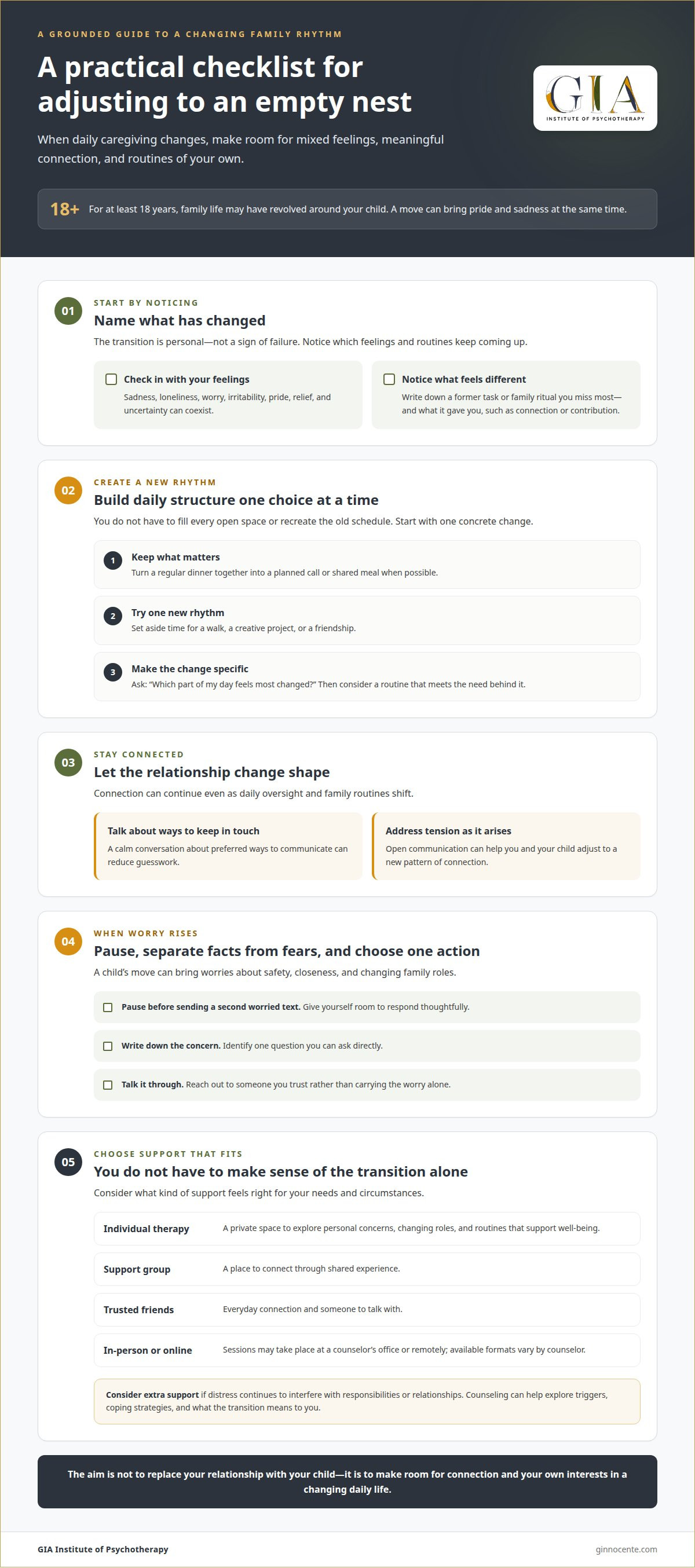
For life transitions counseling, consider what kind of support fits your needs. Individual therapy offers private space to explore personal concerns; a support group can provide shared experience, while trusted friends may help with everyday connection. In-person sessions take place at a counselor’s office, and online sessions use a remote format; nearby counselors’ available formats vary.
Grief and Mixed Emotions
A child’s move can bring pride and sadness at once. You may celebrate a college acceptance, then feel a pang when the bedroom is quiet. Relief, worry, and uncertainty can also surface as parenting shifts from daily oversight to a different kind of connection. Naming these emotions can make the transition easier to understand.
Counseling can help you explore grief, identify changing roles, and develop routines that support your well-being. At a first appointment, expect to describe what changed, how it affects daily life, and what you hope to work on. Open communication with your child, including addressing tension as it arises, can help sustain connection as family routines shift.
Changes to identity, purpose, routines, and daily structure
After a child moves out, familiar parenting tasks may disappear from the day. Packing lunches, checking homework, or coordinating rides may have shaped your schedule and sense of usefulness. Without those repeated cues, an ordinary weekday can feel unstructured. The change may raise questions about identity: who am I outside daily caregiving?
Purpose can shift along with routine. If you once planned evenings around your child’s activities, you might now face quiet hours and fewer shared decisions. Rather than filling every open space immediately, consider what the old routine provided. Was it connection, responsibility, creativity, or a sense of contribution? Naming the need can reveal meaningful ways to meet it now.
- Notice the gap: Write down which former task or family ritual you miss most.
- Keep what matters: Turn a regular dinner together into a planned call or shared meal when possible.
- Try one new rhythm: Set aside time for a walk, creative project, or friendship.
These steps aren’t meant to replace your relationship with your child. They help create a daily structure that includes connection while making room for your own interests. For example, you might use the time you once spent driving to evening practices for a class, then share updates with your child later. The goal is to build a week around chosen commitments, not simply recreate the old schedule.
Life transitions counseling can help you explore how parenting has shaped your identity and what you want to carry forward. Start with one concrete question: which part of my day feels most changed? From there, you can identify values, try new routines, and reflect on how each change feels. If these shifts affect a relationship, discussing expectations openly can help you and your child adjust to a new pattern of connection.
Anxiety, stress, and emotional overwhelm
A child’s move can raise questions about safety, closeness, and changing family roles. Worry may show up as repeatedly checking for messages, imagining problems, or feeling tense before a call. Notice when these reactions occur. For example, write down the trigger, the thought that followed, and what helped you settle. This record can reveal patterns without treating every anxious moment as a diagnosis.
Stress may also make ordinary decisions feel heavier. An unopened message, a quiet weekend, or a change in family plans can intensify uncertainty. Pause and separate what you know from what you fear. If your child hasn’t replied, the known fact is that the message is unanswered; the feared explanation is a possibility, not proof. A calm conversation about preferred ways to stay in touch can reduce guesswork and support connection.
When emotions feel overwhelming, choose one manageable action instead of trying to solve every concern at once:
- Take a brief pause before sending a second worried text.
- Write down the concern and identify one question you can ask directly.
- Speak with someone you trust instead of carrying the worry alone.
These steps create room to respond thoughtfully, especially when anxiety affects conversations or daily decisions. If distress continues to interfere with responsibilities or relationships, counseling can help you understand triggers, practice coping strategies, and explore what this transition means to you. Bring a recent example, such as a difficult call or stressful evening, to make the conversation specific.
Safety needs immediate attention. According to the 988 Suicide & Crisis Lifeline, people in the United States experiencing suicidal thoughts or wanting to hurt themselves can call the free Suicide and Crisis Lifeline at 988.
Distinguishing empty nest syndrome from depression
One useful clue is whether distress stays closely tied to your child’s move. A difficult evening may ease after an enjoyable conversation, a familiar activity, or a supportive visit. Notice whether your feelings shift with reminders of the transition or spread across unrelated parts of daily life. That pattern offers context, not a diagnosis.
Depression can involve a broader, more persistent change in mood or interest. You might lose enjoyment in gardening, friendships, and meals, not only parenting routines. Low energy, hopeless thoughts, or difficulty managing everyday responsibilities also deserve attention. Consider the full pattern rather than judging yourself by one hard day.
These experiences can overlap. You might feel grief about an empty bedroom while also struggling to enjoy activities that once mattered. A journal can help you track mood, interest, sleep, and daily functioning alongside events such as calls or family visits. Share those observations with a qualified mental health professional, who can explore the details with you.
Seek professional help when sadness, anxiety, or loss of interest keeps interfering with work, relationships, self-care, or ordinary responsibilities. You don’t need to determine whether it’s depression before asking for support.
Before an appointment, note a few specifics: what changed, which activities feel different, and what a challenging day looks like. Include moments that still bring connection or pleasure, such as enjoying a meal with a friend. These details help distinguish transition-related distress from a broader change in well-being. A professional can listen to your experience, discuss its impact, and help identify useful next steps without reducing your life to a label.
GIA Institute of Psychotherapy: Adult Individual Psychotherapy
GIA Institute of Psychotherapy offers Adult Individual Psychotherapy for parents working through grief, uncertainty, or changes in identity after a child leaves home. Sessions provide space to understand emotional patterns, explore old wounds, and develop practical strategies for daily life. The approach blends traditional therapy with neuroscience and expressive modalities, supporting reflection as you consider what matters in this next chapter. If distress is affecting your relationships, routines, or sense of self, individual therapy can help you work through those concerns with care. Contact GIA Institute of Psychotherapy to discuss taking this next step.
Make room for what comes next
Your child’s move can change how you connect, but it doesn’t end your role in their life. This next chapter can also invite you to shape routines around your values, relationships, and interests. You don’t have to decide everything at once; one honest conversation or small change can offer a starting point.
If you’re considering empty nest syndrome counseling in Margate, NJ, GIA Institute of Psychotherapy offers Adult Individual Psychotherapy to help adults work through life transitions. Individual Therapy for Children and Teens and Family Therapy are also available for concerns affecting other family members or relationships. Support can give you space to consider your needs while building a healthier way forward.
Contact GIA Institute of Psychotherapy to take a thoughtful next step. Your family’s story is changing, and you can approach what comes next with care and renewed possibility.
Frequently Asked Questions
What is empty nest syndrome and what are common symptoms?
Empty nest syndrome is emotional difficulty connected with a child leaving home. Signs may include feeling distracted at work, avoiding an activity you once enjoyed, or feeling unusually unsettled during family milestones. Consider how these feelings affect your choices and relationships, rather than relying on one isolated moment. If distress makes everyday responsibilities harder to manage, discussing the change with a mental health professional can help clarify what support may fit.
Which therapists in Margate, NJ offer counseling for empty nest syndrome?
GIA Institute of Psychotherapy offers Adult Individual Psychotherapy for adults facing life transitions, including the changes that follow a child’s move. The practice serves Margate and nearby communities, including Ocean City, Linwood, Ventnor, Egg Harbor Township, Upper Township, and Galloway. Individual sessions can help you explore your concerns, while Family Therapy may help when the transition affects family relationships.
What types of therapy are used for empty nest syndrome, such as individual or couples counseling?
Individual therapy gives a parent room to explore personal changes, while Couples Counseling can help partners adjust together. GIA Institute of Psychotherapy uses approaches that include CBT, Internal Family Systems, and Emotionally Focused Therapy for couples. For example, partners might use sessions to discuss how they each handle a quieter home or plan shared routines that feel meaningful to both.
How can I find a licensed therapist in New Jersey for empty nest concerns?
Look for a therapist who clearly identifies their New Jersey licensure and has experience with life transitions, family relationships, or adult mental health. Ask how sessions are structured and what approach might suit your goals. GIA Institute of Psychotherapy begins with a 15-minute intake call after a contact form, helping match prospective clients with an appropriate therapist; online counseling is available to clients in New Jersey.


