

If you’re wondering what to do when you feel emotionally numb, start gently: notice what’s happening in your body, stay connected with someone you trust, and don’t pressure yourself to feel a certain way. Emotional numbness can follow stress or difficult experiences, and may also accompany depression, anxiety, or other concerns. If it persists or makes everyday life harder, professional support can help you explore what may be behind it.
Feeling shut down can be confusing, especially when you’re going through the motions without feeling present in your life. This article explains how emotional numbness differs from depression, what may contribute to it, and which small coping steps may help you reconnect with yourself. It also covers when to seek support, so you can approach what you’re feeling with more understanding and less self-judgment.
Key Takeaways
- Notice changes in enjoyment, connection, and your sense of presence; these clues can help you describe what emotional numbness feels like.
- Emotional numbness can overlap with depression, but its possible roots also include grief, anxiety, trauma, and prolonged stress.
- Explore gentle ways to reconnect with your body and daily life, while avoiding coping habits that may deepen disconnection.
- Pay attention to how long numbness lasts and how it affects daily routines; those patterns can help you decide when to seek support.
What Causes Emotional Numbness in a Relationship?
Emotional numbness can surface during or after painful relationship experiences, leaving you feeling distant from yourself or someone you love. If you’re wondering what to do when you feel emotionally numb, start by noticing what has changed and when it began.
Mental Health Conditions Linked to Numbness
Emotional numbness can accompany mental health conditions such as anxiety, depression, post-traumatic stress disorder (PTSD), and dissociative disorders. It isn’t itself a diagnosis, so numbness alone can’t tell you which condition, if any, is involved. You might feel disconnected from a partner, lose interest in shared activities, or struggle to respond emotionally. Tracking when these shifts happen can help you describe them in therapy or a healthcare appointment.
Numbness as a Response to Distress
Numbness can be a protective response when emotional pain, trauma, or prolonged stress feels overwhelming. It may seem as though your mind has turned down your feelings, leaving you on autopilot rather than fully engaged. In a relationship, this can look like withdrawing from conversations, feeling flat during moments that once felt positive, or struggling to name your feelings. This response may offer temporary distance from distress, but ongoing disconnection can make closeness harder. Notice the pattern and consider what circumstances may be contributing, without treating numbness as a personal failure.
Medications and Emotional Numbness
Some medications can contribute to emotional numbness as a side effect. Antidepressants, including SSRIs and SNRIs, may dampen emotional intensity for some people; other medicines can also affect feelings. Don’t stop or change a prescribed medication on your own. Tell the prescribing doctor what changed and when, including any dose changes. They can consider the timing, the medication, and your symptoms when discussing next steps. The same emotional shift can have more than one possible cause, so sharing the full picture matters.
Signs can include feeling blank or flat, muted excitement, isolation, or a distorted sense of time. Numbness may feel like moving through fog, even as you keep up with daily tasks.
How long numbness lasts depends on its cause. If it persists for a few weeks or disrupts daily life, consider seeking professional support.
Thoughts of suicide, self-harm, or immediate danger call for urgent help. In the United States, call 911 or go to the nearest emergency department, according to USA.gov.
What Is the Difference Between Emotional Numbness and Depression?
Emotional numbness describes muted or inaccessible feelings; depression is a mental health condition that may include numbness. The experiences can overlap, but numbness alone doesn’t establish depression. Look at the broader pattern: whether you’re keeping up with daily activities, losing interest in things you once enjoyed, or also experiencing anxiety, grief, or exhaustion. These details can help clarify what you’re going through.
Trauma, loss, and chronic stress can each contribute to emotional shutdown. After a painful event, feeling disconnected may be a protective response to emotional overload. Grief can also leave someone feeling blank, especially when strong emotions are hard to express. Anxiety may keep attention fixed on perceived danger, while PTSD can involve numbness alongside distressing memories or avoidance. The cause and surrounding experiences matter, since the same feeling can arise in different circumstances.
Depression may involve a broader, persistent shift in mood, interest, energy, or daily functioning. Someone might feel detached from friends, stop enjoying a favorite activity, and struggle with ordinary responsibilities. Emotional numbness can be part of this picture, but it can also follow trauma or stress without being depression. Medication may affect emotional intensity, too, so consider when the numbness began and whether anything changed around that time.
Professional support can help if numbness lasts more than a few weeks, disrupts work or relationships, or makes daily routines hard to maintain. A therapist can help you explore when the feeling happens, what seems to intensify it, and ways to reconnect safely. If trauma is involved, EMDR may help people process difficult memories and feelings without becoming shut down by them. Trauma-informed therapy can offer space to explore that experience.
Lifestyle changes and coping strategies
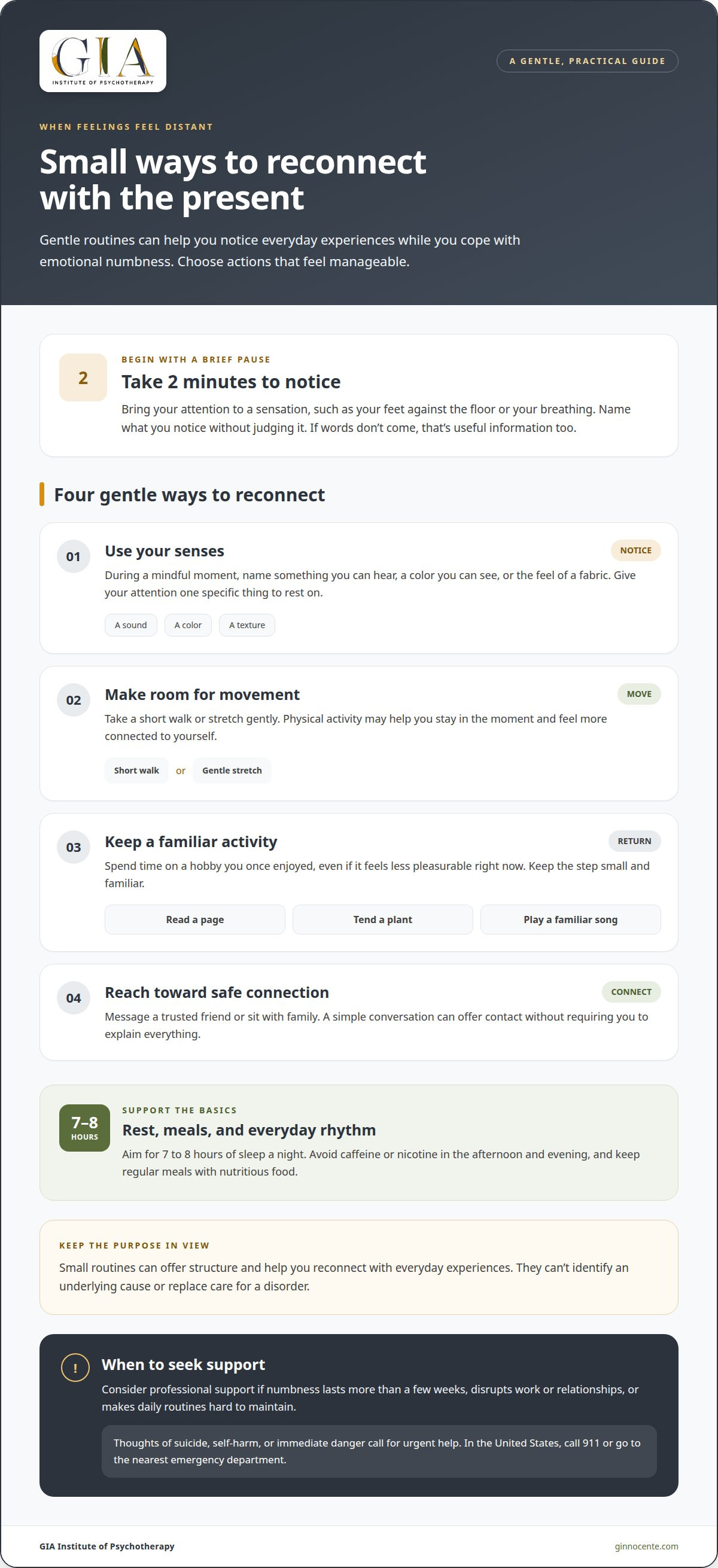
Small routines can offer structure while you cope with numbness. They can’t identify an underlying cause or replace care for a disorder, but they may help you reconnect with everyday experiences. Choose actions that feel manageable, especially on difficult or exhausting days.
Start with brief practices that bring attention back to the present. Pause for 2 minutes and notice sensations, such as your feet against the floor or your breathing. Naming what you notice, without judging it, can be a first step toward recognizing feelings. If words don’t come, that’s useful information too.
- Use your senses: Notice five senses during a mindful moment. Name a sound, a color, or the feel of a fabric. This gives attention something specific to rest on.
- Make room for movement: Take a short walk or stretch gently. Physical activity may help you stay in the moment and feel more connected to yourself.
- Keep a familiar activity: Spend time on a hobby you once enjoyed, even if it feels less pleasurable now. Try reading a page, tending a plant, or listening to a familiar song.
- Reach toward safe connection: Message a trusted friend or sit with family. A simple conversation can offer contact without requiring you to explain everything.
Rest and basic routines matter, too. Aim for 7 to 8 hours of sleep a night, and avoid caffeine or nicotine in the afternoon and evening. Regular meals and nutritious food can support daily well-being. A short journal entry can help you notice patterns, such as whether numbness shifts after rest, movement, or time with someone you trust.
Try not to rely on alcohol or drugs to feel real or force emotion; temporary relief can bring further health problems. Avoiding every person or situation can also deepen disconnection. Instead, choose one small, safe interaction or activity, then notice its effect without expecting a particular feeling. If numbness continues to interfere with everyday life, include a healthcare professional in your coping plan.
Depression and anxiety
Emotional numbness can accompany depression and anxiety, but it doesn’t tell the whole story. Look for changes in daily life, such as feeling detached, losing interest, feeling persistently low, or struggling with work and relationships. Anxiety may bring ongoing worry or alertness, while depression can affect mood, energy, and enjoyment. These symptoms can overlap, so one feeling alone can’t establish a diagnosis. Understanding how symptoms connect with your circumstances can help guide the next step.
Notice when the numbness appears and what’s happening around it. Conflict, bereavement, or reminders of traumatic stress may trigger emotional shutdown. Sometimes numbness persists without a clear trigger and affects several parts of life. Write down changes in sleep, interest, social connection, and daily routines. This record can help you describe the pattern to a mental health professional and explore whether depression, anxiety, trauma, or another concern may be involved.
Support can help you understand the pattern without trying to force a feeling. Counseling may help you identify emotions and connect them with events or thoughts. Cognitive behavioral therapy can help uncover unhelpful thought and behavior patterns and practice healthier responses. If numbness interferes with work, relationships, or basic routines, or persists for a few weeks, seek professional help. A primary care provider can also help investigate possible health-related causes.
If you’re in the United States, call or text 988 to reach the 988 Suicide & Crisis Lifeline. If you may harm yourself or someone else, or can’t stay safe, seek immediate emergency help. For ongoing numbness linked to depression, anxiety, or traumatic stress, talking with a therapist can create space to explore what’s happening and rebuild connection at a manageable pace. Explore individual therapy support as a next step.
GIA Institute of Psychotherapy: Adult Individual Psychotherapy
GIA Institute of Psychotherapy offers individual therapy for adults experiencing emotional numbness and seeking to understand what may contribute to it. For people in Ocean City, Linwood, Margate, Ventnor, Egg Harbor Township, Upper Township, and Galloway, therapy can offer space to explore how feelings connect with stress, trauma, or life changes, and develop practical ways to navigate difficult moments.
Consider reaching out when numbness affects relationships or everyday routines, or feels difficult to work through alone. Therapy can help you explore what’s happening and identify possible next steps. To learn more or schedule an intake call, contact GIA Institute of Psychotherapy or visit ginnocente.com.
Take a Gentle Step Toward Reconnection
Feeling numb doesn’t have to define your relationship with yourself or the people around you. A next step can be as simple as sharing what’s been difficult with someone you trust or exploring it with professional support. You don’t need a complete explanation before you begin. If you’re still asking what to do when you feel emotionally numb, let that question guide you toward support rather than self-criticism.
GIA Institute of Psychotherapy offers individual therapy for adults, children, and teens, as well as family therapy. These services support individuals and families working through emotional challenges and life transitions.
If you’re ready to take a step toward understanding what you’re experiencing, contact GIA Institute of Psychotherapy. You deserve space to be heard, and the possibility of feeling more connected can begin with one conversation.
Frequently Asked Questions
What Does It Mean to Become Emotionally Numb?
Emotional numbness means experiencing a noticeable reduction in emotional response or access to feelings. You might hear upsetting news and know it matters, yet feel little inside. It can also feel like watching your day from a distance. Consider what changed before the feeling appeared, such as a major conflict or a period of relentless demands. That context can help you describe the experience.
What Is Emotional Numbing?
Emotional numbing describes muted feelings; it isn’t a diagnosis by itself. You may understand a situation intellectually while finding it hard to feel sadness, warmth, excitement, or concern. For example, you may know a reunion matters but feel blank during it. The terms “numbness” and “emotional blunting” can describe similar experiences, though people may use them differently.
How Does Emotional Numbness Affect the Victim?
Emotional numbness can affect relationships, choices, and your sense of connection. You might stop replying to friends, withdraw from shared plans, or use alcohol or drugs to try to feel something. Shame about seeming distant can make it harder to explain what’s happening. If numbness leads to self-harm or suicidal thoughts, treat that as a serious safety concern and seek immediate support.
How Should I Respond to Someone Feeling Numb?
Respond with calm curiosity rather than pressure. You could say, “I’m here with you. Would talking or sitting together feel better?” Give them time to answer and offer a simple choice, such as a quiet walk or a glass of water. Avoid telling them to cheer up or demanding an explanation. If they mention self-harm or feeling unsafe, take their words seriously and help them access urgent support.
Is Emotional Numbness Part of Anxiety?
Numbness can occur alongside anxiety, although numbness alone doesn’t show that anxiety is the cause. Someone might feel detached during a stressful period, then notice worry, tension, or difficulty settling. Pay attention to whether the numbness appears in particular situations or continues afterward. A clinician can consider the full pattern, including daily functioning and other symptoms, rather than interpreting one feeling in isolation.
Is Feeling Numb a Sign of Depression?
Feeling numb can be associated with depression, but it isn’t enough on its own to identify depression. Notice whether it occurs with ongoing low mood, reduced interest, fatigue, or difficulty managing everyday responsibilities. Keeping a brief note of changes in mood and routine can make it easier to describe the pattern during an appointment. A mental health professional can help assess what may be contributing.


