
In the quiet moments between meetings, after the kids are asleep, or during a long drive along the Garden State Parkway, a question may surface: "Is this all there is?" For many high-functioning adults in New Jersey, life can feel like a series of checklists—outwardly successful, yet inwardly disconnected. The constant pressure to perform, manage relationships, and navigate life’s inevitable transitions can leave you feeling overwhelmed, stuck, or simply not like yourself.
You’ve likely considered seeking support, but the thought of finding a therapist who truly understands your experience can be daunting. You're not looking for a quick fix or generic advice. You’re searching for a space where you can be seen, heard, and understood—a place to heal old wounds, develop new strategies, and rediscover the most authentic version of yourself. This guide is your first step toward that transformation, exploring how modern therapy for adults in NJ can be a powerful catalyst for healing and growth.
Why Seek Therapy for Adults in New Jersey Now?
Adult Psychotherapy is more than just addressing a crisis; it is a dedicated space for self-discovery, emotional regulation, and intentional growth. In today's fast-paced world, the decision to invest in your mental health is not a sign of weakness but a profound act of strength and self-advocacy. For many adults in New Jersey, especially those in the "sandwich generation" juggling the demands of aging parents, growing children, and demanding careers, the mental load can become immense. High-functioning anxiety and depression often hide in plain sight, masked by productivity and success, yet slowly eroding your sense of well-being and presence.
Choosing to begin therapy is choosing to reclaim your narrative. It's an opportunity to untangle the patterns that no longer serve you, heal from past experiences that still echo in the present, and build a more resilient, fulfilling future. It is a collaborative process designed to empower you with the clarity and tools needed to navigate life with greater ease and purpose.
Signs It’s Time to Prioritize Your Mental Health
Recognizing the need for support is the first and most crucial step. While every individual's journey is unique, there are common signals that it may be time to seek professional guidance. You don't have to wait for a breaking point to begin the work of healing.
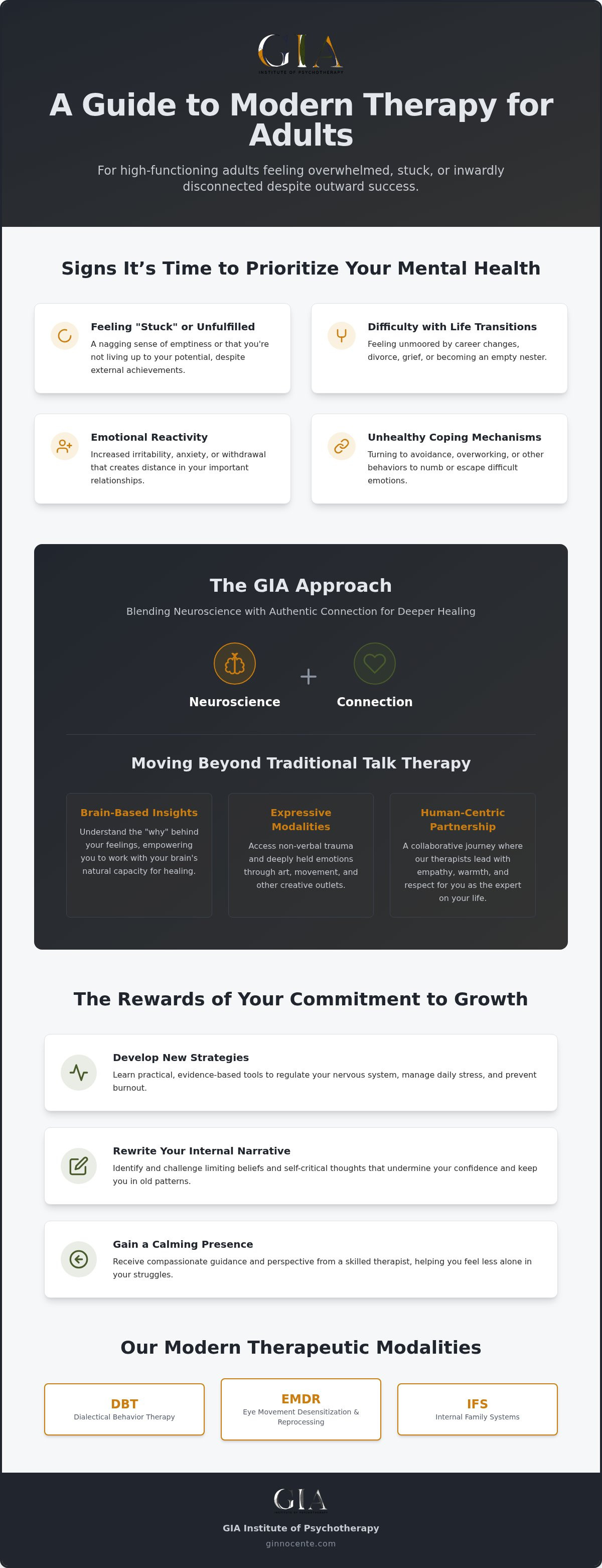
- Persistent feelings of "being stuck" or unfulfilled. Despite achieving external milestones, you may feel a nagging sense of emptiness, a lack of purpose, or a belief that you are not living up to your potential.
- Difficulty navigating major life transitions. Events like career changes, divorce, becoming an empty nester, or grieving a loss can disrupt your sense of identity and leave you feeling unmoored.
- Emotional reactivity that impacts your relationships. You might notice increased irritability, anxiety, or withdrawal that creates distance between you and your loved ones in your South Jersey community.
- Relying on unhealthy coping mechanisms. If you find yourself turning to avoidance, overworking, or other behaviors to numb difficult emotions, therapy can help you develop healthier strategies.
The Benefits of Individual Therapy for Adults
Engaging in individual therapy is a commitment to your own growth, and the rewards can transform every aspect of your life. It provides a confidential, non-judgmental environment to explore your inner world and create lasting change.
- Developing new strategies for managing daily stress and burnout. Learn practical, evidence-based tools to regulate your nervous system, manage anxiety, and prevent the exhaustion that comes from chronic stress.
- Rewriting the internal narrative that holds you back. Identify and challenge the limiting beliefs and self-critical thoughts that undermine your confidence and keep you trapped in old patterns.
- Gaining a steady, calming presence to help navigate life’s storms. A skilled therapist acts as a compassionate guide, offering perspective and support as you face challenges, helping you feel less alone in your struggles.
The GIA Approach: Blending Neuroscience with Authentic Connection
We believe that effective therapy is built on a foundation of genuine human connection. While many platforms can help you find a therapist, they often miss the most critical element: the therapeutic relationship itself. At GIA Institute, our approach is centered on creating a space where you feel truly seen, heard, and understood by a therapist who gets you. This isn't just about feeling comfortable; it's a clinical necessity for deep, transformative work to occur.
Our work is informed by the latest insights from neuroscience, which show how our brains can change and heal. We translate complex concepts about neuroplasticity and trauma recovery into practical, accessible strategies you can use in your daily life. By integrating expressive arts and other creative modalities, we also offer pathways to healing for adults who find that traditional talk therapy alone isn't enough to access and process deeply held emotions.
Moving Beyond Traditional Talk Therapy
While talking is a cornerstone of psychotherapy, we recognize that some experiences are stored non-verbally in the body and mind. Our integrative approach honors the whole person by incorporating methods that go beyond conversation.
- How we use brain-based insights to facilitate deeper emotional shifts. We help you understand the "why" behind your feelings and reactions, empowering you to work with your brain's natural capacity for healing rather than against it.
- The role of expressive modalities in accessing non-verbal trauma. For some, art, movement, or other creative outlets can unlock emotions and memories that words cannot reach, providing a powerful avenue for release and integration.
- Balancing clinical authority with a gentle, human-centric approach. Our therapists are highly skilled experts, but we lead with empathy, humility, and warmth, ensuring our relationship is one of partnership, not hierarchy.
A Collaborative Journey Toward Transformation
Your healing journey is uniquely yours. We see our role as that of a compassionate and knowledgeable guide, but you are always the expert on your own life. Our process is built on collaboration, respect, and a shared commitment to your well-being.
- Why we view the client as the expert on their own life. You hold the wisdom and insight about your experiences. Our job is to help you access that inner knowledge and use it to forge a path forward.
- Setting restorative goals that focus on the "best parts of yourself." Therapy isn't just about "fixing" what's wrong; it's about reconnecting with your strengths, values, and inherent resilience.
- Ensuring the therapeutic pace is intentional, patient, and non-judgmental. True healing cannot be rushed. We honor your pace, creating a safe and patient environment where you can unfold and grow without pressure.
Modern Modalities for Adult Healing: DBT, EMDR, and IFS
When seeking therapy for adults in NJ, you may come across a confusing alphabet of acronyms: DBT, EMDR, IFS. While directories list these as options, they rarely explain why they are so effective for the specific challenges adults face. At GIA Institute, we specialize in these evidence-based treatments because they offer more than just coping skills; they provide pathways to fundamentally rewrite old wounds and transform your relationship with yourself.
General counseling can be helpful, but these specialized clinical modalities are designed to address the root causes of anxiety, trauma, and emotional dysregulation. They are powerful tools that, in the hands of a skilled therapist, can accelerate healing and create profound, lasting change. Our expertise in these areas ensures you receive targeted, effective care tailored to your unique needs.
EMDR and Trauma Recovery
Eye Movement Desensitization and Reprocessing (EMDR) is a structured psychotherapy that helps people heal from traumatic events and distressing life experiences. It is considered a gold standard for adults who have experienced past or recent trauma, whether it's a single-incident event or complex, developmental trauma. EMDR uses a neuroscience-based tool for desensitization, allowing the brain's natural healing process to resume by processing "stuck" memories and reducing their emotional charge.
- What is EMDR and how does it help process traumatic memories? By using bilateral stimulation (such as eye movements or tapping), EMDR helps the brain integrate painful memories so they are no longer emotionally activating in the present.
- Why EMDR is effective for adults. It can help resolve the underlying trauma that fuels anxiety, depression, phobias, and relationship difficulties, often leading to relief more rapidly than traditional talk therapy alone.
DBT for Emotional Regulation
Dialectical Behavior Therapy (DBT) is a highly practical and skills-based approach designed to help individuals manage intense emotions and improve their relationships. It is particularly beneficial for adults who struggle with emotional reactivity, impulsivity, or a persistent sense of crisis. The core of DBT lies in balancing acceptance and change—learning to accept yourself and your reality as they are, while also working to build a life that feels more meaningful and stable.
- How DBT provides practical skills for daily life. DBT teaches concrete skills in four key areas: mindfulness, distress tolerance, emotion regulation, and interpersonal effectiveness.
- Who benefits most from the structure of DBT? Adults who feel overwhelmed by their emotions and want clear, actionable strategies to navigate daily challenges find the structure of DBT incredibly empowering.
Internal Family Systems (IFS) and the Self
Internal Family Systems (IFS) is a compassionate and transformative model of psychotherapy that views the mind as being naturally made up of different "parts" or subpersonalities. These parts—like a "critical" part, an "anxious" part, or a "people-pleasing" part—each have their own beliefs and intentions. IFS helps adults understand these inner parts with curiosity and compassion rather than judgment. The goal is to access the core Self, which is inherently calm, confident, and wise, and to heal the wounded parts that carry old pain, allowing for greater internal harmony and clarity.
- Understanding the "parts" of your personality. IFS helps you see that you are not your anxiety or your anger; rather, these are parts of you that are trying to protect you.
- The process of unburdening parts that carry old pain. Through a gentle, guided process, you can help these parts release the burdens of past trauma, freeing them from their extreme roles and restoring balance to your inner system.
Navigating Adult Life Transitions in South Jersey
Life as an adult in South Jersey comes with its own unique rhythm and set of stressors. From the bustling summer season in Shore towns like Ocean City and Margate to the quiet introspection of the off-season, the environment can profoundly impact our well-being. Whether you're navigating the competitive professional landscape, dealing with the challenges of raising a family in communities like Linwood or Egg Harbor Township, or facing a major life change like divorce or bereavement, therapy can provide an anchor in times of uncertainty.
At GIA Institute, we understand the local context and how it shapes your experience. We view life transitions not as crises to be endured, but as opportunities for profound growth. Our philosophy is to help you author your "next chapter" with intention, resilience, and a renewed sense of purpose.
Therapy for Career and Life Shifts
Adulthood is a series of chapters, and the transition between them can be both exciting and terrifying. Therapy offers a supportive space to explore the complex emotions that accompany these shifts and to design a future that aligns with your values.
- Managing professional burnout in the competitive NJ landscape. Develop strategies to set boundaries, reconnect with your professional passion, and create a healthier work-life integration.
- Finding purpose after major life milestones. Whether it's marriage, the birth of a child, an empty nest, or retirement, therapy can help you navigate the identity shifts that come with these significant changes.
- Using therapy to navigate the "what’s next?" phase of adulthood. Gain clarity and confidence as you contemplate career changes, new relationships, or a different way of being in the world.
Relational Health and Individual Growth
Our individual well-being is deeply intertwined with the health of our relationships. The work you do in individual therapy has a powerful ripple effect, transforming how you show up as a partner, parent, friend, and family member.
- How individual therapy improves your role in couples and families. By understanding your own triggers, patterns, and needs, you can communicate more effectively and engage in relationships from a place of emotional stability.
- Breaking generational patterns to create a healthier home environment. Therapy can help you identify and heal from inherited family dynamics, allowing you to create a new legacy for yourself and your children.
- The importance of setting boundaries for personal well-being. Learn to say "no" without guilt and "yes" with intention, protecting your energy and honoring your own needs as essential.
Your First Step Toward Healing at GIA Institute
We know that reaching out for help takes immense courage. The process of finding a therapist can feel overwhelming, especially when you're already feeling vulnerable. Unlike impersonal directories that feel like booking a haircut, our intake process is designed to be a warm, human, and collaborative conversation. From the very first call, our goal is to make you feel safe, respected, and hopeful about the path ahead.
Your first sessions are not about immediate problem-solving; they are about connection. It's a "getting to know you" space where you can share your story at your own pace and begin building the trust that is essential for deep therapeutic work. We are committed to creating a restorative, non-judgmental environment where you can finally exhale.
What to Expect in Your Initial Sessions
The beginning of your therapy journey is about laying a strong foundation for the work to come. We move at a pace that feels right for you, ensuring you feel comfortable and understood every step of the way.
- How we match you with the right clinical approach for your needs. During our initial consultation, we listen deeply to your story to understand which of our modalities and therapists would be the best fit for your specific goals.
- Creating a roadmap for your healing journey during the first month. Together, we will collaboratively create a flexible plan that outlines your goals and the steps we will take to achieve them.
- The focus on making you feel "seen and understood" from day one. Our primary objective in the beginning is for you to leave each session feeling that you have a partner and an advocate in your corner.
Scheduling Your Path Forward in Ocean City and Beyond
Starting your journey is simple and straightforward. We provide expert adult therapy for residents of Ocean City, Linwood, Margate, Ventnor, Egg Harbor Township, and surrounding South Jersey communities. A simple, empathetic conversation is all it takes to begin.
- We offer flexible scheduling to accommodate the busy lives of adults, with both in-person and virtual therapy options available.
- Our team will guide you through the intake process, answering any questions you have with transparency and care.
- The most important thing to remember is this: You don’t have to navigate this transition alone. A more peaceful, centered, and fulfilling life is possible, and we are here to help you find it.
Frequently Asked Questions About Therapy for Adults
How do I know if I need therapy or if I’m just going through a rough patch?
A "rough patch" typically has a clear cause and a foreseeable end. If you feel persistently stuck, overwhelmed, or unhappy for several weeks or months, and it's impacting your work, relationships, or overall well-being, therapy can provide the support and tools needed for lasting change. Therapy isn't just for crises; it's also for growth and self-understanding.
What is the difference between a therapist, a counselor, and a psychologist in NJ?
These terms are often used interchangeably. In New Jersey, professionals who provide psychotherapy are licensed by the state. This includes Licensed Professional Counselors (LPC), Licensed Clinical Social Workers (LCSW), Licensed Marriage and Family Therapists (LMFT), and Psychologists (Psy.D. or Ph.D.). All are qualified to provide therapy; the key is finding someone with the right specialty and approach for you.
Is therapy at GIA Institute of Psychotherapy confidential?
Absolutely. Confidentiality is the cornerstone of therapy and is protected by state law and professional ethics. Everything you share with your therapist is kept strictly private, with a few rare exceptions related to safety (such as imminent harm to yourself or others), which will be explained to you in your first session.
How long does adult individual psychotherapy typically last?
The duration of therapy is highly individual and depends on your unique goals and needs. Some clients seek short-term, solution-focused therapy for a specific issue, which may last a few months. Others engage in longer-term therapy to work on deeper patterns and personal growth. This is something you will discuss and decide on collaboratively with your therapist.
Can I focus on specific trauma using EMDR at your NJ offices?
Yes. Our clinicians are specifically trained and experienced in using EMDR to help adults process and heal from specific traumatic memories, whether they are from the distant past or more recent events. We will work with you to determine if EMDR is the right approach for your needs during the initial consultation.
What happens if I don’t feel a connection with my therapist after the first session?
The therapeutic relationship is the most important factor in successful outcomes. We understand this and encourage open communication. If you don't feel the connection is right, we will be happy to help you find another therapist within our practice or provide referrals to ensure you get the best possible care.
Do you offer virtual therapy for adults in New Jersey?
Yes, we offer secure and confidential virtual therapy (telehealth) sessions for adults located anywhere in New Jersey. This provides a convenient and accessible option for those who cannot make it to our South Jersey offices or prefer to have sessions from the comfort of their own home.
How do I explain my need for therapy to my family or partner?
You can frame it as a proactive step toward your well-being, much like going to the gym for physical health. You might say something like, "I've decided to work with a professional to learn some new skills for managing stress and to work on being the best version of myself for me and for us." Your therapist can also help you practice this conversation.


