

What if feeling worn down isn’t something you have to push through alone? When work or daily responsibilities leave you exhausted, detached, or unable to recharge, it can be hard to tell whether you’re facing burnout or a demanding stretch. Exploring therapy for burnout NJ doesn’t mean you need to label or diagnose yourself. It can help you understand what’s weighing on you and consider what support might be useful.
This guide offers a gentle self-check to help you notice signs of strain without treating a checklist as a diagnosis. You’ll also find realistic steps to protect your energy and recover after demanding days, along with an overview of what therapy can involve. For people in South Jersey, adult individual psychotherapy may provide a collaborative space to explore patterns, consider practical strategies, and decide on a fitting next step. You can move at your own pace, with curiosity rather than judgment.
Key Takeaways
- Notice how long exhaustion or detachment has lasted, whether rest helps, and how strain affects daily life. These observations are not a diagnosis.
- Use a gentle self-check to choose one manageable next step and consider which pressures may call for support from others.
- Therapy for burnout NJ can offer a collaborative space to explore stress patterns, boundaries, and practical options at a comfortable pace.
- When considering therapy, ask about the clinician’s relevant experience, approach, practical access, and whether adult individual psychotherapy feels like a good fit.
- GIA Institute of Psychotherapy serves communities including Ocean City, Linwood, Margate, Ventnor, Egg Harbor Township, Upper Township, and Galloway.
Therapy for burnout in NJ: Start with a compassionate self-check
Feeling exhausted, detached, or unsure why ordinary responsibilities seem harder can be unsettling. Noticing these changes isn’t a personal failure, and you don’t have to be certain they’re burnout before taking them seriously. A self-check can help you describe what you’re experiencing, but it can’t diagnose you or determine the cause on its own.
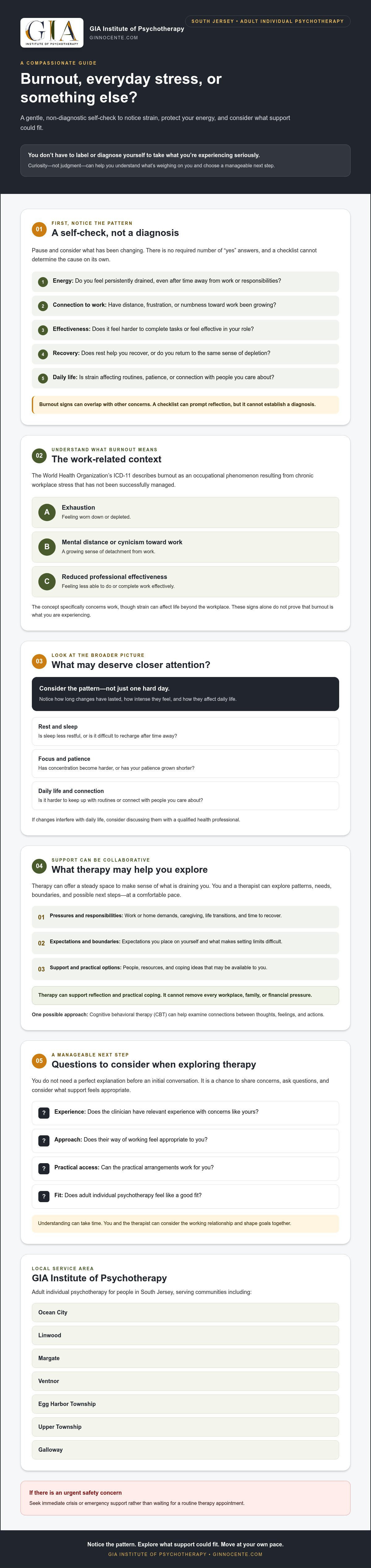
The World Health Organization’s ICD-11 describes burnout as an occupational phenomenon resulting from chronic workplace stress that hasn’t been successfully managed. It includes exhaustion, greater mental distance or cynicism toward work, and reduced professional effectiveness. The concept specifically concerns work, although strain can affect life beyond the workplace. For more background, see this overview of occupational burnout.
A non-diagnostic checklist of possible burnout signs
Pause and consider what’s been changing, without counting symptoms or trying to reach a label:
- Do you feel persistently drained, even after time away from work or responsibilities?
- Have you noticed growing distance, frustration, or numbness toward work that once felt manageable?
- Does it feel harder to complete tasks or feel effective in your role?
- Does rest help you recover, or do you return to the same sense of depletion?
- Is the strain affecting routines, patience, or connection with people you care about?
There’s no required number of “yes” answers. Burnout signs can overlap with other concerns, so a checklist can prompt reflection but can’t establish a diagnosis. A clinician can help you explore what may be contributing and whether another concern deserves attention.
When ongoing stress deserves closer attention
One difficult day may call for rest; a pattern that continues deserves a closer look. Ongoing distress can make sleep less restful, concentration more difficult, patience shorter, or connection with others harder. Consider how long the changes have lasted, how intense they feel, and how they affect your life rather than judging yourself by one especially demanding day.
If these changes interfere with daily life, consider discussing them with a qualified health professional. Therapy for burnout NJ can be one way to explore what’s happening. An initial conversation is a chance to share your concerns and consider what support may fit, not proof that you have burnout.
If you’re facing an urgent safety concern, seek immediate crisis or emergency support rather than waiting for a routine therapy appointment. For other concerns, you can take time to observe your experience and decide what next step feels manageable.
How therapy for burnout in NJ can help you understand the strain
Therapy can offer a steady, collaborative place to make sense of what’s draining you. Rather than assuming there’s one cause or a quick fix, you and a therapist can explore patterns, needs, boundaries, and possible next steps. That process may include emotional support and practical coping ideas, while recognizing that therapy can’t remove every workplace, family, or financial pressure.
The World Health Organization’s description of burnout refers specifically to chronic workplace stress. In therapy, you can also consider how work connects with caregiving, life transitions, relationships, or limited time to recover. The goal isn’t to fit your experience into a label. It’s to understand what’s happening and what support could be useful.
What a therapist may explore with you
Early sessions are an opportunity to share what prompted you to seek support, ask questions, and discuss what you’d like to change. You and the therapist can consider whether the working relationship and approach feel appropriate, then shape goals together. You don’t need to arrive with a perfect explanation. It’s okay for understanding to take time.
Conversation may touch on demands at work or home, caregiving responsibilities, recent transitions, and whether you have enough time or support to recharge. A therapist might also help you notice expectations you place on yourself, what makes it difficult to set limits, and which people or resources are already available to you. Understanding a pattern doesn’t mean you’re to blame for it, and one conversation may not resolve pressures that have built over time.
How different therapy approaches may fit
Different approaches offer different ways to explore concerns. Cognitive behavioral therapy (CBT), for example, can help examine connections between thoughts, feelings, and actions. GIA Institute of Psychotherapy reports using CBT, DBT, EMDR, and Internal Family Systems. These are options to ask a clinician about, not a promise that a particular method is right for burnout.
The right therapeutic approach should fit your concerns, preferences, and pace, not the other way around. You can ask what an approach involves, how it might relate to your goals, and whether other options are available. Therapy for burnout NJ may be worth exploring if you want support understanding the strain and considering practical next steps. If you’re in the area, you can learn more about adult individual psychotherapy and decide what questions you’d like to ask.
Burnout, everyday stress, or another concern: What should you notice?
Stress, burnout, and other mental health concerns can feel alike, especially when exhaustion has been building for a while. Comparing what you notice can help you describe what’s changed, but it can’t tell you what diagnosis, if any, applies. Anxiety or depression, for example, may also involve low energy, difficulty concentrating, or changes in motivation. Only a qualified professional can assess your symptoms and needs in context.
| What to notice | Everyday stress may look like | Ongoing burnout or another concern may look like |
|---|---|---|
| Duration | A response to a specific demand that eases as the situation changes. | Strain that continues or keeps returning, even when a demanding period passes. |
| Recovery after rest | Time away or a restful night brings some relief. | Rest doesn’t seem to restore your energy, or relief feels brief. |
| Daily impact | You’re managing usual routines, though a busy stretch may feel tiring. | Concentration, motivation, relationships, or everyday responsibilities feel harder to maintain. |
| Possible context | A deadline, a difficult day, or a temporary change. | Work demands, caregiving, transitions, or several pressures with little room to recover. |
These are reflection points, not rules. Burnout is associated with chronic workplace stress, while exhaustion and reduced motivation can have other causes too. The Mayo Clinic’s guide to spotting job burnout offers more context, but an article or checklist can’t replace an individual assessment.
Questions to help describe what has changed
Try asking yourself: When did I first notice a difference? Does it seem connected to work, caregiving, or another ongoing demand? What has changed in my energy, motivation, concentration, relationships, or ability to recover? Jotting down specific examples, such as struggling to focus on a usual task or feeling depleted after a day off, can make it easier to explain your experience in a conversation with a therapist.
When to consider professional support
If distress persists, worsens, or interferes with daily life, you don’t have to prove you’re burned out before seeking help. Therapy for burnout NJ can be one option for exploring what you’re experiencing with a professional, who can help consider whether stress, burnout, or another concern may be involved.
If you or someone else is in immediate danger, seek urgent crisis or emergency support where you are rather than waiting for a routine therapy appointment.
A practical checklist for taking the next step toward burnout support
You don’t have to change everything at once. A short, thoughtful check-in can turn a vague sense of overload into one possible next step. Use this list as a guide, not a test you need to pass.
- Name the pattern. Note when the strain tends to rise, what feels hardest, and whether anything brings even brief relief.
- Separate what’s yours to influence from what isn’t. You may be able to adjust a routine or ask for help with a task. Workload, staffing, caregiving demands, or other structural pressures may require shared support or broader changes.
- Choose one manageable action. Could you protect a short recovery period, postpone a nonessential task, or ask someone you trust to share a responsibility?
- Decide who else may need to be involved. Depending on the situation, that could mean talking with a trusted person, a supervisor, or an available workplace resource. Consider what feels safe and appropriate for you.
- Prepare for a therapy conversation if you’re considering one. Write down recent changes, your main concerns, questions you want answered, and what you hope might become easier.
Small steps that may create room to recover
A realistic boundary might be setting aside a defined period to decompress after work or discussing a more manageable way to share responsibilities at home. These steps may create some breathing room, but they can’t guarantee that external pressures will change. If distress persists or daily life remains difficult, professional support may still be worth considering. You don’t have to try every self-help idea first.
How to prepare for a first therapy conversation
Bring a few notes, not a polished explanation. You might include situations that feel hardest, changes you’ve noticed, and questions such as, “What approach might fit my concerns?” or “How will we decide what to focus on?” It’s also reasonable to ask about the therapist’s relevant experience, availability, fees, insurance, and session format. Confirm practical details with the practice, since they can vary.
The first conversation can help you share what’s going on and consider whether working with that therapist feels appropriate. Therapy for burnout NJ is an option to explore, not a commitment to a particular approach or outcome. If you’re considering adult individual psychotherapy, contact GIA Institute of Psychotherapy about adult individual therapy to ask whether it may fit your concerns.
Finding therapy for burnout in NJ: Explore support that fits
Choosing a therapist is about more than finding someone nearby. You deserve a chance to ask whether their experience, style, and practical arrangements fit what you’re facing. If you’re looking for therapy for burnout NJ, you can describe concerns such as exhaustion, ongoing stress, or difficulty setting boundaries without arriving with a diagnosis or a complete plan.
Questions to ask when choosing a therapist
A first conversation can help you understand how a therapist works and whether you feel comfortable speaking openly. Consider asking:
- How do you approach concerns like ongoing stress, exhaustion, or difficulty setting limits?
- What therapy approaches might fit my needs, and how would we decide together what to focus on?
- How do we review goals and talk about whether therapy feels helpful over time?
- What are the practice location, current availability, session format, and payment or insurance arrangements?
These questions can help you assess personal fit and practical access. It’s reasonable to ask for clarification or take time to consider your options. Confirm details directly with the practice, since availability and arrangements can change.
Exploring adult therapy with GIA Institute of Psychotherapy
GIA Institute of Psychotherapy offers adult individual psychotherapy and serves South Jersey communities including Ocean City, Linwood, Margate, Ventnor, Egg Harbor Township, Upper Township, and Galloway. The practice reports using CBT, DBT, EMDR, and Internal Family Systems alongside practical strategies. These approaches are possibilities to discuss with a clinician, not a guarantee of a particular result or confirmation of specialized burnout experience.
You can ask whether the practice’s approach and current availability fit your concerns, and discuss questions about location, session format, or payment directly. Exploring support doesn’t commit you to a particular therapy or outcome. It’s a way to learn whether working together could feel like a useful next step.
If you’d like to learn more, explore therapy with GIA Institute of Psychotherapy and ask whether adult individual psychotherapy may fit your needs.
Take one steady step toward support
Burnout isn’t a personal failing, and a self-check can help you notice patterns without turning them into a diagnosis. Paying attention to how long the strain lasts, whether rest helps, and how daily life is affected can give you a clearer starting point. You don’t need to be certain what’s going on before asking for support.
Therapy for burnout NJ may offer a collaborative place to explore what’s contributing to the strain and consider practical next steps. GIA Institute of Psychotherapy offers adult individual psychotherapy and lists CBT, DBT, EMDR, and Internal Family Systems among its approaches. The practice serves South Jersey communities including Ocean City, Linwood, Margate, Ventnor, Egg Harbor Township, Upper Township, and Galloway. You can ask whether its approach and current availability fit your needs.
Explore whether therapy with GIA Institute feels like a fit. You’re allowed to move at your own pace. A small step toward understanding what you need can be a meaningful beginning.
Frequently Asked Questions
Is therapy helpful for burnout?
Therapy may help you understand ongoing strain, notice patterns, and consider practical changes. Whether it’s a good fit depends on your concerns, preferences, and circumstances. A therapist can explore options with you, but therapy can’t remove every external pressure or guarantee recovery. If distress is affecting daily life, consider discussing your experience with a qualified mental health professional. You don’t need to be certain burnout is the right label before asking for support.
Can I be burned out without knowing it?
Yes, some people notice exhaustion or distance from work gradually and first describe feeling unlike themselves, less effective, or unable to recover after rest. Those experiences don’t prove burnout and may have other explanations. Rather than trying to diagnose yourself, consider what has changed, how long it’s been happening, and how it affects daily life. If you’re concerned, sharing these observations with a qualified professional can help you explore what support may fit.
How do I know if I need therapy for burnout?
Consider talking with a therapist if distress persists, feels difficult to manage alone, or affects work, relationships, sleep, or everyday responsibilities. You don’t need to prove you’re burned out or have a formal label before asking for help. Therapy for burnout NJ can provide a setting to describe what’s happening and discuss whether a therapist’s approach and services suit your needs. You can raise questions before deciding whether to begin.
What happens in therapy for burnout?
Early conversations often focus on what feels difficult, when the strain began, and what you hope might change. A therapist may explore personal patterns, relationships, responsibilities, and sources of support with you. The process should be collaborative, so you can ask about the therapist’s approach and discuss goals together. What sessions involve varies by clinician and individual circumstances. You don’t need to arrive with everything figured out; questions and uncertainty are welcome parts of the conversation.
Can therapy help if my work situation does not change?
Therapy may help you understand your responses, consider boundaries, identify sources of support, and explore manageable choices. It can’t guarantee that workplace demands or other external conditions will change. A therapist can work with you to distinguish what feels within your control from what may require support from other people or workplace resources. The conversation should respect your circumstances and the options available to you, rather than placing responsibility for structural pressures on you alone.
Is burnout the same as depression or anxiety?
No. Burnout is commonly used to describe exhaustion and strain, particularly in relation to work, while anxiety and depression are different mental health concerns. Some experiences can overlap, and a checklist can’t determine what’s happening for an individual. If symptoms persist or interfere with daily life, a qualified professional can help assess your experience and discuss appropriate support. You don’t have to decide on a label before speaking with someone about what you’re noticing.
How can I find therapy for burnout in South Jersey?
Look for a mental health professional whose approach, location, availability, and session format fit your needs. Ask how they work with concerns like ongoing stress, how goals are shaped, and what payment arrangements apply. GIA Institute of Psychotherapy offers adult individual psychotherapy and serves Ocean City, Linwood, Margate, Ventnor, Egg Harbor Township, Upper Township, and Galloway. Contact the practice directly to confirm current services and availability and ask whether its approach may suit your concerns.


