

Imagine watching your child’s bright, curious spirit slowly retreat behind a wall of worry or sudden tears at the school gate. You want to reach out and pull them back to safety, yet you feel a profound sense of helplessness as they struggle with fears they cannot yet name. It is heartbreaking to witness your little one carry the weight of the world on their small shoulders. Have you ever wondered if there is a way to help them find their footing without the process feeling clinical or scary? You aren't alone in this journey, and your child’s current struggle is not the end of their story.
We understand that you simply want your child to feel safe, happy, and free. This guide explores the most effective and gentle pathways for therapy for children with anxiety NJ, focusing on restorative care right here in South Jersey. You will discover how to recognize the subtle signs of childhood distress and move past the confusion of clinical jargon. We will look at how play therapy helps children heal, how to advocate within local school systems, and how to finally restore a lasting peace to your family home.
Key Takeaways
- Learn how to distinguish between typical childhood shyness and deeper nervous system responses by identifying behavioral red flags like irritability and perfectionism.
- Discover how restorative therapy for children with anxiety NJ uses play and expressive arts to help your little one process big emotions when words aren't enough.
- Gain practical co-regulation tools to transform your family home into a safe harbor where predictable routines and "worry-free zones" foster healing.
- Understand how to navigate the New Jersey school system with confidence by bridging the gap between therapeutic support and classroom advocacy for IEPs or 504 plans.
- Identify the key questions to ask during a consultation to find a compassionate local expert who balances clinical authority with a relatable, non-judgmental approach.
Recognizing Anxiety in Your Child: Signs NJ Parents Should Watch For
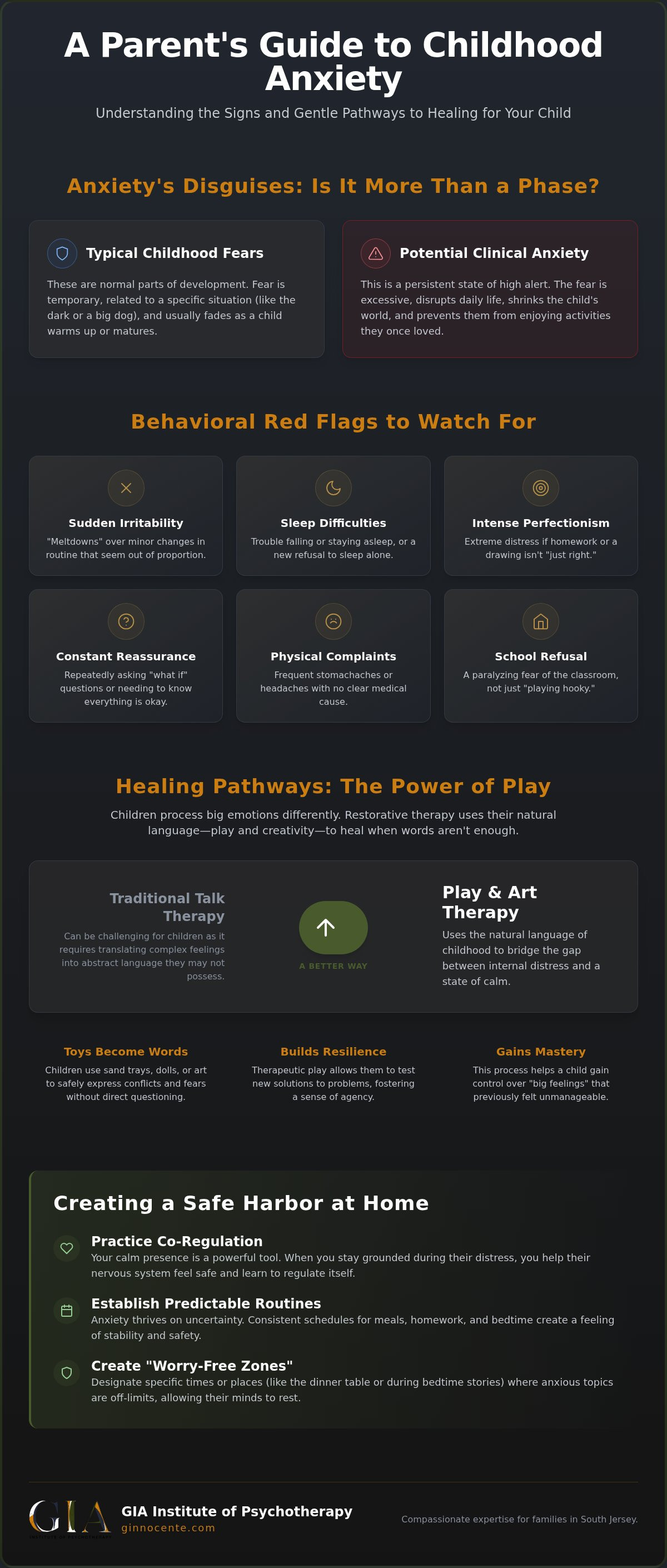
Anxiety in children often disguises itself as something else entirely. It's easy to label a child as "difficult" or "stubborn" when they're actually experiencing a physiological nervous system response. Unlike simple shyness, which usually fades as a child warms up to a situation, clinical anxiety is a persistent state of high alert that doesn't just "go away" with time. This is why seeking professional child psychotherapy can be so transformative; it helps parents and children decode these internal signals before they become ingrained patterns.
Children don't always have the vocabulary to say they feel overwhelmed. Instead, their bodies speak for them. You might notice your child complaining of frequent stomachaches or headaches, particularly on Sunday nights or before a big test. These physical symptoms are very real, yet they're often mistaken for a passing virus when they're actually manifestations of a "fight or flight" response. Other behavioral red flags include:
- Sudden irritability or "meltdowns" over minor changes in a daily routine.
- Difficulty falling or staying asleep, or a new refusal to sleep alone.
- Perfectionism that leads to intense distress if a drawing or homework assignment isn't "just right."
- Constant seeking of reassurance, asking "what if" questions about the future.
In many NJ school districts, we're seeing an uptick in school refusal. This isn't just a child "playing hooky" to stay home and play. It's a paralyzing fear of the classroom environment or social peer groups that requires specialized therapy for children with anxiety NJ to address the root cause and help the child feel safe again.
When is it more than just a phase?
Developmental fears, like being afraid of the dark at age four, are a normal part of growing up. However, when fear begins to shrink a child’s world or prevents them from participating in activities they once loved, it has likely moved beyond a phase. Anxiety can disrupt family harmony and stall social development, making it difficult for kids to build lasting friendships. The window of tolerance refers to the optimal zone of arousal where a child is able to process information and emotions effectively without feeling pushed into a state of panic or total withdrawal.
The unique stressors for South Jersey children
Living in South Jersey brings specific pressures that can weigh heavily on young minds. Local families often feel the weight of competitive NJ school rankings, which can inadvertently trickle down to even the youngest students. Furthermore, the social media comparisons that thrive in our shore communities create a constant stream of external noise for adolescents. These environmental factors, combined with life transitions like moving or family changes, can easily push a child past their ability to cope. Finding therapy for children with anxiety NJ that understands our local culture is the first step toward bringing peace back to your home.
Therapeutic Pathways: How Play and Art Heal Anxiety
Traditional "talk therapy" often asks a child to do something their developing brain isn't yet fully equipped for: translate complex, sensory sensations into abstract language. While adults might find relief in verbalizing their fears, children experience the world through their senses and their imagination. When families seek therapy for children with anxiety NJ, they're often relieved to find that the most effective approaches don't require their child to sit on a couch and explain themselves. Instead, we use the natural language of childhood to bridge the gap between their internal distress and a state of calm. Even as you monitor the signs and symptoms of anxiety in your child, these creative modalities offer a way to begin the healing process immediately.
Play Therapy: Healing through imagination
In the safety of a playroom, toys become the child's words. Through sand tray work or dollhouse play, children can externalize their internal conflicts without feeling the pressure of a direct spotlight. Have you ever seen a child use figurines to act out a scene that feels tense or scary? This isn't just "playing." It's a sophisticated way for them to gain a sense of agency over their environment. Within this therapeutic bond, the child learns that they're not alone in their fear. This process allows them to test out new solutions, build resilience, and find a steady sense of mastery over the "big feelings" that previously felt unmanageable.
Expressive Arts and Emotional Release
When a child’s nervous system is stuck in a state of high alert, rhythmic activities like drawing, music, or movement can provide a much needed reset. Expressive arts therapy works because it bypasses the logical mind and speaks directly to the emotional centers of the brain. It offers a safe container for emotional release, allowing children to "color through" their worries or move their bodies in ways that release stored tension. This approach is particularly powerful for those who struggle with perfectionism or school refusal, as it prioritizes the process of creation over the final product. Our team at GIA Institute of Psychotherapy utilizes these expressive tools to help children rewrite their internal narratives from one of fear to one of strength.
By blending these creative pathways with neuroscience-based strategies, we can also introduce adapted versions of Cognitive Behavioral Therapy (CBT) and Dialectical Behavior Therapy (DBT). For younger minds, this might look like "detective work" to catch "worry thoughts" or using "superhero breathing" to regulate their pulse. This integrated approach ensures that therapy for children with anxiety NJ is not only clinical and effective but also deeply restorative, gentle, and fun. We focus on the whole child, ensuring they leave each session feeling lighter and more capable of navigating their world.
Finding the Right Fit: Choosing a Child Therapist in NJ
Choosing a therapist for your child is a deeply personal decision that goes far beyond a simple search for a local office. It's about finding a compassionate guide who can walk alongside your family through one of life’s most delicate transitions. While clinical expertise is essential, the "right fit" often comes down to how safe and seen your child feels in their presence. When you interview potential providers for therapy for children with anxiety NJ, pay attention to the atmosphere. Does the environment feel like a safe harbor where your child can simply be themselves? A family-centered approach is vital, as it ensures that the restorative work done in session ripples out to the rest of the household.
To find the best match, consider asking these questions during your consultation:
- How do you build rapport with a child who feels nervous or resistant to therapy?
- In what ways do you involve parents in the healing process?
- What experience do you have with the specific stressors of the NJ school system?
A therapist should balance professional authority with a relatable, non-judgmental personality. If a child doesn't connect with the person across from them, the most advanced clinical techniques may fall flat. The goal is to find someone who understands that individual health is deeply intertwined with the family and social systems your child moves through every day.
Credentials and Specializations to look for
The world of mental health is full of acronyms that can feel clinical and cold. For example, DBT focuses on emotional regulation, while EMDR helps process distressing memories. IFS explores the different "parts" of a child’s internal world. While these tools are valuable, specialized training in Play Therapy is often the most important factor for younger children. It's also wise to verify NJ licensing and a provider’s local reputation for being relatable and non-judgmental. You can find more context on clinical standards in this CDC guide on childhood anxiety, which helps bridge the gap between jargon and your child’s actual needs.
The first session: What to expect
Preparing your child for their first visit doesn't have to be a source of more stress. Use gentle language to describe the therapist as a "feelings coach" or a "special friend who helps kids with big worries." During the initial intake, the focus is on building a bridge of trust. You'll likely spend time sharing your family's story while the therapist begins to understand your child’s unique rhythm. Setting realistic goals for the journey is a collaborative effort. Healing isn't a straight line, but with the right therapy for children with anxiety NJ, you'll begin to see your child’s spirit return and peace restored to your home.
A Parent's How-To: Practical Strategies for Home
While finding the right therapy for children with anxiety NJ is a vital step toward wellness, the healing process truly breathes within the walls of your own home. You are the steady presence your child needs most. Your home can become a safe harbor where they learn to navigate their internal storms with your guidance. This doesn't mean you have to be a clinical expert; it simply means being a compassionate witness to their experience while providing a structured, predictable environment.
One of the most powerful tools in your kit is co-regulation. It's natural to feel your own stress rise when your child is panicking, but your calm state is the most effective medicine for their frayed nerves. Instead of offering quick reassurance like "you're fine," which can feel dismissive, try validation. Phrases like, "I can see that your heart is racing and you feel scared right now; I am right here with you," help your child feel seen. This acknowledgment allows their nervous system to begin downshifting because they no longer have to "prove" their distress to you.
When the "big feelings" become overwhelming, practical grounding techniques can bring a child back to the present moment. The 5-4-3-2-1 method is a favorite for many families. Ask your child to name:
- 5 things they can see right now.
- 4 things they can touch (the soft carpet, their shirt).
- 3 things they can hear (the hum of the fridge, birds outside).
- 2 things they can smell.
- 1 thing they can taste.
Daily rituals for emotional safety
Predictability is the enemy of anxiety. Morning routines should focus on quiet connection rather than a frantic rush to the bus stop. A simple five-minute "snuggle time" can lower cortisol levels before the school day starts. At night, creating a "worry-free zone" in their bedroom with soft lighting and a "worry box" to store fears until morning can help them feel secure. Co-regulation is a tool for parental presence that allows your child to borrow your calm until they are strong enough to find their own.
Communicating with your child about their fears
Talk about the brain in a way they can understand. You might describe the amygdala as a "security guard" that sometimes gets a little too excited and sounds the alarm when there isn't a real fire. This takes the shame out of their physical symptoms. Use "I" statements to describe what you notice, such as, "I notice your tummy feels tight when we talk about soccer practice." If they aren't ready to talk, encourage them to draw their "worry monster" or use a journal to express what words cannot yet capture. If you're ready to build a personalized plan for your family, our team at GIA Institute of Psychotherapy is ready to guide you through every step.
Beyond the Office: School Advocacy and Integrated Support
Healing childhood anxiety is a journey that naturally extends beyond the therapy room and into the halls of your child’s school. While individual sessions provide a foundation for growth, the classroom is often where a child’s nervous system is tested most frequently. By bridging the gap between clinical support and educational environments, we ensure that the progress made in therapy for children with anxiety NJ is reinforced throughout the day. This integrated approach transforms the school experience from a source of dread into a place of possibility and belonging.
When a child struggles with school refusal, it's rarely about a lack of discipline. It's a profound physiological response to an environment that feels unsafe or overwhelming. Addressing this requires a collaborative clinical plan that involves school administration, guidance counselors, and teachers. We help facilitate these conversations, ensuring that everyone involved understands how to support your child’s window of tolerance while they're away from home. You don't have to navigate these bureaucratic waters alone; having a wise guide can make the difference between a stalled process and a genuine breakthrough.
School Advocacy in South Jersey Districts
Parents in districts like Ocean City and Linwood often face a unique set of challenges when trying to align their child’s emotional needs with academic expectations. It isn't enough to simply request an evaluation. You need a partner who understands the nuances of the NJ school system. When seeking therapy for children with anxiety NJ, it's vital to choose a provider who speaks the language of local educators. We work closely with families to navigate the complexities of the IEP and 504 process, ensuring that accommodations aren't just checkboxes but meaningful supports. A unified front between the therapist, the parent, and the teacher creates a safety net that catches a child before they fall into a state of panic.
The GIA Institute of Psychotherapy Approach to Child Wellness
At GIA Institute of Psychotherapy, we believe that your child is much more than a diagnosis or a set of symptoms. Our relatable, non-judgmental reputation is built on the idea that healing comes from seeing the "best parts" of a child while tenderly addressing their internal wounds. We empower you to be your child’s strongest mental health advocate, providing you with the language and strategies needed to secure the support they deserve. Our focus is on restorative health that honors the individual spirit of every young person we serve. If you're ready to see your child thrive in both their home and school life, you can Schedule a consultation with our child specialists in Ocean City.
Restoring Peace and Resilience to Your Child’s World
Watching your child struggle with anxiety is one of the most challenging experiences a parent can face, but it is also an invitation to deepen your connection. You now understand that these big feelings are often a nervous system response that requires a gentle, specialized approach rather than just "talking it out." By embracing the power of play and expressive arts, you can help your child find their voice and rewrite their internal narrative. Whether you are implementing co-regulation at home or seeking support within the local school system, every small step you take builds a bridge toward a calmer, more joyful future for your family.
Finding the right therapy for children with anxiety NJ doesn't have to be an overwhelming process. Our team at GIA Institute serves Ocean City and the surrounding South Jersey communities with a focus on restorative, neuroscience-based care. We are specialists in Play Therapy and Expressive Arts; we also provide the expert NJ School Advocacy support needed to ensure your child thrives in the classroom. You don't have to carry this weight alone. Begin your family’s healing journey at GIA Institute today. Your child’s bright, curious spirit is still there, and together, we can help them find their way back to safety and peace.
Frequently Asked Questions
How do I tell my child they are going to see a therapist?
It is helpful to describe the therapist as a "feelings coach" or a special teacher who helps kids understand their worries. You might explain that just like we see a doctor for a tummy ache, we see a therapist to help our hearts and minds feel better. Keep the conversation light and non-judgmental to reduce any fear about visiting our safe harbor in Ocean City.
Does GIA Institute offer psychiatric medication for children?
GIA Institute focuses on psychotherapy and counseling; we do not offer psychiatric medication management. Our approach is rooted in neuroscience-based practical strategies and expressive modalities like Play Therapy. If medication is a path you wish to explore with a medical professional, we can discuss how our counseling services complement that care. Our primary goal is to help your child find new internal strategies and heal through relational health.
What is the difference between Play Therapy and regular talk therapy?
Play Therapy is the natural language of childhood, whereas talk therapy relies on abstract verbal skills that young brains are still developing. In our therapy for children with anxiety NJ, we use sand trays and toys to help kids express "big feelings" without the pressure of finding the right words. This method builds a sense of agency and allows the therapist to see the child's internal world through their creative choices.
How long does it take to see progress in a child with anxiety?
Every child’s journey is unique, and healing often moves in waves rather than a straight line. Many parents begin to notice subtle shifts in their child's window of tolerance and emotional regulation within the first few months of consistent sessions. We focus on building a restorative bond and teaching practical grounding techniques. Over time, these small changes lead to a more peaceful home environment and a more resilient child.
Can therapy help with my child’s school refusal in NJ?
Yes, school refusal is a common reason families seek therapy for children with anxiety NJ. We look beyond the surface behavior to understand the underlying nervous system response that makes the classroom feel unsafe. Our school advocacy services bridge the gap between clinical needs and educational support. We work with districts in Ocean City and surrounding South Jersey areas to ensure your child feels supported as they return to school.
Will my child have to talk about their trauma immediately?
No, we never force a child to share more than they are ready for. Our first priority is establishing a sense of safety and building a restorative therapeutic bond. Using modalities like Expressive Arts, children can process difficult experiences at their own pace. We follow your child’s lead, ensuring they feel seen and understood before inviting them to rewrite their internal narrative in a way that feels safe and steady.
Do you provide 24/7 crisis support for families?
GIA Institute does not provide 24/7 crisis intervention services. We are a private outpatient practice focused on long-term restorative health and individual psychotherapy. If your child is experiencing a mental health emergency, please contact your local South Jersey crisis center or go to the nearest emergency room. We are here to support your family’s ongoing healing journey and school advocacy needs during our regular clinical hours.
How involved will I be in my child’s therapy sessions?
You are an essential part of the healing process. While individual therapy for children and teens provides a private space for your child, family therapy is often integrated into the overall plan. We believe that individual health is deeply intertwined with the family system. You will receive guidance on co-regulation and practical strategies for home to ensure the work we do in Ocean City creates lasting change for everyone.


