

What if your child’s therapy session felt less like a clinical appointment and more like a creative sanctuary where they finally felt understood? As a parent, you want more than a cold diagnosis or a rigid checklist of symptoms. You're likely searching for a child therapist New Jersey families can truly lean on, someone who sees your child’s unique spirit rather than just a medical label. It's natural to feel exhausted by the weight of clinical jargon or the stress of navigating complex school IEP processes alone. You want your child to feel supported, not pathologized.
You deserve a partnership that feels restorative, steady, and deeply human. This guide will help you navigate the New Jersey pediatric mental health landscape with clarity and confidence. We'll show you how to find a therapeutic fit that balances professional clinical authority with a gentle, play-based approach. We will explore practical strategies for home life, ways to advocate effectively within the local school system, and the specific steps to building a future where your child feels empowered, resilient, and whole.
Key Takeaways
- Understand why a local child therapist New Jersey expert provides a unique advantage by navigating the specific cultural and educational nuances of our state.
- Discover how creative modalities like play therapy and expressive arts bridge the gap between neuroscience and emotional healing.
- Learn the critical differences between private practices and agencies to ensure your child experiences the consistent, long-term bond necessary for growth.
- Gain practical insights into the therapist’s role within the NJ Child Study Team and how specialized advocacy can transform your child’s academic experience.
- Explore a non-medicalized, human-centric model of care that prioritizes your child’s agency and your family’s collective well-being.
Finding the Right Child Therapist in New Jersey: A Parent’s Compass
The decision to seek help for your child is rarely made lightly. It often comes after sleepless nights, whispered conversations with partners, and moments of quiet worry. You aren't just looking for a professional; you're looking for a safe harbor where your child can be seen, heard, and held in their complexity. Finding a child therapist New Jersey families can rely on requires a perspective that looks beyond the clinical diagnosis to the human being underneath. It's about finding a partner who values the strength of your child’s spirit as much as their emotional health.
Why does "local" matter so much in this search? It isn't just about the convenience of the drive to an office in Linwood or Margate. A local provider understands the specific rhythms of South Jersey life, from the academic pressures of our regional school districts to the social dynamics of our coastal communities. They act as a wise guide, helping you translate clinical insights into practical steps for your child’s daily life. This journey is a collaborative effort, and the right partner understands that healing happens within the context of your family and your community. To understand the history and scope of these professional approaches, you can explore various Therapeutic Modalities That Work as a foundation for your search.
Signs Your Child May Benefit from Professional Support
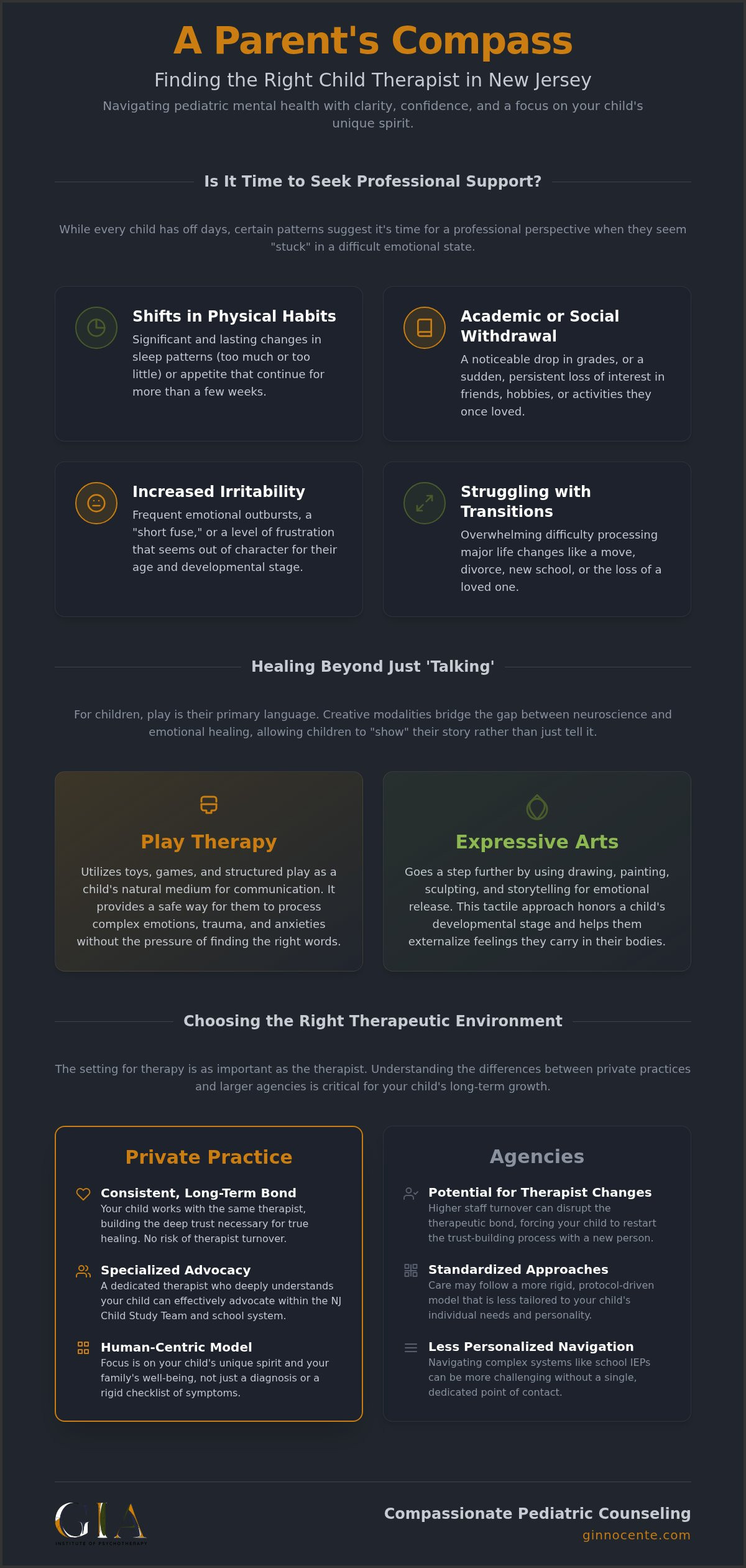
Recognizing when a child needs extra support is an act of deep attunement. While every child has "off" days, certain patterns suggest it's time to bring in a professional perspective. You might notice your child struggling to bounce back from typical setbacks or appearing "stuck" in a difficult emotional state.
- Sudden shifts in physical habits: Significant changes in sleep patterns or appetite that last more than a few weeks.
- Academic or social withdrawal: A noticeable drop in grades or a sudden loss of interest in activities they once loved in your local community.
- Increased irritability: Emotional outbursts or a "short fuse" that seems out of character for their developmental stage.
- Struggling with transitions: Difficulty processing major life changes like a move, a divorce, or a change in school environment.
The Importance of a Relatable Therapeutic Reputation
Children have an incredible "authenticity radar." They know when a therapist is truly present and when they are simply following a script. This is why a relatable, human-centric reputation is vital. When therapy feels like a "doctor's visit," children often close off. However, in a restorative environment that prioritizes the therapeutic alliance, they feel safe enough to explore their internal world. Trust is the bedrock of this process. It isn't built through clinical distance, but through warmth, patience, and a genuine interest in the child’s unique perspective. By moving away from a cold, medicalized model, we create space for real transformation to begin. A therapist who feels like a person rather than a provider can reach a child in ways a clinical manual never could.
Therapeutic Modalities That Work: Beyond Just 'Talking'
Children often lack the vocabulary to describe their internal landscape. A skilled child therapist New Jersey families trust knows that healing requires a bridge between science and soul. It's about more than conversation. It's about creating a felt sense of safety. Modern pediatric care uses neuroscience to understand how a child’s nervous system responds to stress. By engaging both the creative and logical parts of the brain, we help young clients rewrite the internal narratives that tell them they aren't safe or capable. This process transforms a child's sense of agency, allowing them to see themselves as resilient rather than broken.
Play Therapy and Expressive Arts in NJ
For a child, play is the primary language. Play Therapy provides a structured yet gentle way for them to process complex emotions without the pressure of finding the perfect words. In a safe, restorative environment, toys and art supplies become the tools for self-expression. Expressive arts go a step further, allowing for an emotional release that traditional talk therapy might miss. These modalities are especially vital for younger children or non-verbal teens who carry their burdens in their bodies rather than their speech. It allows the child to "show" their story rather than just tell it. This tactile approach honors their developmental stage while fostering deep internal clarity.
Evidence-Based Approaches: CBT, DBT, and EMDR
While creativity opens the door, the clinical expertise of a child therapist New Jersey parents trust ensures that evidence-based frameworks provide the structure for lasting change. Cognitive Behavioral Therapy (CBT) is highly effective for children facing school-related stress or anxious thoughts. It teaches them to identify and shift unhelpful patterns. For adolescents struggling with intense emotional waves, Dialectical Behavior Therapy (DBT) skills offer a toolkit for regulation and relational health. Additionally, Eye Movement Desensitization and Reprocessing (EMDR) serves as a powerful, neuroscience-backed tool for healing deeper childhood wounds. These methods aren't just clinical protocols. They are pathways to freedom.
At GIA Institute, we blend these clinical standards with a deeply human touch, ensuring your child feels supported at every stage. If you're ready to explore a more relatable, authentic approach to healing, we're here to guide your family through the process. Our goal is to move beyond mere symptom management and toward a vision of a healthier future for your child.
Comparing Child Therapy Options in NJ: Private Practice vs. Agencies
When searching for a child therapist New Jersey families often find themselves at a crossroads. Should you choose a large state-funded agency or a specialized private practice? This decision impacts more than just your schedule; it shapes the depth of the therapeutic bond. In New Jersey, many state agencies face a persistent waitlist crisis, sometimes leaving children waiting months for an initial intake. Beyond the wait, clinician turnover in high-volume settings can disrupt the continuity a child needs to feel safe. For a young person, starting over with a new face every few months feels like a setback rather than progress. Finding a child therapist New Jersey parents can trust involves looking for a setting that prioritizes long-term relational health.
The Benefits of Specialized Private Practice
A private practice often serves as a steady, calming presence. Because therapists in these settings typically maintain lower caseloads, they can offer a level of personalized attention that is difficult to replicate in larger systems. You gain direct access to specialists who are deeply trained in specific modalities like Internal Family Systems (IFS) or Play Therapy. This model also allows for greater flexibility. Whether it's collaborating with your child’s teacher or joining a family session to bridge the gap between home and therapy, the focus remains on the relationship. It's a collaborative journey rather than a clinical transaction. This stability allows the child to build a deep, non-judgmental partnership with their therapist over time.
When to Seek Hospital-Based or State Services
While private practice is a restorative choice for many, some situations require a different level of intensity. If your child needs an Intensive Outpatient Program (IOP) or a Partial Hospitalization Program (PHP), hospital-based services provide the necessary structure for acute stabilization. These environments are designed for short-term, high-frequency care. Additionally, if your child requires psychiatric medication management, you'll need to partner with a medical provider, as these services are separate from the individual therapy we offer. State departments also provide specialized support for kinship-specific needs, ensuring that every family system has a path toward clarity and health. Understanding these levels of care helps you determine which harbor is right for your child’s current storm.
Navigating the NJ School System and Mental Health Advocacy
Academic success and emotional health are deeply intertwined. For many South Jersey students, the classroom can become a source of profound pressure rather than a place of discovery. A child therapist New Jersey families trust understands that a child cannot thrive academically if they are struggling internally. In our state, the educational landscape is governed by specific mandates that can feel overwhelming to parents. This is where your therapist becomes more than a clinician; they become an advocate. By providing a professional voice during the Child Study Team process, a therapist helps translate a child's emotional needs into actionable educational supports that honor their unique journey.
Supporting Your Child’s IEP and 504 Plan
Navigating an Individualized Education Program (IEP) or a 504 Plan meeting is often an emotional experience. You aren't just discussing grades. You're discussing your child’s future. A skilled therapist provides the clinical documentation necessary to secure accommodations that actually make a difference. Whether it's requesting a quiet space for sensory breaks or modified testing schedules, this advocacy ensures the school sees the whole child. In communities like Linwood or Ocean City, bridging the gap between the therapy office and the classroom creates a consistent safety net. It allows the child to feel supported in every environment they inhabit, ensuring their mental health is a priority during the school day.
Addressing School Refusal and Academic Anxiety
School refusal is more than just a lack of motivation. It's often a manifestation of deep-seated anxiety or a feeling of being "stuck" in a fearful cycle. When a child feels overwhelmed by social or academic pressures, the thought of entering the building can feel impossible. A collaborative approach is essential here. We work closely with parents and teachers to create a gradual, supportive return to the classroom. This isn't about forcing compliance. It's about building resilience. By teaching self-regulation skills and fostering a sense of agency, we help students face their fears with a steady, calming presence by their side. We focus on rewriting the narrative of fear into one of capability.
If your family is currently struggling with educational hurdles, our school advocacy services can provide the steady guidance you need to move forward. We believe that every child deserves an educational experience that honors their mental health and celebrates their unique spirit.
GIA Institute: Compassionate Pediatric Counseling in South Jersey
GIA Institute serves as a safe harbor for families across South Jersey, including those in Ocean City, Margate, and Linwood. Gina Innocente and her team have built a practice rooted in the belief that every child possesses an innate capacity for healing. This isn't a factory-style clinic; it's a restorative space where professional clinical authority meets a gentle, human-centric heart. When you look for a child therapist New Jersey families can relate to, you're choosing a partner who understands that your child’s journey is unique. We blend the precision of neuroscience with the creative release of expressive arts, ensuring that the therapeutic process feels as authentic as it is effective.
A Supportive Space for Children and Teens
Our primary goal is to create a non-judgmental environment where kids feel seen rather than diagnosed. We know that for many children, the fear of being "different" or "broken" can be a significant barrier to opening up. At GIA, we replace that fear with validation and hope. We offer specialized support for adolescents as they navigate the complex transitions of middle and high school, helping them build the resilience needed for adulthood. Our approach is deeply family-centered, focusing on strengthening the bonds between parent and child. We believe that when the family system is supported, the child’s healing becomes more sustainable and profound.
Take the Next Step Toward Healing in South Jersey
Choosing to begin therapy is an act of courage and love. If you're ready to move toward a healthier future, the first step is simple. You can schedule an initial consultation to discuss your child’s needs and see if our practice feels like the right fit for your family. In your first session, you won't find a cold, clinical interrogation. Instead, you'll encounter a warm, inviting presence dedicated to understanding your story. We'll explore your child’s strengths, acknowledge the challenges you're facing, and begin to sketch out a map for growth. It’s about building trust from the very first moment.
You don't have to navigate these transitions alone. Whether your child is struggling with school-related anxiety, social pressures, or internal clarity, a dedicated child therapist New Jersey provides can offer the steady guidance necessary for transformation. We invite you to Discover how we can support your child’s journey and help your family find the peace you deserve. Together, we can rewrite the internal narratives that hold your child back and move toward a vision of resilience and joy.
A Path Toward Brighter Days for Your Family
You now have the clarity needed to navigate the pediatric mental health landscape with confidence. By choosing a child therapist New Jersey parents rely on, you're investing in a partnership that values your child’s unique spirit over a clinical label. You've seen how the right blend of neuroscience-based restorative care and expressive modalities can help a child process big emotions when words aren't enough. Whether you're seeking South Jersey school advocacy experts to support an IEP or looking for a safe harbor for emotional growth, the right support changes everything.
At GIA Institute, we're dedicated to this collaborative journey. We specialize in Play Therapy and Expressive Arts to ensure your child feels empowered and seen. It's time to move toward a vision of transformation and relational health. Schedule a consultation with a compassionate NJ child therapist to take that first brave step. Your child’s resilience is waiting to be rediscovered, and we're honored to guide you toward a future filled with hope and internal clarity.
Common Questions About Child Therapy in New Jersey
How do I know if my child needs therapy or if it's just a phase?
Determining the difference requires looking at the persistence and intensity of the behavior. If your child’s struggles interfere with their daily life in Ocean City or their academic performance in Linwood for more than a few weeks, it's likely more than a phase. We look for patterns of withdrawal, intense irritability, or sudden changes in sleep and appetite. Seeking professional support early allows for restorative care before these challenges become deeply ingrained in your child's life.
What is the difference between a child psychologist and a child therapist in NJ?
A child psychologist often focuses on diagnostic testing and psychological evaluations to identify specific learning or developmental issues. In contrast, a child therapist New Jersey families work with focuses on clinical counseling, emotional healing, and relational health. At GIA Institute, we emphasize the therapeutic relationship and expressive modalities. While both roles are highly trained, therapists provide the ongoing, human-centric support needed for navigating life’s transitions and rewriting internal narratives.
Can a therapist help with my child’s IEP or 504 plan in New Jersey?
Yes, our practice provides specialized school advocacy services for families in districts like Upper Township and Margate. We offer the clinical documentation necessary to secure accommodations and can participate in Child Study Team meetings to advocate for your child’s mental health. This bridge between the therapy office and the school ensures that supports like sensory breaks or modified testing schedules are grounded in your child’s actual emotional requirements and academic needs.
What happens if my child refuses to talk during the therapy session?
Silence is a natural part of the healing process and is never viewed as a failure. We utilize Play Therapy and Expressive Arts to allow children to communicate their "big" emotions without the pressure of finding the perfect words. A child might express themselves through art, sand trays, or creative play. This non-verbal communication is often more revealing than traditional talk. Our therapists sit patiently with silence, creating a safe, non-judgmental space where trust grows naturally.
How long does child therapy typically last before seeing results?
Every child’s journey toward healing follows a unique rhythm and pace. While some families notice subtle shifts in emotional regulation within six to eight weeks, deeper internal clarity often takes more time. The total duration depends on the complexity of the challenges and the consistency of the sessions. We focus on sustainable growth rather than quick fixes. Our goal is to provide your child with lasting resilience and practical strategies they can use throughout their life.
Is play therapy effective for older children or just toddlers?
Play therapy is highly effective for a wide age range, including older children and many adolescents. While a younger child might use literal toys, an older student might engage in expressive arts, sand tray work, or structured games to process complex feelings. These modalities bypass the logical brain and tap into deep emotional resonance. It allows older kids to explore their internal world and social pressures without the discomfort of a formal, face-to-face interrogation.
Do you offer family therapy alongside individual sessions for my child?
We believe that a child’s health is deeply intertwined with their family system and social environment. GIA Institute offers family therapy to strengthen the bond between parent and child and improve relational health at home. These sessions help parents understand the progress made in individual therapy and provide new strategies for support. By working together, we ensure that the healing journey is a collaborative effort that creates a restorative and validating environment in your South Jersey home.
How do I explain to my child what a therapist does?
You can describe a therapist as a "feelings guide" or a "special coach for the heart." Explain that just like a coach helps with sports, a therapist helps people understand their emotions and find ways to feel strong. Mention that it’s a private, safe place where they can play, draw, and talk about whatever is on their mind. Emphasize that the therapist is a steady, calming person who is there to help them discover the best parts of themselves.


