

What if the very activity your child uses to escape reality is actually the most powerful tool they have to face it? For many parents, watching a child struggle with big emotions or school challenges feels like navigating a storm without a map. You might feel a heavy sense of helplessness when traditional talk therapy fails to connect, or perhaps you worry that seeking support will lead to a permanent label. It's natural to feel confused when your child can't explain their distress. You're simply witnessing the limits of adult language in a world built on imagination and movement. Finding the right play therapy New Jersey provides can bridge that gap, offering a space where your child feels seen, heard, and truly understood.
In this guide, you'll discover how play serves as a primary clinical tool for neurodevelopmental healing and emotional processing. We'll explore how this restorative approach helps children regulate their emotions, strengthens family bonds, and paves the way for success in the classroom. By the end, you'll understand how to transform your child's natural instincts into a foundation for resilience, clarity, and lasting peace at home.
Key Takeaways
- Learn why traditional talk therapy often falls short for young children and how play serves as their primary clinical language for expression.
- Understand how specialized play therapy New Jersey families trust uses neuroscience to help children build new neural pathways for emotional regulation.
- Identify the specific behavioral and emotional red flags that suggest it's time to seek professional support for your child.
- Explore the differences between child-led and therapist-guided play to find the right therapeutic path for your child's unique needs.
- Gain clarity on the intake process and the vital role parents play in creating a restorative environment that supports healing beyond the therapy room.
Understanding Play Therapy: Why Play is the Natural Language of Children
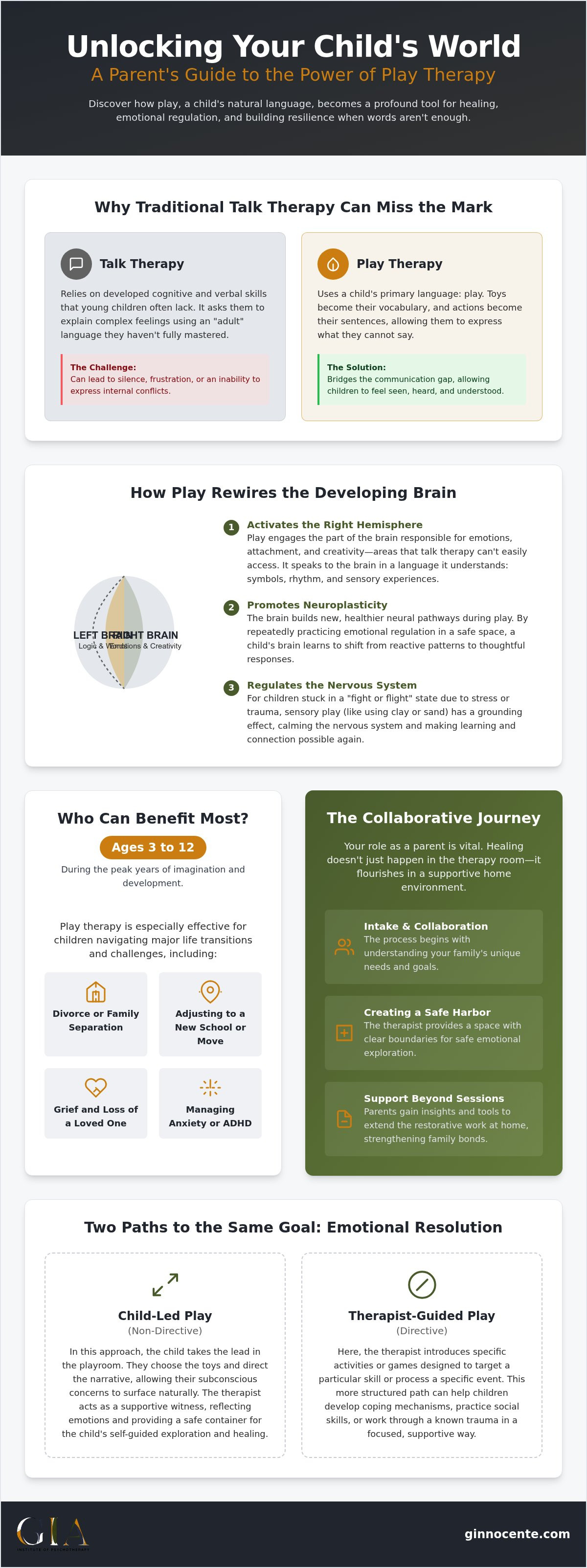
Imagine asking a six-year-old to sit on a couch and describe their anxiety about a recent move. The likely result is silence, a shrug, or a distracted gaze toward the window. This isn't because they're being difficult. It's because the cognitive verbal skills required for traditional talk therapy simply haven't developed yet. For a child, play is their primary language. It's the way they explore, learn, and eventually, heal. When seeking play therapy New Jersey families often discover that what looks like simple fun is actually a sophisticated, evidence-based clinical process.
In the playroom, toys serve as a child’s vocabulary. A dollhouse might represent a fractured home life; a tray of sand might become a battlefield where they process school-yard bullying. Through these symbols, children can externalize internal conflicts that they can't yet put into sentences. It allows them to keep a safe distance from painful memories while still processing the emotional weight attached to them. This shift from "just playing" to "therapeutic work" is where the transformation begins.
The Difference Between Play and Play Therapy
While regular play is essential for a child's development and entertainment, it lacks the specific intent of clinical intervention. In a therapeutic setting, a trained professional acts as a steady, calming presence. They provide a safe harbor where boundaries are clear and every action is observed with clinical insight. You can learn about the fundamentals of play therapy and how these structured environments differ from a typical playroom at home. The therapist doesn't just play along; they witness the child's narrative and guide them toward emotional resolution.
Who Can Benefit? Ages and Stages
This modality is particularly effective for children between the ages of 3 and 12, a period when imagination is at its peak. However, the principles of expressive arts can be adapted for pre-teens and adolescents who may feel "too old" for toys but still struggle with verbalizing complex feelings. Using play therapy New Jersey practitioners can support children through various life transitions including:
- Navigating the emotional fallout of a divorce or family separation
- Adjusting to a new school or a cross-country move
- Processing grief after the loss of a loved one or a pet
- Managing the "big feelings" associated with anxiety or ADHD
By meeting children in their own world, we validate their experiences without the pressure of adult-level communication. This approach doesn't just address symptoms; it honors the child's spirit and helps them rewrite their internal narrative from a place of agency and strength.
The Science of Healing: How Play Therapy Supports the Developing Brain
While many parents see play as a simple pastime, it's actually the engine of brain development. When a child engages in play, they activate the right hemisphere of the brain. This is where we process emotions, attachment, and creativity. Unlike the logical left brain, which relies on words, the right brain responds to symbols, rhythm, and sensory experiences. This is why play therapy New Jersey professionals focus on creative expression to reach parts of the brain that talk therapy cannot access. When looking for play therapy New Jersey families deserve an approach that understands the biological roots of behavior.
Through the process of neuroplasticity, the brain actually builds new neural pathways during these sessions. By repeatedly practicing self-regulation in a safe environment, a child's brain learns to move away from reactive patterns and toward thoughtful responses. According to the Association for Play Therapy, this systematic use of play helps children address clinical concerns while fostering healthy brain architecture. At GIA Institute, we blend these neuroscience-informed strategies with practical expressive tools to support a child's unique developmental journey. We understand that trauma can freeze a child's progress, but the brain's natural ability to heal is always present.
Regulating the Nervous System
When a child experiences trauma or chronic stress, their nervous system often gets stuck in a fight or flight state. This heightened state of arousal makes it nearly impossible to learn or connect with others. Sensory-rich play, such as working with clay or sand, provides a grounding effect that signals safety to the brain's survival centers. In child therapy, neuroregulation is the process of helping a child's nervous system return to a state of calm balance after periods of emotional intensity. This shift allows them to move from a place of survival to a place of connection and curiosity. If you're noticing your child is constantly on edge or easily overwhelmed, exploring individual therapy for children can provide the steady support they need to feel safe again.
Rewriting the Internal Narrative
The playroom serves as a laboratory for life. Here, children use toys to re-do difficult experiences in a way that feels safe and controlled. If a child felt powerless during a difficult event, they might use figurines to act out a different ending where they have a voice or find protection. This isn't just make-believe; it's a way of building a sense of mastery and self-esteem. By shifting from the role of a passive victim to an active creator, the child begins to rewrite their internal narrative. They discover their own agency, learning that while they cannot control everything that happens, they can control how they respond. This builds a foundation of resilience that serves them long after they leave the playroom.
Recognizing the Signs: When to Seek Play Therapy in New Jersey
How do you distinguish between a temporary "phase" and a deeper emotional struggle? It's a question that keeps many parents awake at night. When a child is hurting, they don't always have the words to describe their internal world. Instead, they speak through their actions, their moods, and even their physical bodies. Recognizing these signals isn't about finding a label for your child. It's about understanding their unique way of asking for support. Choosing play therapy New Jersey families trust allows you to intervene before these challenges become deeply rooted patterns.
Early intervention is vital for long-term emotional health. When we address a child's distress early, we provide them with the tools to navigate future hurdles with resilience. According to the Association for Play Therapy, this specialized approach helps children process life stressors in a way that respects their developmental stage. By paying attention to the following indicators, you can take the first step toward restoring peace in your home.
Behavioral and Physical Red Flags
Children often express emotional pain through regression. You might notice a child who was previously independent suddenly struggling with sleep, changes in appetite, or even bathroom habits. These shifts aren't "bad behavior." They're often signs that the child's nervous system is overwhelmed. Other red flags include:
- Increased irritability or aggressive outbursts that feel uncharacteristic for your child.
- Social withdrawal or a sudden loss of interest in activities they once loved.
- Persistent physical complaints, such as frequent stomach aches or headaches, that have no clear medical cause.
These somatic symptoms are real. They're the body's way of holding onto stress that the mind can't yet process. When these behaviors persist for more than a few weeks, it's often a sign that the child needs a safe, therapeutic space to offload their burdens.
School-Based Challenges and Advocacy
For many children, the classroom is where emotional struggles become most visible. School refusal often masks underlying anxiety or a fear of failure. You might see your child struggle to maintain friendships or receive reports of "acting out" during lessons. These academic hurdles don't just affect grades; they impact a child's sense of self-worth. It's helpful to remember that you don't have to navigate this journey alone.
Effective play therapy New Jersey providers often bridge the gap between home and school. At GIA Institute, we offer school advocacy services to help families navigate the complexities of IEP or 504 plan meetings. We collaborate with NJ schools to ensure your child’s mental health is supported throughout their day. This holistic approach ensures that the progress made in the playroom translates into success in the classroom, helping your child feel capable and understood in every environment they inhabit.
Directive vs. Non-Directive Play: Two Paths to the Same Goal
How does a therapist decide when to follow a child's lead and when to offer a gentle push? In the world of play therapy New Jersey families often find that the most effective approach is one that adapts to the child's unique temperament. There isn't a single way to heal through play. Instead, we use two primary frameworks, directive and non-directive, to help children navigate their internal worlds. At GIA Institute, our therapists carefully assess your child's personality and history to determine which path, or which combination of paths, will best support their growth.
Child-Centered Play Therapy (CCPT)
Child-Centered Play Therapy (CCPT) is rooted in the belief that children have an innate drive toward healing when provided with the right environment. In this non-directive approach, the child leads the way. The therapist provides unconditional positive regard, acting as a steady witness to the child’s story. This freedom builds a deep therapeutic alliance and fosters a sense of autonomy. When a child feels truly in control of their space, they begin to develop internal clarity and self-discovery that translates into confidence outside the playroom. It's a process of letting the child show us what they need, rather than telling them what to do.
Structured Modalities for Specific Goals
Sometimes, a child needs more specific tools to manage "big feelings" like anger or social anxiety. Directive play therapy involves the therapist introducing specific activities to target these goals. This might look like:
- Bibliotherapy: Using storytelling to help a child process complex family changes by seeing their experience reflected in a character’s journey.
- Role-Playing: Creating scenarios to practice social skills and conflict resolution in a safe, non-judgmental harbor.
- DBT-Informed Skills: Integrating dialectical behavior therapy concepts for older children who need tangible strategies for emotional regulation.
Beyond these frameworks, we often weave in Expressive Arts and sand tray therapy. These modalities allow for a deeper layer of communication that transcends traditional talk therapy. Whether your child is building a world in the sand or painting their emotions, they're doing the brave work of rewriting their internal narrative. If you're ready to see how a tailored approach can help your child find their voice, explore our individual therapy for children and teens to begin the journey toward healing.
The Collaborative Journey: What Parents Can Expect in South Jersey
Starting the therapeutic journey can feel like a heavy decision for any parent. We understand the weight of that choice. When you look for play therapy New Jersey provides, you aren't just looking for a clinical service; you're looking for a partner who understands your family's heart. At GIA Institute, we've created a safe harbor where your family's story is heard without judgment. Our intake process is a collaborative dialogue where we explore your child's unique strengths, your family's specific challenges, and your hopes for a more peaceful home. This isn't about diagnosing a problem. It's about mapping a path toward restoration and growth.
A typical session at GIA Institute lasts between 45 and 50 minutes. During this time, your child has the undivided attention of a steady, calming presence. For families in Ocean City and Linwood, this means having access to high-quality clinical care right in your own community. While the child is busy in the playroom, the work continues through you. We believe that healing is a relational process that extends far beyond our office walls and into the rhythm of your daily life.
Healing the Whole Family System
Child therapy is most effective when parents are active partners in the process. We provide frequent check-ins and practical "homework" to help you integrate restorative strategies into your home environment. We know that parenting a struggling child is exhausting. Part of our work involves addressing your own stress and helping you build new relational strategies that foster deep connection. We maintain a delicate balance regarding confidentiality; your child needs a private space to process their feelings, but we will always keep you informed about their general progress and any safety concerns. This transparency builds trust within the entire family system and ensures everyone is moving toward the same goal.
Next Steps for Families in South Jersey
If you're ready to take the next step, we've made the process as simple as possible. You can schedule an initial consultation at our Linwood or Ocean City locations to see if our approach is the right fit for your needs. When talking to your child about their first visit, we suggest keeping it simple and honest. You might tell them they're going to a special playroom where they can play with toys and talk to a helper who wants to get to know them. There's no pressure to perform or explain everything on the first day. It's simply a time for them to feel safe and seen in a space designed just for them.
Begin your child’s journey toward healing and growth today.
Moving Toward a Brighter Future for Your Child
We've explored how play serves as the bridge between a child's internal world and external healing. By understanding the neuroscience of play and recognizing the behavioral signs of distress, you've already taken a significant step in supporting your child's growth. Whether through child-centered exploration or structured skill-building, the goal remains the same: a resilient child who feels empowered to navigate life's transitions. Finding the right play therapy New Jersey families can rely on means choosing a path that honors your child's unique spirit while involving you in every step of the restorative process.
At GIA Institute, we specialize in expressive arts and school advocacy to provide a holistic, human-centric approach for families in Ocean City, Linwood, and throughout South Jersey. Connect with a Compassionate Child Therapist in NJ to begin this collaborative journey. Your child's potential for healing is already within them; we're simply here to provide the safe harbor where it can flourish.
Frequently Asked Questions about Play Therapy in New Jersey
How long does play therapy usually take to see results?
Results depend on your child's unique history and the specific challenges they face. While some families notice subtle shifts after just a few visits, a standard course of treatment typically spans 12 to 20 sessions to create lasting change. Consistency is the most important factor in this restorative process. By attending weekly sessions, your child builds the trust and safety necessary to process deep emotions and develop new coping strategies for life at home and school.
Is play therapy effective for children with ADHD or Autism?
Play therapy is a powerful tool for children navigating neurodivergence such as ADHD or Autism. It provides a non-verbal outlet for children to practice focus, impulse control, and social engagement in a low-pressure environment. At GIA Institute, we blend these sessions with neuroscience-informed strategies to support your child's developing brain. This approach helps them build the self-regulation skills they need to succeed in various social settings, from the playground to the classroom.
Will I be in the room during my child’s play therapy session?
Most children attend their sessions individually to foster a sense of autonomy and safety within the playroom. While you won't typically be in the room for the full 45 to 50 minutes, you remain a vital part of the journey. We prioritize the family system through frequent parent check-ins and collaborative planning. This structure allows your child to explore their internal world privately while ensuring you have the tools to support their growth at home.
How do I know if my child’s therapist is the right fit?
The right therapist should feel like a steady, calming presence who treats your family's story with profound empathy. You'll know it's a good fit when you feel understood rather than judged during your initial consultations. A skilled provider in play therapy New Jersey families trust will be transparent about their clinical approach and open to your questions. Observe how your child reacts over time; a sense of comfort and safety is the best indicator of success.
Can play therapy help with school refusal or social anxiety in NJ schools?
Yes, play therapy is highly effective for addressing school-related anxiety and refusal within NJ schools. We use expressive modalities to help children process the underlying fears that lead to avoidance. Beyond the playroom, GIA Institute offers specialized school advocacy services to help families in Linwood and Ocean City navigate IEP and 504 meetings. This holistic support ensures that the emotional progress your child makes in therapy is supported by their academic environment as well.
What is the difference between play therapy and art therapy?
While both use creativity to heal, play therapy is a broader clinical framework that utilizes toys, sand trays, and role-play to facilitate communication. Art therapy focuses specifically on the creative process of making art to resolve internal conflict. GIA Institute often integrates both through our specialized Expressive Arts programs. This combination allows us to meet your child exactly where they are, using whatever medium feels most natural for their self-expression and emotional resolution.
Is play therapy covered by insurance in New Jersey?
Coverage for play therapy New Jersey services depends on your specific insurance plan and the therapist's licensing. In New Jersey, play therapy is a modality practiced by licensed mental health professionals such as LCSWs or LPCs. Many plans provide reimbursement for these services as part of behavioral health benefits. We recommend checking with your provider to understand your out-of-network benefits or co-payment requirements for individual therapy for children and teens in South Jersey.
How do I explain play therapy to my child so they aren’t scared?
You can explain the playroom as a special place where they get to play with toys and have a helper who wants to get to know them. Reassure them that there are no "wrong" ways to play and they aren't in trouble. Using simple, non-threatening language helps reduce any initial anxiety. Tell them it's a safe harbor where they can be themselves, have fun, and work on making things feel a little easier at home.


