
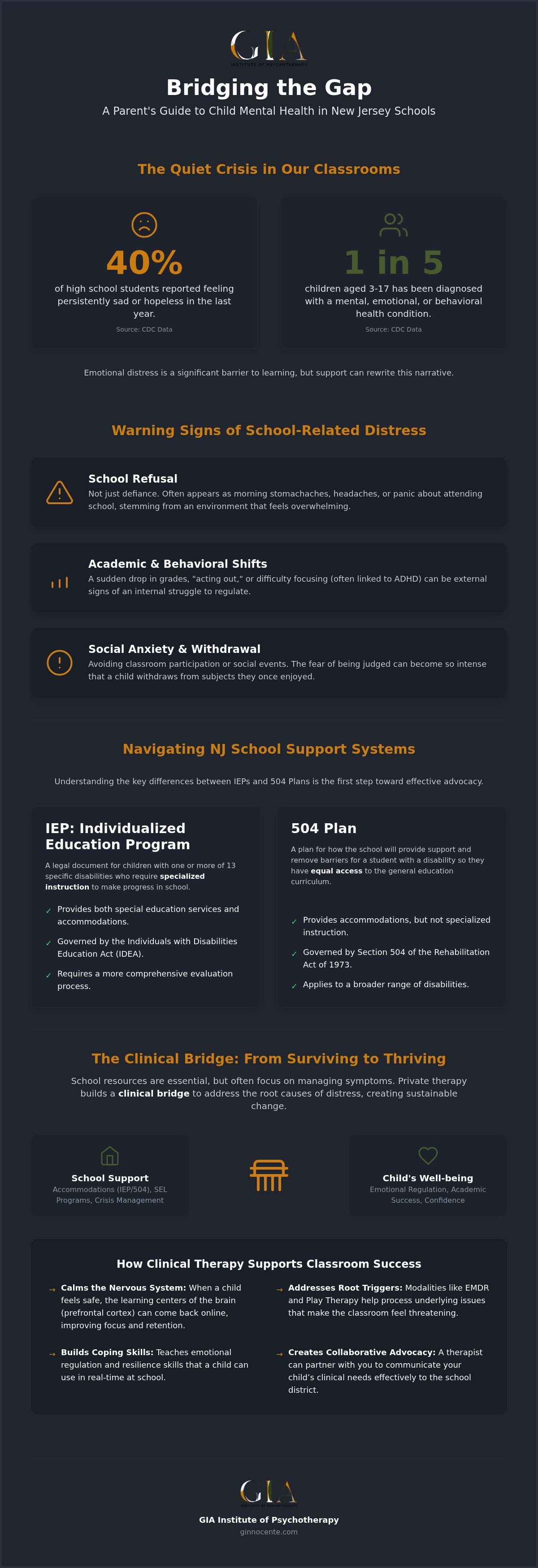
According to the CDC, 40% of high school students have reported feeling hopeless or depressed within the last year, a statistic that reflects the quiet crisis unfolding in our local classrooms. You see the weight of these numbers every morning when your child resists school, or every evening when they fall further behind because their emotional distress has become a barrier to learning. Finding the right child school mental health support NJ parents can trust is the first step toward rewriting this narrative. It's deeply painful to feel unheard by school administrators while you're simultaneously trying to decode the confusing differences between IEPs and 504 plans.
You don't have to carry this burden alone. You deserve a clear, restorative path forward that bridges the gap between clinical healing and academic success. This guide will show you how to navigate the New Jersey school system while providing your child with the clinical support they need to thrive academically and emotionally. We'll explore how to build a collaborative relationship between your child's therapist and the school district; this ensures your child has a comprehensive plan for both their education and their internal peace.
Key Takeaways
- Learn how the New Jersey Department of Education sets wellness standards and what those specific regulations mean for your child's daily classroom experience.
- Understand why a clinical bridge between private therapy and the classroom is essential for sustainable academic and emotional growth.
- Discover how to navigate the complexities of IEPs and 504 plans to secure the most effective child school mental health support NJ districts can provide.
- Identify the subtle warning signs of school-related anxiety, from morning physical symptoms to sudden shifts in academic performance, before they lead to burnout.
- Explore how professional school advocacy services can transform your relationship with school administrators into a collaborative partnership focused on your child’s healing.
Understanding School-Based Mental Health Support in New Jersey
In New Jersey, the vision for student success has expanded far beyond the traditional report card. Comprehensive child school mental health support NJ families rely on is no longer viewed as a luxury; it's a fundamental right established by state wellness standards. The New Jersey Department of Education has increasingly prioritized the emotional landscape of the classroom, recognizing that a child cannot reach their academic potential if they're drowning in anxiety or emotional distress. This shift toward Social-Emotional Learning (SEL) is particularly evident in South Jersey districts, where schools are moving toward a model that values emotional regulation as much as mathematical proficiency. It's a restorative approach that acknowledges the whole child rather than just the student.
The Current State of Student Wellness in NJ
The data paints a clear picture of the challenges our children face. According to the CDC, at least 1 in 5 children aged 3 through 17 have been diagnosed with a mental health condition. Even more concerning, 40% of high school students reported feeling hopeless or depressed within the last year. In response, New Jersey has implemented the "Whole School, Whole Child, Whole Community" model. This framework aims to integrate health services with academic goals. While Understanding School Psychology helps parents see how school-based professionals work within the system, a gap often persists. School resources are frequently stretched thin, focusing on crisis management rather than the long-term clinical healing your child might need to truly thrive.
Common School-Related Mental Health Challenges
When emotional needs go unmet, they often manifest as behaviors that schools might misinterpret or overlook. You might notice your child struggling with specific patterns that disrupt their education:
- School Refusal: This isn't simple defiance. It's often a profound physiological response to an environment that feels unsafe or overwhelming, frequently appearing as morning stomachaches or headaches.
- ADHD and Conduct Issues: In the classroom, these can look like "acting out" or a sudden drop in grades, but they're often rooted in a struggle to regulate internal static.
- Social Anxiety: The pressure to perform socially can become so intense that a child begins to "fail out" of subjects they once enjoyed simply to avoid being noticed or judged.
Recognizing these signs is the first step toward advocacy. New Jersey's new legislative efforts, such as the SPARK program launched in 2026, aim to bridge these gaps, but the journey often requires a dedicated clinical partner to ensure your child's voice is heard by administrators. We don't just want your child to survive the school day; we want them to feel present, capable, and understood within it.
The Clinical Bridge: How Therapy Supports Classroom Success
Have you ever wondered why school-based accommodations sometimes fall short of the transformation you hoped to see? While school districts provide essential frameworks, they often lack the specialized clinical depth required for deep, internal healing. This is where the clinical bridge becomes vital. By integrating private therapy with academic life, we address the root causes of distress rather than just managing the symptoms in the hallway. When looking for child school mental health support NJ families often find that clinical intervention is the missing piece that turns a survival plan into a thriving plan.
The neuroscience of learning is clear: when a child’s nervous system is stuck in a state of high alert, the prefrontal cortex essentially goes offline. This is the part of the brain responsible for focus, memory, and retention. Healing this internal dysregulation allows the brain to return to a state of curiosity and growth. While the NJ Department of Education Mental Health Resources offer a helpful starting point for understanding state-wide wellness standards, clinical modalities like EMDR can help a child process the underlying triggers that make the classroom feel like a battlefield.
Healing Through Expression and Play
For younger children, the language of healing isn't found in spoken words, but in play. Play Therapy allows a child to externalize their school-related stress through expressive arts and creative storytelling. This process helps them communicate what they can’t yet verbalize to a teacher or a counselor. By building a "safe harbor" within their own mind, they learn to carry a sense of internal peace into the noisy, unpredictable environment of the school day. It gives them the agency to navigate their world with newfound confidence.
Skill-Building for Teens and Adolescents
Adolescents require a different set of tools to navigate the social and academic pressures of high school. Dialectical Behavior Therapy (DBT) provides practical skills for managing hallway stress and emotional surges in real-time. Similarly, Cognitive Behavioral Therapy (CBT) helps students dismantle the social perfectionism and test anxiety that often leads to burnout. Empowering a teen to understand their own mental health needs transforms them from a passive recipient of support into an active advocate for their own well-being. If you're ready to help your child build these essential skills, exploring individual therapy for children and teens can be the first step toward a more balanced academic journey.
Navigating NJ School Systems: IEPs, 504 Plans, and Advocacy
The maze of acronyms and legal requirements can feel like an additional weight when you're already worried about your child's well-being. These frameworks, however, are the primary vehicles for securing the child school mental health support NJ students need to thrive. Understanding the difference between an IEP and a 504 Plan is the first step in advocating for a "Least Restrictive Environment" that honors your child's emotional health. While some might suggest jumping straight to legal counsel, clinical advocacy often provides a more nuanced, collaborative bridge between a clinical diagnosis and a practical classroom strategy.
The IEP vs. 504 Plan: Which Does Your Child Need?
An Individualized Education Program (IEP) is designed for students who require specialized instruction to make meaningful academic progress. This is often necessary when emotional distress or neurodivergence significantly alters how a child processes information. In contrast, a 504 Plan focuses on providing accommodations, such as extra time on tests, preferred seating, or a quiet space to decompress. This ensures equal access to the learning environment without necessarily changing the curriculum itself. Classification is the formal process where the Child Study Team determines if a student’s disability adversely affects their educational performance and requires specialized services. Consulting the NJ Department of Education Mental Health Resources can help you understand the specific criteria for these programs within our state's unique system.
Effective Communication with South Jersey School Districts
When you feel your child is falling behind, the first step is to request a formal evaluation in writing. This letter should clearly state your concerns and request a meeting with the Child Study Team. Preparing for this first meeting can feel intimidating; however, remember that you are the expert on your child's history and internal world. Bringing private clinical documentation to the table is vital for creating a comprehensive picture of their needs. It allows the school to see the child behind the data points.
A clinical therapist can participate in the Child Study Team process by providing a professional perspective that translates complex emotional symptoms into actionable classroom supports. They help the school see the "why" behind the behavior, which is essential for restorative healing. If you find that school-based services feel inadequate, don't lose hope. You have the right to request a follow-up meeting to adjust the plan. This ensures the support remains a living document that evolves alongside your child’s healing journey. Collaborative advocacy is about building a team that sees your child's potential, not just their challenges.
Warning Signs Your Child Needs Professional School Support
Does your child’s personality seem to shift the moment the school bus rounds the corner? It’s often difficult for parents to distinguish between typical developmental "growing pains" and a deeper emotional struggle that requires specialized intervention. While every child has bad days, persistent patterns of distress are the heart’s way of signaling for help. Recognizing these subtle red flags early is the first step in securing the child school mental health support NJ families need to restore balance to their homes and classrooms.
You might notice a sudden drop in grades, even in subjects your child once loved. Or perhaps the physical toll of anxiety manifests before the first bell rings. Common signs include:
- Somatic Complaints: Frequent morning stomachaches, headaches, or nausea that miraculously disappear on weekends or during school breaks.
- Academic "Failing Out": A sharp decline in performance or a complete lack of interest in previously favorite classes and hobbies.
- Social Withdrawal: Pulling away from long-term friends, eating lunch alone, or a sudden reluctance to participate in extracurricular activities.
- Homework Meltdowns: Intense irritability, tears, or explosive outbursts specifically centered on schoolwork or the thought of the next school day.
The Spectrum of School Refusal
There's a significant difference between a child simply "not wanting to go" to school and the clinical reality of school avoidance. Clinical refusal is often rooted in a profound sense of unsafety within the learning environment. When a child avoids school, it provides immediate relief from their anxiety; unfortunately, this relief reinforces the cycle and makes the next day even harder to face. Moving from basic parenting strategies to professional intervention becomes necessary when the avoidance begins to interfere with your child's fundamental right to an education and emotional peace.
Behavioral Shifts and Emotional Regulation
When a child "acts out" in class, it’s rarely because they're being "difficult" or "lazy." More often, these behaviors are a cry for emotional support from a child who lacks the tools to regulate their internal static. Undiagnosed learning disabilities or social anxiety can make the classroom feel like a place of constant failure, leading to a defensive posture. By rewriting the narrative from "problem child" to "struggling student," we can begin the restorative work of healing. If you're seeing these signs, our school advocacy services can help you translate these behaviors into a plan for clinical and academic success.
How GIA Institute Supports Your Child’s Academic Journey
GIA Institute of Psychotherapy stands as a steady, calming guide for families throughout South Jersey. We understand that your child's emotional life doesn't stop at the school gates; it follows them into every classroom and hallway. Our restorative approach to child and teen therapy is designed to bridge the gap between internal emotional clarity and external academic achievement. Whether you live in Ocean City, Egg Harbor, Linwood, or the surrounding communities, we provide the localized expertise needed to navigate the specific nuances of our regional school districts. We believe in the possibility of transformation and the inherent strength of every student we serve.
True healing happens when every adult in a child's life is moving in the same direction. We don't just work with your child in isolation. Instead, we foster a collaborative environment that links families, therapists, and school teams into a unified front. This integrated strategy ensures that the child school mental health support NJ students receive is consistent, compassionate, and deeply rooted in clinical evidence. By creating this clinical bridge, we help you rewrite a narrative of struggle into one of resilience and long-term well-being.
Our School Advocacy Services
Securing the right accommodations requires more than just a diagnosis; it requires an expert who understands how clinical needs translate into educational law. Our team reviews existing IEP and 504 plans through a specialized clinical lens to identify gaps that might be hindering your child's progress. We don't just offer advice from the sidelines. We can attend school meetings as a supportive, expert voice for your child, ensuring their emotional needs are heard by administrators. By providing the precise clinical documentation schools require, we help families implement real change that honors the child's spirit while supporting their academic growth.
Starting the Journey Toward Healing
Your first consultation at GIA Institute is a space for you to feel seen and understood. We begin by listening to your family's story and identifying the specific hurdles your child faces both at home and in the classroom. From there, we create a customized plan that addresses the root causes of distress while building practical skills for daily life. This holistic approach ensures your child has the tools to regulate their emotions while you have the advocacy support to navigate the school system with confidence. If you're ready to build a stronger foundation for your child's future, you can Schedule a consultation for school mental health support today. We are here to be your safe harbor and your partner in this journey toward healing.
Empowering Your Child's Future in the Classroom
The journey toward emotional wellness and academic achievement is rarely a straight line, but it's one you don't have to walk alone. By bridging the gap between clinical healing and classroom advocacy, you can ensure your child feels seen, supported, and capable of growth. We've explored how identifying subtle red flags and navigating the complexities of IEPs and 504 plans can transform a child's educational experience. Finding the right child school mental health support NJ families can rely on is about more than just checking boxes; it's about rewriting your child's internal narrative from one of struggle to one of resilience.
At GIA Institute, we specialize in IEP and 504 advocacy alongside evidence-based modalities like Play Therapy and DBT. We're dedicated to serving South Jersey families with the empathetic, relatable care your child deserves. If you're ready to move from uncertainty to a clear plan of action, we invite you to take the next step toward restorative healing. Begin your child’s path to school success with a GIA consultation. There is so much hope for your child's future, and we're here to help you reach it.
Frequently Asked Questions
How do I start the process of getting mental health support in a NJ school?
You begin by submitting a formal, written request for an evaluation to your child’s school principal or the Director of Special Services. This letter initiates a specific legal timeline under New Jersey law. Whether you are in the Linwood or Egg Harbor Township school districts, the school must meet with you to determine if an evaluation is warranted. It’s a collaborative first step toward identifying the right child school mental health support NJ students need to succeed.
Can a private therapist attend my child’s IEP or 504 meeting in NJ?
Yes, you have the legal right to invite individuals with knowledge or special expertise regarding your child to these meetings. A private therapist provides a vital clinical perspective that school data might miss. At GIA Institute, we often attend these meetings for families in Ocean City and Galloway. We help translate clinical findings into actionable classroom accommodations. This ensures the school team understands the emotional why behind your child's academic or behavioral struggles.
What is the difference between a school counselor and a private therapist?
A school counselor primarily focuses on academic scheduling, social-emotional learning, and short-term crisis management within the school building. They are essential for immediate support during the school day. In contrast, a private therapist provides deep, clinical healing for underlying mental health conditions. While school staff manages the educational environment, a private clinician at GIA Institute uses evidence-based modalities like DBT or Play Therapy to address the root causes of emotional distress for long-term wellness.
What should I do if the school denies my request for an evaluation?
If a school district in South Jersey denies your request, don't lose hope. You can request a written explanation for the denial and ask for an Independent Educational Evaluation (IEE) at the district's expense. You also have the right to file for mediation or a due process hearing. Before taking legal steps, presenting new clinical documentation from a private therapist can often reopen the conversation. This collaborative approach frequently resolves disagreements without the need for high-friction legal action.
How long does it take to see improvements in my child’s school behavior?
Every child’s journey is unique, but many families begin to notice a shift once a clinical bridge is established between therapy and the classroom. While immediate relief can occur after implementing a 504 plan, sustainable behavioral change often takes several months of consistent support. We focus on restorative healing that builds internal regulation skills. As your child feels more understood and supported in districts like Upper Township, their capacity for academic focus and emotional stability naturally grows over time.
Does GIA Institute provide support for school refusal in South Jersey?
Yes, we specialize in helping families navigate the complexities of school refusal throughout Ocean City, Linwood, and Ventnor. School refusal is often a symptom of profound anxiety rather than simple defiance. We use evidence-based modalities, including Play Therapy for younger children and DBT for teens, to address the underlying triggers. Our school advocacy services also help you work with administrators to create a re-entry plan that feels safe and manageable for your child.
Are there specific NJ laws that protect my child’s mental health at school?
New Jersey students are protected by the NJ Administrative Code for Special Education and federal laws like Section 504 of the Rehabilitation Act. These regulations ensure that child school mental health support NJ is a right for those who need it. Additionally, recent 2026 legislation like the SPARK program and the NJ4S initiative have expanded state-wide mental health resources. These laws mandate that schools provide a Least Restrictive Environment where your child’s emotional and academic needs are both respected.


