

What if finding a depression counselor isn’t about choosing the “best” approach, but about finding someone you can speak with comfortably? If you’re searching for a depression counselor Linwood NJ, you may be wondering whether counseling could help, how to compare local options, or what you’ll be expected to say. You don’t need to have everything figured out before exploring support.
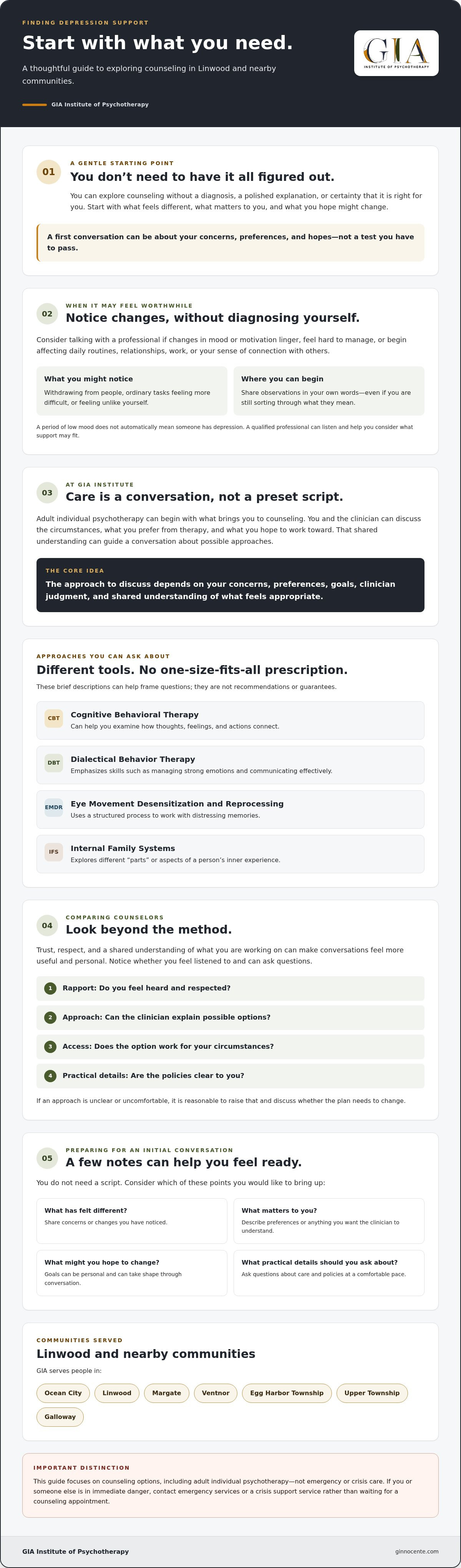
A helpful first conversation can focus on what you’re experiencing, what matters to you, and what you hope might change. At GIA Institute of Psychotherapy, adult individual psychotherapy is collaborative, with approaches such as CBT, DBT, EMDR, and Internal Family Systems available to discuss with a clinician. No single approach is right for everyone, and you deserve room to ask questions without feeling pressured.
This article explains what to look for in a counselor serving Linwood and nearby communities, what depression support may involve, and how to prepare questions about treatment and practical details. GIA serves people in Ocean City, Linwood, Margate, Ventnor, Egg Harbor Township, Upper Township, and Galloway. You can explore your options at a pace that leaves space for your needs.
Key Takeaways
- Start by noticing what you want support with; you don’t need a diagnosis or a polished explanation to explore counseling.
- Use an initial conversation to share your concerns, preferences, and hopes, and learn how a counselor approaches care.
- When comparing a depression counselor Linwood NJ, consider rapport, therapeutic approach, access, and practical policies.
- Ask about CBT, DBT, EMDR, and Internal Family Systems as possible approaches, while keeping in mind that fit depends on your needs.
- Prepare a few questions before contacting GIA Institute of Psychotherapy so you can discuss personal needs and practical details at a comfortable pace.
Considering a Depression Counselor in Linwood, NJ? Start With What You Need
Reaching out can feel like a big step, especially if you’re not sure how to describe what’s going on. You don’t need a diagnosis, a clear explanation, or certainty that counseling is right for you before asking questions. If you’re searching for a depression counselor Linwood NJ, you can begin with what feels different and what you’d like support with.
Depression counseling offers space to talk through emotional concerns, consider the circumstances and patterns affecting you, and explore supportive strategies with a counselor. It isn’t a test you have to pass or a label you have to arrive with. The pace and focus can take shape through conversation, based on your experiences and preferences.
When might it feel worthwhile to talk with a counselor?
Everyone has difficult days, and a period of low mood doesn’t automatically mean someone has depression. You might consider talking with a professional if changes in mood or motivation linger, feel hard to manage, or begin affecting daily routines, relationships, work, or your sense of connection with others. You don’t have to decide on a diagnosis yourself. A qualified professional can listen to your concerns and help you consider what kind of support may fit.
You can reach out before you’re certain which words describe your experience. Perhaps you’ve been withdrawing from people, finding ordinary tasks more difficult, or feeling unlike yourself. Those observations are a reasonable place to begin, even if you’re still sorting through what they mean.
What can a depression counselor help you explore?
Counseling can offer time and space to make sense of personal stressors, emotions, recurring patterns, and hopes for change. The conversation may start with what prompted you to seek support, then develop as you and the counselor learn what feels useful to explore. Goals and next steps are individual, not a preset script.
Depression counseling is a collaborative process for exploring emotional concerns and considering supportive strategies that reflect a person’s needs and goals. It’s one form of Psychotherapy, a broad term for approaches that use conversation and other methods to support emotional well-being. This guide focuses on counseling options, including adult individual psychotherapy, not emergency or crisis care. If you or someone else is in immediate danger, contact emergency services or a crisis support service rather than waiting for a counseling appointment.
What Depression Counseling May Involve at GIA Institute
At GIA Institute of Psychotherapy, adult individual psychotherapy can begin with understanding what brings you to counseling. You and the clinician can discuss your concerns, the circumstances surrounding them, what you prefer from therapy, and what you hope to work toward. That shared understanding can guide a conversation about possible approaches, rather than assuming one method is right before you’ve had a chance to talk.
GIA offers several clinical approaches, including CBT, DBT, EMDR, and Internal Family Systems (IFS). These are different therapeutic tools, not a one-size-fits-all prescription: the approach to discuss depends on your concerns, preferences, and goals, along with the clinician’s judgment and your shared understanding of what feels appropriate. Reading about Depression from the National Institute of Mental Health may help you prepare questions, but an overview can’t determine which approach is right for you.
How might CBT, DBT, EMDR, and IFS differ?
Each approach offers a different way to structure therapeutic work. CBT can help you examine how thoughts, feelings, and actions connect. DBT emphasizes skills such as managing strong emotions and communicating effectively. EMDR uses a structured process to work with distressing memories, while IFS explores different “parts” or aspects of a person’s inner experience. These brief descriptions can help you frame questions, but they aren’t recommendations or guarantees.
Why does the counseling relationship matter?
The method is only part of the experience. Trust, respect, and a shared understanding of what you’re working on can make conversations feel more useful and personal. Notice whether you feel listened to and whether you can ask questions or explain what doesn’t feel right. If an approach is unclear or uncomfortable, it’s reasonable to raise that with the counselor and discuss whether the plan needs to change.
If you’re comparing options for a depression counselor Linwood NJ, ask how a clinician decides which approaches to discuss, how your preferences shape the plan, and how you can revisit it over time. You don’t need to choose a method based on its name alone. You can learn more about adult individual psychotherapy at GIA and use an initial inquiry to ask what approach and practical arrangements may fit your needs.
How to Compare Depression Counselors Near Linwood, NJ
Provider profiles can help you build a shortlist, but the most important details are personal and practical. Compare counselors serving Linwood, and consider GIA’s other local communities, including Ocean City, Margate, Ventnor, Egg Harbor Township, Upper Township, and Galloway, if location affects your choice. The American Psychological Association offers guidance on finding a qualified professional. Use it as a starting point, then confirm information directly with each practice.
This comparison can help you organize questions. You don’t need a perfect score; look for a provider whose approach and practical arrangements are clear enough for you to consider.
| Factor | What to ask or confirm |
|---|---|
| Therapeutic rapport | Does communication feel respectful, understandable, and attentive to your concerns? |
| Approach | How does the clinician work with depression-related concerns, and how will your preferences shape goals? |
| Access | Where are sessions held? Are they in person, remote, or offered in both formats? Check travel and accessibility needs. |
| Practical policies | What are the current fees, insurance details, availability, cancellation terms, and steps before a first appointment? |
What questions can help you assess clinical fit?
Ask how the clinician would begin understanding your concerns and how you’d work together to set goals. You might also ask how you’ll discuss progress and revisit the plan if your needs change. Pay attention to whether you feel heard and can follow the explanation. A respectful conversation should leave room for your questions, not make you feel rushed into a decision.
Which practical details should you confirm first?
Before choosing, verify the clinician’s credentials and experience directly, along with current appointment availability, fees, insurance information, and cancellation policies. Confirm whether sessions are in person or remote, and ask about location, travel, accessibility, and any forms or other steps required before the first appointment. These details can change, so don’t assume a directory listing reflects a practice’s current arrangements.
For a depression counselor Linwood NJ, comparing providers this way helps you weigh fit alongside logistics. Keep notes from each conversation so you can compare what matters most, such as a clear explanation of the approach or a session format that works with your routine.
How to Prepare to Contact a Depression Counselor in Linwood
Make contact feel more manageable by following a simple path: note what’s concerning you, identify what you’d prefer from counseling, write down a few questions, then reach out when you feel ready. You don’t need a diagnosis or a polished explanation. A few honest words about what prompted your search for a depression counselor Linwood NJ can be enough to begin an inquiry.
What should you have ready for an initial inquiry?
Keep it brief and practical. You might note changes you’ve noticed, what kind of support feels important, and anything you hope to understand or work toward. Share only what feels comfortable at this stage. You can ask how personal information is handled before discussing sensitive details.
Keeping your questions in one place can make them easier to remember during a conversation:
- What session formats are currently available, and where are sessions held?
- Is there current availability, and what steps are involved before getting started?
- What are the current fees and insurance details?
- Are there cancellation policies or other practical arrangements I should know about?
Confirm these details directly with the practice, since availability, policies, and format can vary. Mention any access or travel considerations that could affect your choice.
What can you expect from an initial conversation?
An initial conversation can be a chance to share what brings you to counseling, describe your preferences, and ask about possible next steps. The process may differ from one practice to another, so it’s reasonable to ask what to expect before sharing more. You don’t have to tell your whole story at once. Begin with the part that feels easiest to put into words.
Notice how the exchange feels. Are your questions welcomed? Do the answers make sense to you? You can take time to consider whether the interaction feels respectful and comfortable instead of deciding everything on the spot.
If you’d like to learn more about the practice before making an inquiry, explore GIA Institute of Psychotherapy. Use your notes to ask about adult individual psychotherapy, discuss your preferences, and confirm practical details without needing every answer in advance.
Take a Thoughtful Next Step With GIA in the Linwood Area
Choosing where to begin doesn’t require certainty about a diagnosis or a particular therapy method. Consider four things: whether the conversation feels respectful, whether the approach makes sense to you, whether the practical arrangements work, and whether you feel able to ask questions. If you’re looking for a depression counselor Linwood NJ, these considerations can help you explore adult individual psychotherapy at GIA Institute of Psychotherapy without treating an inquiry as a commitment.
Is GIA the right place to begin asking questions?
GIA offers adult individual psychotherapy for people seeking support with depression-related concerns. Its clinical approaches include CBT, DBT, EMDR, and Internal Family Systems. These are options to discuss, not guaranteed matches. You can describe what has been difficult and ask whether a particular approach, or another way of working, might suit your needs. A conversation can help clarify possibilities without requiring you to choose a method in advance.
Before deciding, confirm current appointment availability, session format, fees, and insurance details directly with GIA. These practical points may shape whether care is accessible for you, and they can change. It’s reasonable to ask about them early, alongside questions about clinical fit.
What if you are not sure what kind of help you need?
Uncertainty is a valid place to start. You might say that your mood, energy, relationships, or daily routines have felt different, or that you’re having trouble putting the experience into words. You can share at your own pace and ask what next steps may be appropriate. The first conversation is an opportunity to learn and ask questions, not a demand to have everything figured out.
GIA does not provide psychiatric medication management, residential treatment, or round-the-clock crisis care. If you or someone else is in immediate danger or has an urgent safety concern, contact local emergency services rather than relying on routine counseling.
A next step can be small: gather the questions you want answered, then decide whether you’re ready to reach out. To learn more or make an inquiry, Contact GIA Institute of Psychotherapy. Ask about adult individual psychotherapy, discuss which approaches may be worth exploring, and confirm practical details before deciding what feels right for you.
Take Your Next Step Toward Support That Fits
Choosing a depression counselor Linwood NJ can begin with a few thoughtful questions: Do you feel heard? Does the approach make sense to you? Can you confirm the practical details before deciding? You don’t need to be certain about a diagnosis or have a complete plan before reaching out.
GIA Institute of Psychotherapy offers adult individual psychotherapy and counseling for children, teens, and adults, as well as couples and families, in its South Jersey service area, including Linwood. Its clinical approaches include CBT, DBT, EMDR, and Internal Family Systems. These are options to discuss collaboratively, not guaranteed matches. Ask GIA directly about current availability, session format, fees, and insurance information so you can consider whether the next step works for you.
If you’re ready to ask questions or explore adult individual psychotherapy, contact GIA Institute of Psychotherapy to discuss a next step. You can begin with what feels difficult and take the conversation one step at a time. To explore support in Linwood, Ocean City, Margate, Ventnor, Egg Harbor Township, Upper Township, or Galloway, contact GIA and ask about the options that may fit your needs.
Frequently Asked Questions
How do I find a depression counselor in Linwood, NJ?
To find a depression counselor Linwood NJ, compare providers by therapeutic rapport, approach, practical access, and policies. Check each clinician’s credentials and experience directly, then ask how they collaborate on goals and discuss changes over time. GIA Institute of Psychotherapy serves Linwood and other South Jersey communities, including Ocean City, Margate, Ventnor, Egg Harbor Township, Upper Township, and Galloway. Confirm current format, availability, fees, and insurance details with any practice you contact.
Can counseling help with depression?
Counseling can provide a supportive setting to explore depression-related concerns, personal stressors, emotional patterns, and goals. The focus and approach depend on the individual, and counseling can’t guarantee a particular outcome. You can ask a qualified clinician how they work with concerns like low mood, reduced motivation, or difficulty managing daily life. If you’re also considering medication or other care, discuss those questions with an appropriate health professional.
What happens in a first appointment with a depression counselor?
An initial appointment may be a chance to discuss what prompted you to seek support, relevant context, your preferences, and what you hope to explore. You can ask questions about the counselor’s approach and practical details, too. The structure and next steps vary by practice, so confirm what to expect when you arrange an appointment. You don’t need a polished explanation; sharing what feels comfortable is a reasonable place to begin.
What is the difference between CBT, DBT, EMDR, and IFS?
They offer different ways to approach therapeutic work. CBT explores links among thoughts, feelings, and actions. DBT focuses on skills for managing emotions and relationships. EMDR uses a structured process to address distressing memories, while Internal Family Systems (IFS) explores different parts of a person’s inner experience. GIA offers these approaches, but none is a guaranteed or universal fit. Ask a clinician which options may align with your concerns and preferences.
Does GIA Institute of Psychotherapy offer in-person counseling in Linwood?
GIA’s current session format isn’t specified here, so contact the practice directly to ask whether in-person counseling is available in Linwood, whether remote sessions are offered, or whether both formats are possible. You can also confirm the location, current clinician availability, and any steps needed before an appointment. If travel or accessibility affects your choice, mention that when you inquire so you can understand the arrangements before deciding.
How much does depression counseling cost, and does insurance cover it?
GIA’s current fees and insurance participation aren’t specified here, so ask the practice directly for up-to-date information before arranging care. Coverage and out-of-pocket costs can depend on your insurance plan and the provider’s billing arrangements. Contact your insurer as well to ask about behavioral health benefits, network status, copays, and any referral or authorization requirements. Confirm cancellation policies and other potential charges with the practice before getting started.
Can I contact a counselor if I am unsure whether I have depression?
Yes. You don’t need to know whether you have depression or settle on a diagnosis before asking about counseling. Describe what has felt difficult, such as changes in mood, motivation, relationships, or daily routines, and ask what kind of support may be appropriate. A clinician can discuss your concerns and possible next steps with you. If you’re facing immediate danger or an urgent safety concern, contact local emergency services rather than routine counseling.


