
What if the recurring argument you have every Tuesday night isn't actually about the laundry or the schedule, but a silent cry for the connection you both deeply crave? It's exhausting to feel stuck in a loop, watching the same painful patterns play out while the emotional distance between you grows. You might feel a heavy sense of anxiety about the future, especially when searching for a specialized therapist for relationship problems NJ feels like wading through a sea of confusing acronyms like EFT, IFS, or DBT.
This guide is designed to offer you a safe harbor and a clear path forward. We believe that healing is not just possible; it's a journey you don't have to take alone. You'll discover how specialized therapeutic approaches like EFT and IFS can transform your relationship dynamics and help you find a path back to connection in South Jersey. We will provide a clear framework for understanding your struggles, explain which modality fits your specific needs, and help you find a local specialist near the Jersey Shore who understands the delicate rhythm of your life. Together, we can move from a place of confusion toward a future rooted in clarity, presence, and lasting restorative health.
Key Takeaways
- Identify the "negative cycle" that keeps your relationship stuck and see how life's transitions might be fueling your repetitive conflicts.
- Explore how finding a specialized therapist for relationship problems NJ offers you advanced tools like Emotionally Focused Therapy to rebuild your emotional bond.
- Learn to evaluate a provider's clinical voice and specialized training so you're receiving more than just general advice.
- Gain confidence for your first session with a clear framework for what to expect and tips for talking to a partner who's hesitant about therapy.
- Discover how a neuroscience-informed approach provides a compassionate, restorative path toward lasting relational health.
Understanding the 'Cycle': Why Relationship Problems Feel Stuck
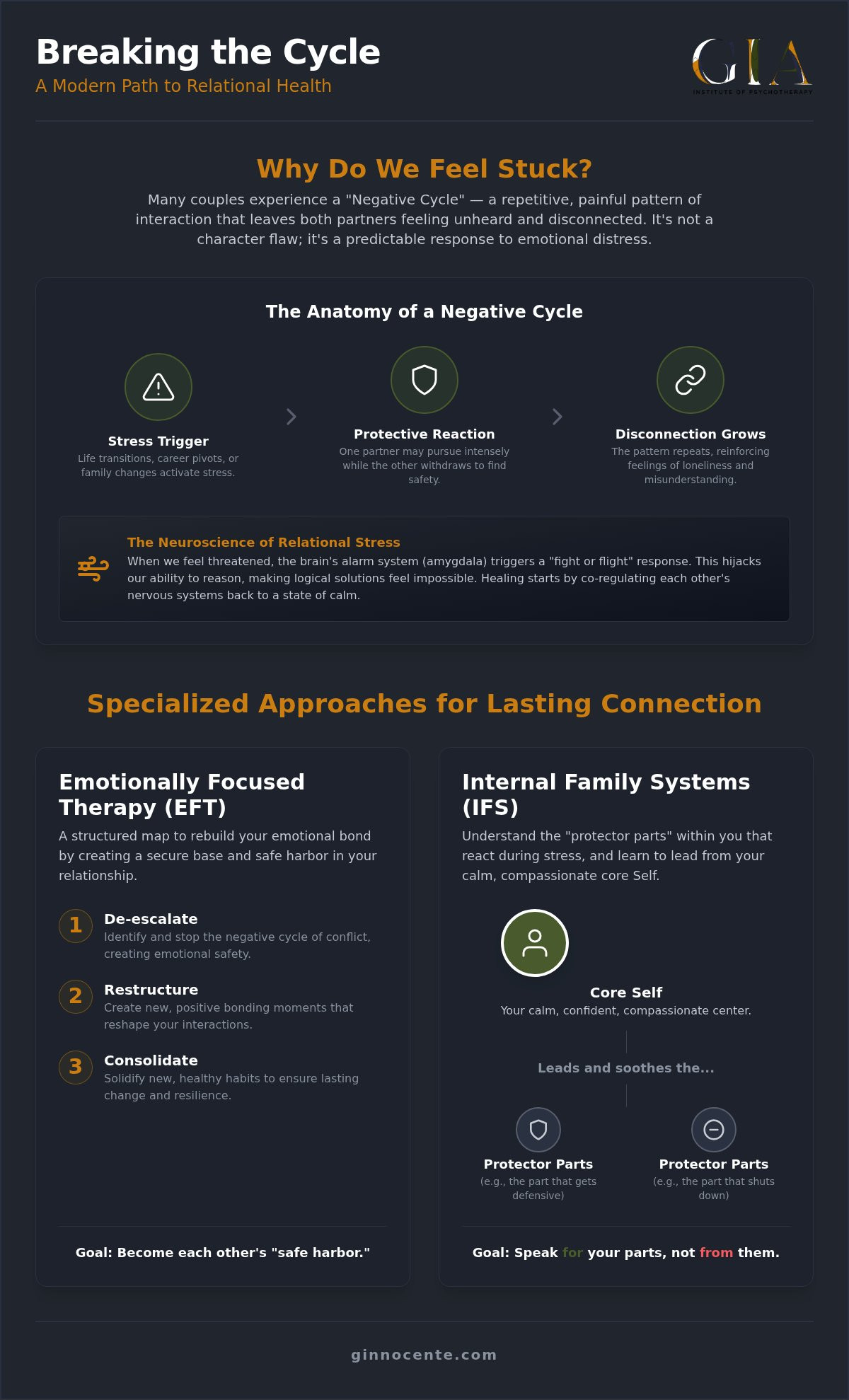
Have you ever felt like you're speaking a different language than your partner, even though the words remain the same? This experience often signals the presence of a "Negative Cycle," a repetitive emotional dance where communication breaks down and both individuals feel increasingly unheard. When you're searching for a therapist for relationship problems NJ, it's helpful to understand that this "stuckness" isn't a failure of character or a lack of effort. It's a natural, albeit painful, response to the complexities of human connection. Transitions such as moving to a new community, navigating career pivots, or welcoming a first child often act as catalysts for these cycles. These moments of stress activate our unique attachment styles, causing some of us to reach out with intensity while others quietly withdraw to find safety. We don't choose these reactions; they're the ways our hearts have learned to protect themselves over time.
The Neuroscience of Relational Stress
Why do logical solutions seem to vanish the moment an argument begins? The answer lies within your brain's architecture. When we feel threatened or disconnected, the amygdala takes charge, triggering a "fight or flight" response that effectively hijacks our ability to reason. In these moments, your partner isn't your enemy, but your nervous system is sounding an alarm. A specialized approach to Couples therapy recognizes that "active listening" tips often fail because they don't address this biological reality. Without established emotional safety, even the most sensible compromises feel impossible to reach. True healing begins with co-regulation, the process of helping one another's nervous systems return to a state of calm, presence, and stability.
Common Relationship Hurdles in South Jersey
Living near the Jersey Shore brings its own set of unique relational rhythms and stressors. The seasonal shift from the quiet, reflective winters to the high-energy summers in towns like Ocean City or Margate can create friction in how couples manage their time and energy. Beyond the local landscape, our family-of-origin patterns often act as invisible scripts, influencing how we handle conflict or express affection. Sometimes, the most painful challenges aren't the loud explosions, but the silent ones. Emotional withdrawal and a growing sense of loneliness can leave you feeling like roommates rather than partners. Finding a dedicated therapist for relationship problems NJ allows you to name these patterns and begin the collaborative work of rewriting your shared story. It's about moving from isolation toward a future built on mutual understanding and restorative health.
Specialized Therapeutic Approaches for Lasting Connection
Healing a relationship requires more than just "communication tips" or active listening exercises. It requires a map that understands the deep, neurological roots of human connection. When searching for a therapist for relationship problems NJ, it's vital to find a provider who utilizes modalities grounded in the proven effectiveness of psychotherapy. These specialized approaches don't just treat symptoms; they address the underlying emotional structures that keep you feeling distant or reactive. By focusing on how we bond and how our internal worlds react to stress, we can move beyond repetitive arguments and toward a sense of genuine, restorative presence.
Emotionally Focused Therapy (EFT): Re-writing the Bond
Emotionally Focused Therapy is a structured map for navigating the landscape of emotional disconnection and guiding partners back to a secure, lasting bond. This approach prioritizes emotional safety above all else. It moves through three stages: de-escalating the negative cycles of conflict, restructuring the way you interact to build new bonding moments, and consolidating these healthy habits so they last. By moving through these stages, you learn to become each other's "safe harbor," a place of refuge where you both feel completely seen and valued.
Internal Family Systems (IFS) for Couples
Internal Family Systems (IFS) helps you understand the "protector" parts that emerge during stress, like the part that shuts down or the one that gets defensive during a disagreement. You learn to speak for these vulnerable feelings rather than from a place of reactivity. This creates space for "Self-leadership," where your core, compassionate self guides the relationship rather than your wounded parts. If you're curious about how your history influences your current dynamic, exploring relational health can provide much-needed clarity for both of you.
While EFT and IFS provide the primary framework, other tools can be integrated to support your specific journey. For instance, EMDR is a powerful resource when past trauma or "old wounds" are being triggered by current relationship stress, allowing you to process those memories so they no longer hijack your present. Similarly, DBT skills offer practical, steady strategies for emotional regulation, helping high-conflict couples find calm and clarity in the midst of an emotional storm. A skilled therapist for relationship problems NJ will blend these neuroscience-based strategies to create a customized path toward restorative healing. This collaborative process ensures that you aren't just "fixing" a problem, but rewriting your internal narrative for a healthier future together.
How to Evaluate a Relationship Therapist in New Jersey
Finding the right therapist for relationship problems NJ is a deeply personal decision that goes beyond matching schedules or insurance providers. It's about finding a clinical partner who truly "gets" the nuances of your shared life. You aren't just looking for a referee to settle arguments; you're looking for a wise guide who can hold space for both partners with equal compassion. This evaluation process is the first step toward reclaiming your connection, and it deserves a methodical, patient approach.
Clinical Expertise vs. Personal Connection
Research consistently shows that the "therapeutic alliance"—the bond of trust between you and your provider—is the single most significant predictor of success. When you're learning how to evaluate a relationship therapist, prioritize someone who balances professional authority with genuine human warmth. A skilled therapist should feel like a safe harbor, not a cold observer. During an initial consultation, pay attention to how they handle conflict. Do they remain neutral and steady? Red flags often include therapists who take sides, offer "quick fix" advice for complex wounds, or focus solely on one person's flaws. A restorative approach views the relationship itself as the client, focusing on the dance between you rather than the steps of just one partner.
Local Considerations for NJ Residents
Choosing a therapist for relationship problems NJ who is rooted in your local community offers distinct advantages. Whether you live in Ocean City, Linwood, or Egg Harbor Township, your relationship is shaped by the unique rhythms of South Jersey. A local practice understands the specific stressors of our area, from the seasonal transitions of the Jersey Shore to the complexities of the local school systems and family networks. This shared context allows your therapist to offer more relevant, grounded support. For busy NJ professionals, the choice between telehealth and in-person sessions often comes down to presence versus flexibility. In-person work can provide a profound sense of containment and focus, while telehealth ensures that consistent healing remains accessible even during your most demanding weeks. Ask yourself if the therapist's philosophy resonates with your lifestyle and if their presence feels like a calming, steady force in your life.
Questions to ask during your first conversation might include:
- How do you handle high-conflict moments during a session?
- What is your specific training in couples-focused modalities like EFT or IFS?
- How do you ensure that both of us feel heard and supported throughout the process?
These inquiries help ensure a non-judgmental fit that honors the strength of your spirit and the possibility of your transformation.
Taking the first step toward finding a therapist for relationship problems NJ often feels like a mixture of relief and vulnerability. It's a brave choice to acknowledge that the current patterns aren't working and that you both deserve a more restorative way of being. Many couples arrive with a sense of urgency, hoping to "fix" years of pain in a single hour. However, we view the initial phase of therapy as a time for safety, assessment, and the building of a steady foundation. It's about slowing down the chaos so you can finally hear one another again.
If you're speaking to a reluctant partner about starting this journey, try focusing on your shared desire for peace, connection, and stability. Frame the invitation as a collaborative effort to improve the "we" rather than a list of individual faults. Research from 2026 indicates that 71% of couples who attend therapy see a measurable improvement in their relationship. This suggests that while the work is significant, the possibility of transformation is very real when both partners are present and willing to engage.
Your First Session: A Roadmap
Your first meeting is designed to be a safe harbor where you can begin to share your history without fear of judgment. We'll work together to identify the specific "cycle" that keeps you stuck, mapping out the moments where communication breaks down and emotional distance grows. This session is also about establishing clear boundaries and confidentiality, ensuring the room remains a neutral ground for both voices. By the end of this hour, we'll have a collaborative plan that moves you from crisis management toward deep, intentional healing.
The Collaborative Nature of Healing
Real transformation requires an active presence that extends far beyond the 50-minute hour. It involves practicing new ways of responding to one another in the kitchen, the car, and the quiet spaces of your daily life. You can track your progress through subtle shifts in emotional resonance, such as a quicker recovery after a disagreement or a newfound sense of internal clarity. The "click factor" is that profound, quiet moment when you finally feel truly seen and understood by both your partner and your guide. If you're ready to move toward a future rooted in presence and mutual respect, you can reach out to begin couples counseling and start your journey toward restorative health. Finding the right therapist for relationship problems NJ is about more than just clinical skill; it's about finding a wise presence to help you rewrite your shared narrative.
Finding Your Way Back at GIA Institute
South Jersey is more than just a location; it's a community with a unique rhythm and a deep sense of connection. At GIA Institute of Psychotherapy, we understand that finding a therapist for relationship problems NJ is about more than just clinical credentials. It's about finding a partner who values your story and honors the courage it takes to seek change. Our practice is built on an authentic, relatable reputation that avoids the cold detachment of traditional medical settings. We believe in a collaborative journey where your goals and our expertise meet to create something beautiful and lasting.
The GIA approach is rooted in the belief that your relationship can be a source of profound healing rather than a source of stress. We blend the latest insights from neuroscience with a compassionate, restorative style of care. This means we don't just look at what's going wrong; we look at the biological and emotional reasons why things feel stuck. By understanding how your brain and heart interact, we help you and your partner discover the best parts of yourselves again. Our mission is to provide a steady, calming presence as you navigate the complexities of modern love and life.
A Restorative Space for Transformation
We specialize in helping couples move through significant life transitions, whether you're navigating new parenthood, career shifts, or the quiet distance that can grow over years. This is an invitation to move from a state of simply surviving your connection to truly thriving within it. We offer a safe harbor where you can explore your internal world and rewrite the narrative of your partnership. For those seeking personal growth alongside their relational work, you can Learn more about our Adult Individual Psychotherapy to see how we support individual health as well.
Take the First Step Toward Healing
If you're ready to begin this journey, we're here to guide you with a non-judgmental and supportive presence. We serve local residents in Ocean City, Margate, Linwood, and the surrounding South Jersey areas with both in-person and telehealth options. Choosing a therapist for relationship problems NJ is a significant decision, and we want you to feel confident and seen from your very first consultation. Your path back to connection starts with a single, courageous conversation. We invite you to Contact GIA Institute of Psychotherapy to begin your restorative journey today and discover the possibility of a healthier, more vibrant future together.
Embracing the Path to Relational Health
Your relationship deserves more than just a temporary fix; it deserves a restorative transformation that honors the strength of your bond. By understanding the neurological cycles that keep you stuck and utilizing specialized tools like EFT, you can move from a place of conflict to one of secure connection. Finding the right therapist for relationship problems NJ means choosing a guide who understands the unique rhythms of the South Jersey community, from Ocean City to Linwood. At GIA Institute, we provide a non-judgmental, safe harbor that is reliable, patient, and dedicated to your long-term well-being.
We believe every couple has the capacity to rewrite their internal narrative and discover a future rooted in mutual respect. Healing is a collaborative process that begins the moment you decide your connection is worth the effort. It's time to move toward a more vibrant and stable partnership together. Begin your journey toward a healthier relationship at GIA Institute and discover how our neuroscience-based approach can help you thrive. You don't have to navigate this alone; a path back to connection is waiting for you.
Frequently Asked Questions
How do I know if we need couples therapy or individual therapy first?
Determining whether to start with individual or couples work depends on where the most acute distress lives. If your primary goal is to repair the bond, starting together is often the most effective path. However, individual therapy is a vital resource if personal wounds are consistently hijacking your interactions. We offer both Adult Individual Psychotherapy and Couples Counseling in our Linwood office to ensure you receive the specific support your unique situation requires.
Is it possible to fix a relationship if only one person is willing to go to therapy?
It's absolutely possible to improve a relationship even if only one partner is ready to begin. When you shift your own internal narrative and reactions through individual work, you inevitably change the "dance" between you and your partner. This change can often invite the other person into a new way of relating. Working with a therapist for relationship problems NJ allows you to find agency and clarity regardless of your partner's current readiness.
What is the difference between EFT and traditional marriage counseling?
Traditional marriage counseling often focuses on behavioral changes or communication tips like active listening. In contrast, Emotionally Focused Therapy (EFT) targets the deep emotional bond and attachment security beneath those behaviors. Instead of just teaching you how to argue better, EFT helps you understand the underlying fears that trigger conflict. This approach creates a restorative safe harbor where both partners feel fundamentally secure and seen, leading to more lasting relational health.
How long does it typically take to see results in relationship therapy?
Every couple moves at a different pace, but many begin to feel a sense of de-escalation within eight to twelve sessions. The initial phase focuses on stabilizing the relationship and reducing high-conflict moments. Deep, restorative healing that rewrites your internal bond typically takes longer as we move into restructuring your interactions. We prioritize a methodical, patient rhythm that allows you to process changes naturally without feeling rushed or pressured.
Can therapy help us if we are already considering divorce or separation?
Therapy is a powerful space for couples who feel they've reached the end of their rope. Whether you're seeking a path back to connection or need clarity on whether to stay, we provide a non-judgmental environment to explore those difficult questions. Using neuroscience-based strategies, we help you understand the "cycle" that led to this point. This clarity ensures that any decision you make is rooted in presence and internal clarity rather than reactive pain.
Do you provide school advocacy if our relationship problems are affecting our children?
We understand that relational stress doesn't stay contained within the home; it often ripples into a child's academic and social life. GIA Institute provides dedicated School Advocacy Services for families in communities like Ocean City and Margate. We help bridge the gap between your child's emotional needs and their educational environment. This ensures that as you work on your relationship, your children receive the structural support they need to thrive in NJ schools.
What should I look for in a NJ therapist's credentials for relationship issues?
When evaluating a therapist for relationship problems NJ, look for licensed professionals such as an LPC or LCSW with advanced training in relational modalities. It's important to verify that they have specific experience in Emotionally Focused Therapy (EFT) or Internal Family Systems (IFS) rather than just general counseling. A qualified specialist will also have a deep understanding of South Jersey's local dynamics and a clinical philosophy that emphasizes restorative, person-centered growth.
How does the GIA Institute handle conflict between partners during a session?
At GIA Institute, we view conflict as a signal of unmet needs rather than a failure of the relationship. Our therapists act as a steady, calming presence during high-emotion moments to help you co-regulate your nervous systems. We use de-escalation techniques to slow down the conversation, ensuring that arguments don't spiral into "amygdala hijacks." This collaborative approach creates a safe space where you can speak for your feelings rather than from a place of reactivity.


