

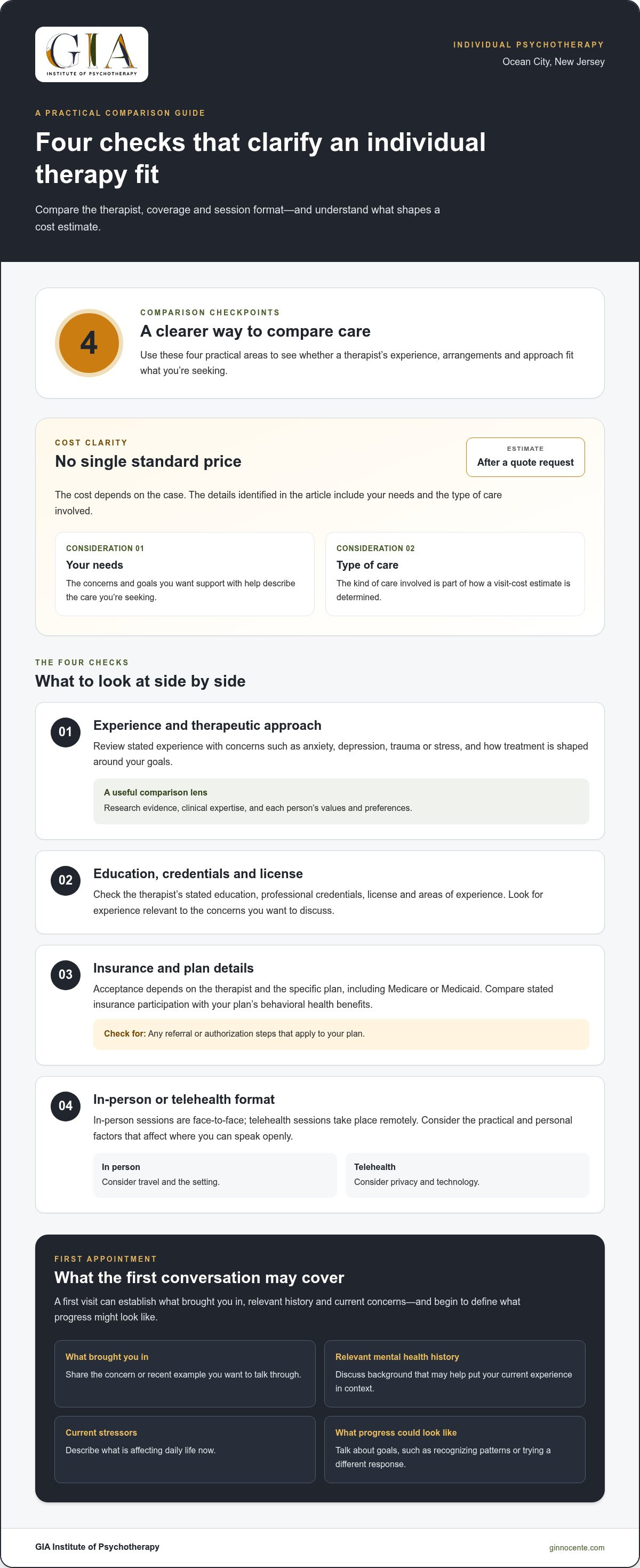
The cost of individual psychotherapy in Ocean City, NJ depends on the care you’re seeking and the details of your visits, rather than a single standard figure. Pricing depends on the case and is provided after a quote request; factors include your needs and the type of care involved. Cost can be an important first question, especially when you’re already weighing whether to seek support.
Emotional strain doesn’t always arrive as one clear problem. Anxiety or low mood may overlap with stress at home, changing relationships, or a difficult life transition. You deserve a clear sense of what individual therapy involves and what can shape its cost, without feeling pressured to have everything figured out before you begin.
This article explains what individual psychotherapy can address, how visits typically work, and which details influence a cost estimate. It also explores how to consider a therapist’s approach and what a thoughtful next step can look like, so you can make a decision with more clarity and less guesswork.
Key Takeaways
- Notice how anxiety or low mood affects daily routines and relationships to clarify what you’d like support to address.
- Explore how grief, stress, trauma, or repetitive thoughts may call for a personalized therapeutic approach.
- Consider how social and family dynamics shape emotional wellbeing, even when you’re seeking individual care.
- Understand which details of your needs and type of care can affect a visit-cost estimate.
- Compare therapy formats and approaches to identify a next step that feels relevant to your situation.
Anxiety and depression
Anxiety and depression can affect sleep, focus, relationships, and everyday responsibilities. Individual psychotherapy gives you space to examine these concerns, notice patterns, and practice strategies that fit daily life. For example, someone facing a work transition might explore how worry affects concentration and identify a manageable next step. Therapy can also support personal growth when there isn’t one single problem to solve.
How do I compare individual psychotherapists in Ocean City, NJ? Compare their stated experience with concerns such as anxiety, depression, trauma, or stress, and how they shape treatment around your goals. The Canadian Psychiatric Association describes a useful comparison point: how a therapist brings together research evidence, clinical expertise, and each person’s values and preferences.
What are the qualifications and licenses of Ocean City, NJ psychotherapists? Review each therapist’s stated education, professional credentials, license, and areas of experience. For example, note whether their profile describes work with adults experiencing depression or with people managing anxiety during life transitions.
Which Ocean City, NJ therapists accept insurance, Medicare, or Medicaid? Acceptance depends on the therapist and the specific plan, including whether it is Medicare or Medicaid. Compare the practice’s stated insurance participation with your plan’s behavioral health benefits, including any referral or authorization steps.
Are in-person and telehealth individual therapy options available near Ocean City, NJ? In-person sessions happen face-to-face, while telehealth sessions take place remotely. Consider privacy, travel, technology, and the kind of setting that helps you speak openly when choosing a format.
How can I find an individual psychotherapist in Ocean City, NJ accepting new clients? Review a practice’s intake information to understand how to get started, then share your main concern and preferred format. A concise description, such as “anxiety is disrupting my sleep,” helps clarify the kind of support you’re seeking.
What should I expect at a first individual psychotherapy appointment? Expect to discuss what brought you in, relevant mental health history, current stressors, and what progress might look like. You can bring an example, such as a recent moment when anxiety or anger felt difficult to manage, and ask how therapy could address it.
Depression may appear as persistent low mood, reduced interest, or difficulty managing routines; anxiety may involve ongoing worry or avoidance. A therapist can explore how these experiences connect with trauma, PTSD, ADHD, anger, or substance abuse concerns without assuming one explanation fits everyone. Individual therapy may focus on coping with stress, understanding triggers, building communication skills, or working toward personal growth. Naming one priority, such as getting through a difficult transition or responding differently during conflict, can help give early sessions direction. Progress can mean recognizing patterns and trying a new response, not simply feeling better after one conversation. If concerns affect a child or teen, age-appropriate individual therapy may provide a different setting for exploring emotions and daily challenges.
Grief, OCD, stress, and trauma
Grief can follow a death, a separation, or another lasting loss. It may surface during ordinary moments, such as setting a place at dinner or passing a familiar street. Counseling can help you describe what has changed, recognize difficult moments, and consider what support might feel useful. There’s no single timeline that fits every person’s experience.
Stress can build around work demands, caregiving, health concerns, or major transitions. For example, a move may bring excitement alongside uncertainty about relationships and routines. Individual sessions can help you identify what feels urgent, separate manageable tasks from emotional concerns, and practice responses to specific stressors. You might bring a recent situation to discuss, such as a conflict that kept replaying after work.
Obsessive-compulsive disorder, or OCD, involves obsessions and compulsions that can disrupt daily life. Someone might describe recurring fears and repeated checking that consumes attention before leaving home. A therapist can explore how these experiences affect routines and relationships, then discuss goals suited to the person’s needs. No single example establishes a diagnosis; assessment considers the wider pattern and its impact.
Trauma can affect how you experience reminders, trust, or a sense of safety. Post-traumatic stress disorder, or PTSD, is a specific mental health condition that requires professional assessment. You may choose to begin by naming a present-day challenge, such as avoiding a location associated with a painful event. Therapy can focus on understanding reactions and building practical ways to manage distress, at a pace that feels comfortable.
Grief, OCD, stress, and trauma can overlap without having the same cause. For instance, a difficult relationship change may intensify stress while bringing up earlier painful memories. Substance use may also become part of the picture when someone uses alcohol or another substance to cope. Sharing that context helps shape a fuller conversation about needs and goals, without reducing you to one label.
Before sessions, note one recent example, its effect on daily life, and what you hope could change. You might write, “I avoid calls after an upsetting conversation,” or “I check the lock repeatedly.” These details can give counseling a clear starting point. If relationship strain is part of the challenge, couples counseling for relationship concerns may offer a shared setting to discuss communication and emotional impact.
Adult social, emotional, and family problems
Adult concerns often show up in ordinary interactions before they feel like a mental health issue. A tense conversation with a partner, avoiding friends, or feeling emotionally drained after work can point to patterns worth exploring. For example, someone who agrees to every family request may later feel resentful and overwhelmed. Individual therapy can help you examine the emotions and beliefs behind that response, then practice clearer ways to express your needs.
Social difficulties can involve loneliness, conflict, or uncertainty about how to maintain relationships. An adult who stops answering friends after a disagreement might explore what made reconnecting feel difficult. In therapy, you can map the situation, identify the thoughts and emotions involved, and consider a response that better reflects your values. This reflection can support communication and personal growth without treating one disagreement as the whole story.
Family stress can also follow changes in caregiving, parenting, separation, or household responsibilities. In Ocean City and nearby communities, daily life can bring different personal and family pressures, and each household has its own relationships and needs. One adult might feel caught between supporting an aging parent and raising children. Discussing those competing responsibilities can clarify boundaries, emotional needs, and which conversations need attention first.
Emotional concerns may connect with sleep, work, medication questions, or changes in substance use. For instance, an adult might notice increased irritability after a demanding period at work and want to understand its effect at home. A therapist can explore your experiences and goals, while medication decisions belong in conversations with an appropriate medical professional. The focus remains on understanding how daily circumstances and emotional reactions interact.
Before a session, write down a recent interaction, the feeling it brought up, and what you wanted to say. A concrete note might read, “I felt dismissed when plans changed, but stayed silent.” That example gives therapy something specific to work with. It can also help distinguish a repeated relationship pattern from a one-time misunderstanding, making it easier to identify a useful goal.
Support doesn’t require arriving with a complete explanation. Adults can begin with a practical concern, such as arguments about household tasks or withdrawing during family gatherings. Individual therapy centers the adult’s perspective; family therapy can include relatives when shared communication is the focus. Naming who is affected, what happens, and what change would matter gives the conversation direction. Those details can help turn broad concerns into workable steps toward healthier relationships.
Individual, couples, and family mental health services
Choosing a therapy format starts with identifying who needs support and what feels difficult. Individual therapy focuses on one person’s concerns, such as anxiety affecting work or sadness during a life transition. Couples counseling centers on patterns between partners, such as recurring arguments about household responsibilities. Family therapy brings relatives together to discuss shared concerns, including communication or changes in caregiving.
These formats can address related concerns from different perspectives. You may want private space to understand emotional reactions before discussing them with a partner. A couple may instead want help describing a repeated conflict without turning the conversation into blame. A family might need to understand how one person’s new school or work routine affects everyone’s responsibilities. The central question is whether the main goal concerns one person, a relationship, or a wider family pattern.
For children and teens, individual sessions can give a young person room to talk about school pressure, friendships, or a change at home. A parent may be involved in conversations about a child’s needs, while family therapy can focus on interactions among relatives. School advocacy services address school-related concerns, such as communicating about a student’s needs. These are distinct forms of support, so the goal helps guide the appropriate starting point.
Clinical care should be personalized to the person’s concerns, preferences, and treatment goals. Before beginning, write down one example of what you hope to address, such as withdrawing during disagreements or feeling overwhelmed by caregiving. Then consider whether you want individual reflection, shared relationship work, or family discussion. A licensed therapist’s stated background and approach can help you assess whether their work matches those goals.
Some concerns overlap. Life transitions can create stress for one person while also changing a couple’s routines or a family’s roles. For example, a parent returning to work may feel stretched, while children adjust to a different schedule. Individual sessions can focus on the parent’s experience; couples or family sessions can address shared adjustments. The useful choice depends on which conversations need attention and who should participate.
To prepare for an initial discussion, describe the concern, who it affects, and what improvement would look like in daily life. “We want to argue less about schedules” points toward shared relationship work. “I want to understand why I shut down during conflict” identifies an individual goal. If both concerns matter, clarify which feels most urgent first. This distinction can make the next step in mental health care more focused and collaborative.
What individual psychotherapy services are available in Ocean City, NJ?
People in Ocean City, NJ, can consider individual psychotherapy for personal concerns, including anxiety, depression, stress, and life changes. The work centers on one person’s experiences and goals. For example, someone struggling to speak up at work might explore what makes those conversations difficult and practice a different response. The focus is shaped by the concern, not by a one-size-fits-all plan.
For adults, individual sessions can create room to examine emotional patterns, relationships, or decisions without requiring relatives to attend. If you feel caught between caregiving and work, you could identify which demands feel most pressing, then set a practical goal. A useful first step is to describe one situation, its impact, and what change would matter. That gives therapy a specific starting point.
Children and teens may also benefit from individual support suited to their age and concerns. A student struggling with friendship changes, school pressure, or family transitions might need a setting to express feelings in their own words. Parents can share relevant context, such as a recent change in routines, while the young person’s experiences remain central to the conversation. Goals should reflect the child’s needs and daily life.
Some challenges affect more than one person. Couples counseling can focus on communication between partners, while family therapy can address patterns involving relatives. For instance, a household might discuss how responsibilities shifted after a parent changed work schedules. These formats differ from individual therapy because participants work together on shared concerns. Choosing a format begins with identifying whose perspective and participation matter most.
School-related concerns may call for support focused on communication around a student’s needs. A parent preparing to discuss classroom difficulties could organize examples, questions, and goals before a school meeting. This differs from psychotherapy, which focuses on emotional wellbeing and personal concerns. Clarifying whether the primary need involves emotional support, family communication, or school advocacy helps make the next step more focused.
Visit cost depends on the case and is provided after a quote request; relevant factors include the type of care and the needs being addressed. Before requesting an estimate, write down whether you’re seeking individual, couples, family, or child and teen support. Also note the main concern, such as conflict at home or anxiety around school. These details make the care being discussed clearer.
To explore a next step, ask about individual therapy support and describe the concern you’d like to address. A concise example, such as “I want help managing stress during a family transition,” can make the conversation more grounded and useful.
GIA Institute of Psychotherapy: Adult Individual Psychotherapy
GIA Institute of Psychotherapy offers Adult Individual Psychotherapy for people seeking support with emotional concerns, anxiety, depression, or life transitions. Sessions can create space to explore what feels difficult and consider practical strategies for moving forward. The practice blends traditional therapy with neuroscience-informed approaches and expressive modalities, including Expressive Arts. If family or relationship concerns are central, Family Therapy or Couples Counseling may offer a shared setting. Individual Therapy for Children and Teens supports younger clients with age-appropriate care.
Consider reaching out when you’re ready to talk through what’s affecting your wellbeing and what kind of support may fit. Contact GIA Institute of Psychotherapy or visit ginnocente.com to take the next step.
Take a Thoughtful Next Step
Choosing to begin isn’t a commitment to have every answer. It can simply mean naming what you hope will feel different, then exploring support that fits. For people seeking individual psychotherapy in Ocean City, NJ, a first conversation can help turn a broad concern into a personal starting point.
GIA Institute of Psychotherapy offers Adult Individual Psychotherapy, Individual Therapy for Children and Teens, and Family Therapy. These options create different spaces for working through personal concerns, supporting a young person, or addressing family relationships. You can begin by describing what’s bringing you here and what kind of change matters to you.
If you’re ready to explore that next step, contact GIA Institute of Psychotherapy. You can move at a pace that feels right, with room to build greater understanding and find a way forward.
Frequently Asked Questions
Can I get an estimate of my visit cost?
Yes, you can request an estimate before beginning care. The cost depends on the case and is provided after a quote request; the type of service and your care needs help shape the estimate. For example, individual sessions and family sessions involve different formats. When requesting an estimate, describe the kind of support you’re seeking and the main concern you hope to address.
How long will it take for a treatment to work?
Treatment timing is guided by your goals, concerns, and how therapy fits into daily life. Progress might mean practicing a new response during a difficult conversation, noticing an emotional pattern sooner, or managing a routine with less disruption. Bring these changes into sessions as examples. They help you and your therapist discuss whether the work remains focused on what matters to you.
What if I don’t want to take medication?
You can seek psychotherapy without wanting medication. Therapy may focus on understanding concerns, developing practical strategies, and exploring emotional patterns. For instance, you might work on communicating more clearly during conflict or responding differently to stress. Medication decisions are separate from psychotherapy; discuss questions about them with an appropriate medical professional. You can share your preferences when describing your goals.
Will the information I share with you remain private?
Your therapist can explain how your information is handled and the limits of confidentiality before you share sensitive details. Ask who may access your records, how information is stored, and what circumstances could require disclosure. You can raise these questions during an initial conversation. Understanding the practice’s privacy procedures can help you make an informed decision about what you feel ready to discuss.
Which therapists in Ocean City, NJ specialize in individual psychotherapy?
GIA Institute of Psychotherapy offers Adult Individual Psychotherapy for people seeking individual support. Its clinical approaches include CBT, DBT, EMDR, and Internal Family Systems, alongside traditional therapy and practical strategies. If you live in Ocean City, Linwood, Margate, Ventnor, Egg Harbor Township, Upper Township, or Galloway, consider which concerns and therapeutic approaches you want to discuss when exploring care.
What mental health concerns do individual therapists in Ocean City, NJ treat?
Individual therapy can address concerns such as anxiety, depression, and the emotional strain of life transitions. GIA Institute of Psychotherapy also uses approaches including CBT, DBT, EMDR, and Internal Family Systems. These methods offer different ways to explore thoughts, emotional responses, and personal experiences. You can describe a specific challenge, such as difficulty adjusting after a change, to help identify a relevant starting point.
What are the typical costs of individual psychotherapy in Ocean City, NJ?
There isn’t one typical cost for every visit. The cost depends on the case and is provided after a quote request; the service format and care needs are factors in the estimate. For example, the type of support sought and whether sessions involve one person or family members can shape the care being considered. Describe your needs when requesting an estimate.


