

Fear of failure can feel overwhelming, but it isn’t a mental disorder listed in the Manual of Classification of Mental Disorders (DSM – 5), and atychiphobia isn’t a recognized medical diagnosis. Therapy for fear of failure can help you understand the distress behind that fear and develop more supportive ways to respond.
You may know how exhausting it is to second-guess a decision, put off an opportunity, or feel that one mistake could define you. When fear starts shaping everyday choices, it can add to anxiety and stress and leave you feeling less confident or hopeful. These experiences deserve care, not judgment.
This article explores what fear of failure can look and feel like, what may contribute to it, and how it can affect emotions and behavior. You’ll also find practical coping strategies, including ways to reframe mistakes, set manageable goals, and decide whether professional support may help. The aim isn’t to eliminate every risk of getting something wrong. It’s to help you move forward with greater self-understanding and room to learn.
Key Takeaways
- Notice how fear of failure shows up in your thoughts, choices, and body to better understand what you’re experiencing.
- Perfectionism, past experiences, and inherited influences may shape this fear, but understanding its roots can help you respond with more compassion.
- Look for patterns such as procrastination or avoiding opportunities that may be affecting your confidence and motivation.
- Build a gentler response to setbacks by breaking goals into smaller steps, reflecting on what you can learn, and planning for challenges.
- If fear is making everyday life difficult, professional support can help you explore the anxiety and stress connected to it.
1. What is fear of failure?
Fear of failure is distress about making mistakes, falling short, or facing others’ judgment. It can influence choices even when an opportunity feels meaningful and realistic. It isn’t a mental disorder listed in the Manual of Classification of Mental Disorders (DSM – 5). Atychiphobia, a term sometimes used for an intense fear of failure, isn’t a recognized medical diagnosis.
Fear of failure can involve emotional, cognitive, behavioral, and physical symptoms. Emotionally, you may feel anxiety, shame, embarrassment, or dread before a test, presentation, or difficult conversation. You might assume one mistake proves you lack ability, or imagine others will remember a setback indefinitely. These reactions can make ordinary challenges feel unusually risky.
Behavior can offer another clue. You may delay starting a project, avoid applying for a role, or revise your work repeatedly instead of submitting it. A student might skip studying after deciding they’re bound to fail, while an employee may stay quiet rather than share an idea. Avoidance can bring brief relief, but it also limits opportunities to learn what you can actually do.
Physical reactions may include stress symptoms such as a racing heartbeat, tense muscles, or trouble sleeping before an important task. Symptoms vary, and one anxious moment doesn’t establish a phobia or diagnosis. Notice when the reaction appears, what triggers it, and whether it changes your actions. This can help you distinguish a passing concern from a pattern that repeatedly limits daily life.
Does health insurance cover therapy for fear of failure? Coverage depends on your plan’s mental health benefits, network rules, and how care is categorized. Review your plan documents to understand covered services and any cost-sharing requirements.
How much does therapy for fear of failure cost in the United States? Your costs depend on factors such as location, clinician, session format, and insurance benefits. No single amount applies to every person or situation.
How long does treatment for fear of failure usually take? The length varies with your goals, the situations affected, and how you respond to treatment. A therapist can discuss your progress and adjust the focus as your needs become clearer.
How can I find a therapist who treats fear of failure near me? Search locally for a mental health professional whose approach addresses anxiety, avoidance, or perfectionism. Consider whether their focus fits the specific situations you want help facing.
When should fear of failure be treated by a mental health professional? Consider professional support if the fear is worsening, affects everyday situations, or seriously disrupts work, school, relationships, or decision-making. If panic symptoms or difficulty functioning are part of the pattern, seek help promptly.
2. Genetics, perfectionism, and trauma as possible causes
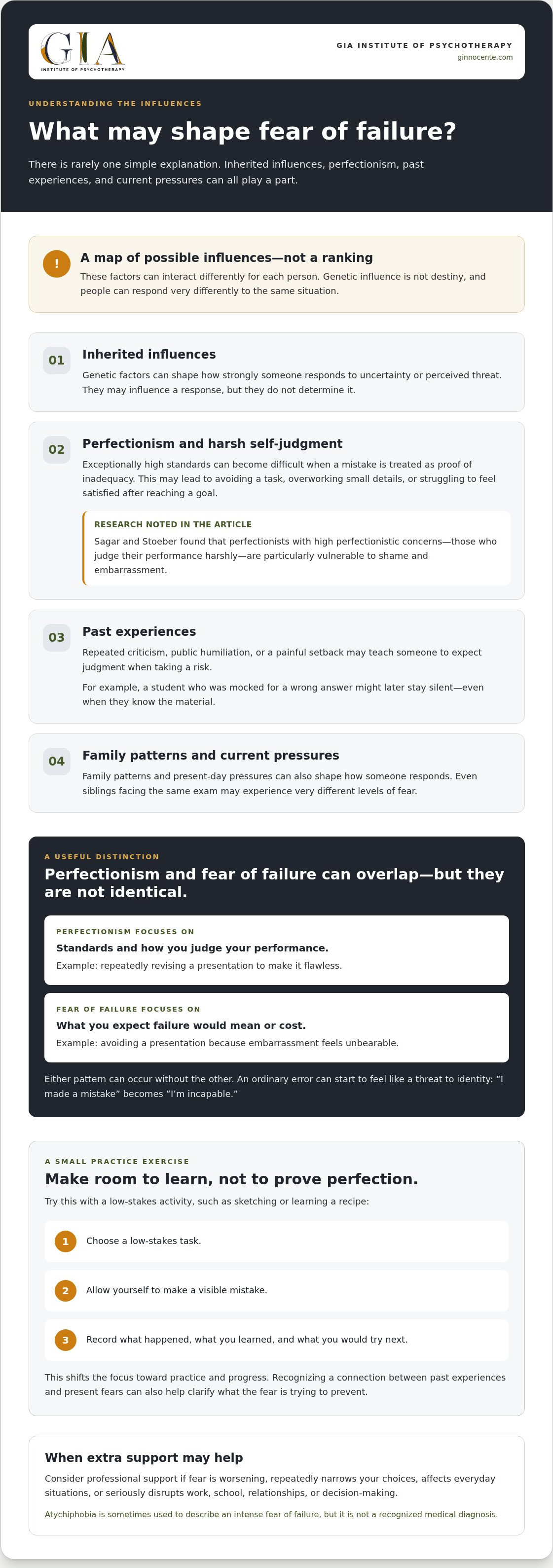
Fear of failure rarely has one simple explanation. Genetic factors can shape how strongly someone responds to uncertainty or perceived threat, but that influence isn’t destiny. Family patterns, past experiences, and current pressures also shape a person’s response. Two siblings, for example, can face the same exam and feel very different levels of fear.
Perfectionism can add another layer. It involves demanding exceptionally high standards, but its effects depend on how someone responds when they fall short. A person focused on growth might improve a draft, accept feedback, and keep learning. Someone who treats every mistake as proof of inadequacy may avoid starting, overwork small details, or struggle to feel satisfied after reaching a goal.
Fear of failure and perfectionism overlap, but they aren’t identical. Perfectionism centers on standards and how someone judges their performance; fear of failure centers on what they expect failure would mean or cost. A perfectionist might revise a presentation repeatedly to make it flawless. Fear of failure might lead that same person to avoid presenting because embarrassment feels unbearable. Either pattern can occur without the other.
Research by Sagar and Stoeber found that perfectionists with high perfectionistic concerns, who judge their performance harshly, are particularly vulnerable to shame and embarrassment. Those feelings can turn an ordinary error into a threat to identity: “I made a mistake” becomes “I’m incapable.” That interpretation can reinforce atychiphobia, a term for intense fear of failure, though it isn’t a recognized medical diagnosis. Naming the thought gives you a chance to question it.
Past experiences can influence these beliefs, too. Repeated criticism, public humiliation, or a painful setback may teach someone to expect judgment whenever they take a risk. A student mocked for a wrong answer, for instance, might later stay silent even when they know the material. The experience doesn’t explain every reaction, but recognizing a connection can clarify what the fear is trying to prevent.
Try one small beginner exercise: choose a low-stakes task, such as sketching or learning a recipe, and allow yourself to make a visible mistake. Then record what happened, what you learned, and what you’d try next. This turns progress into practice rather than proof of perfection. If harsh self-judgment keeps narrowing your choices, support for persistent fear can help you explore the pattern and build a kinder response.
3. How does atychiphobia impact behavior and emotions?
Fear of failure can undermine confidence before you even begin. If you expect a poor outcome, you may interpret uncertainty as evidence that you lack ability. After a small work error, you might think, “I can’t do anything right,” instead of reviewing what happened. This negative self-talk can lower self-esteem and make future challenges harder to approach.
Motivation can shift, too. A student worried about failing an exam might avoid studying because starting makes the possibility feel real. This self-handicapping can interfere with academic success and keep the fear going. Avoiding a task may briefly ease distress, but it also removes the chance to learn, improve, and discover that the outcome may be manageable.
At work or in relationships, fear can quietly narrow your participation. You may stay silent in a meeting, decline a leadership opportunity, or avoid asking for help because you fear judgment. These choices can affect how others see your contributions and shape your self-image. “I’m not someone who takes initiative” may become a belief built on avoidance, not ability.
External pressure can intensify the pattern. High expectations at work, achievement-focused social circles, or pressure to maintain a successful public image can make setbacks feel especially costly. Someone comparing their career progress with polished posts online, for example, may assume they’re falling behind. This strain can affect confidence and increase stress, even when their actual progress remains meaningful.
Trying to picture success doesn’t always help. For people with a strong fear of failure, visualizing success may bring on negative moods rather than encouragement. If that happens, focus on one specific next action: prepare a question for a meeting or complete one section of an assignment. A manageable step can feel more reachable than imagining the whole outcome.
Self-compassion offers another way to respond to mistakes. After a setback, describe what happened without judging your worth: “The proposal wasn’t accepted” is more specific than “I’m a failure.” Then identify one factor you can influence next time. This approach supports self-esteem while leaving room for responsibility and change.
Sharing your fear with someone you trust can also loosen its hold. You might tell a friend, “I’m avoiding this application because rejection feels personal,” and ask them to listen rather than solve the problem. Naming the concern can help separate feelings from facts. If the pattern repeatedly limits school, work, or relationships, consider professional support.
4. Practical strategies for overcoming fear of failure
Choose one task you’ve been avoiding and make its first step small and specific. If you’re delaying an application, open the form and complete one section. Notice the prediction attached to that action, such as “I’ll be rejected,” and compare it with what actually happens. This behavioral experiment helps separate a feared outcome from a known fact. Therapy for fear of failure can help you choose challenging but manageable steps.
Cognitive behavioral therapy (CBT) can help you identify and change negative thoughts about failure. A therapist may help you examine thoughts like “one mistake means I’m incapable,” consider the evidence, and develop a more balanced view. In therapy for fear of failure, gradual exposure can also help you approach feared situations in manageable steps, rather than avoiding them or forcing yourself into a distressing challenge all at once.
Plan for setbacks before they happen. Before a presentation, for example, decide what you’ll do if you lose your place: pause, check your notes, and continue with the next point. An alternative plan can ease anxiety because success no longer depends on everything going perfectly. Afterward, reflect on what contributed to the outcome and what you can adjust next time.
Accept that failure will sometimes be part of being human. A missed deadline or an unsuccessful attempt is an event, not proof of a personal flaw. Ask yourself: What happened? What was within my control? What can I learn? A useful answer might be, “I underestimated the preparation time, so I’ll begin earlier for the next project.” This turns mistakes into information for growth.
- Set a specific goal, such as drafting one page by Friday.
- Break it into smaller steps you can complete and review.
- Seek constructive feedback from someone you trust.
- After a setback, choose one change to test next time.
These steps build confidence through action, not by waiting until you feel completely ready. If a goal feels too demanding, make the first step smaller. If it feels too easy to bring up fear, choose a slightly more challenging step. Aim for steady practice, with room to learn from each outcome.
What types of therapy help with fear of failure? CBT and gradual exposure are commonly used approaches. EMDR is also used to help certain negative experiences feel more neutral.
What happens in therapy for fear of failure? A therapist may explore situations that trigger distress, the thoughts attached to them, and how avoidance affects your choices. You can work together on practical strategies, such as testing unhelpful beliefs and taking manageable steps toward feared situations.
Anxiety, stress, and depression related to failure fears
Fear of failure can turn ordinary expectations into a constant test. Before a work review, you might replay every possible mistake and struggle to focus. Anxiety can grow when each thought predicts humiliation, rejection, or lasting consequences. The pressure may follow you home, making rest feel undeserved until every task seems complete.
Conroy and colleagues identified five core beliefs about the consequences of failure that are associated with threat appraisal and fear. These beliefs can shape how you interpret a setback, even before its outcome is known. A missed target might feel like evidence of personal inadequacy rather than information about planning. That interpretation can intensify distress and make the next challenge seem more dangerous.
Stress may then spread across situations. Someone anxious about disappointing a supervisor could avoid asking questions, work late to prevent criticism, and feel tense before routine meetings. Each response aims to prevent failure, yet the added strain can make concentration and decision-making harder. Caffeine, alcohol, and drugs can worsen stress and anxiety, so notice whether their use changes alongside the pressure.
Persistent fear may also affect mood. If you stop pursuing valued goals, withdraw from supportive relationships, or see little possibility of change, sadness and hopelessness may deepen. Fear of failure can contribute to depression or other mental health concerns when left unaddressed. That doesn’t mean every disappointing result signals depression. Pay attention to changes in mood and daily functioning.
Try a brief thought record after a stressful event. Note the situation, your prediction, how you felt, and what actually happened. For example: “I asked for feedback; I expected ridicule; I felt tense; my manager offered two practical suggestions.” This separates expectations from outcomes and gives you clearer information for your next decision.
Mindfulness-based stress reduction may help people manage fear related to failure. A brief pause can give you room to notice tension without immediately acting on the thought behind it. Name what’s present, take a few steady breaths, and choose one useful next action. If panic symptoms arise or fear makes daily functioning difficult, contact a healthcare provider.
Medication isn’t the only consideration in care. Selective serotonin reuptake inhibitors are commonly prescribed for mood conditions and anxiety, while treatment choices depend on the concerns being addressed. If fear and low mood are affecting your work, relationships, or routine, reach out for support with anxiety and stress and begin discussing what might help.
GIA Institute of Psychotherapy: Adult Individual Psychotherapy
GIA Institute of Psychotherapy offers Adult Individual Psychotherapy for adults whose fear of failure affects their confidence, decisions, or daily life. In a supportive therapeutic space, you can explore what fuels the fear, notice how it shapes your choices, and practice new responses to setbacks. Therapy may draw on practical strategies and approaches that help you understand your thoughts and feelings.
Consider individual support if avoiding opportunities or harsh self-judgment keeps getting in the way of goals that matter to you. Therapy can start with your concerns and move toward manageable steps, helping you develop a more balanced relationship with effort and mistakes.
If you’re ready to explore support, contact GIA Institute of Psychotherapy.
Make room for a different next step
You don’t have to wait for self-doubt to disappear before moving toward something that matters. Choose one manageable action and treat it as practice, not a test of your worth. If fear keeps pulling you away from your goals, therapy for fear of failure can help you understand the pattern and work toward meaningful change.
GIA Institute of Psychotherapy offers Adult Individual Psychotherapy for adults, Individual Therapy for Children and Teens, and Family Therapy. These services offer different ways to seek support, depending on who is affected and what kind of help feels relevant. Taking the first step can be as simple as starting a conversation about what you’d like to change.
Explore your options with GIA Institute of Psychotherapy, and give yourself room to move forward with care and patience.
Frequently Asked Questions
What is fear of failure?
Fear of failure is worry about what a disappointing result could mean for your goals, identity, or relationships. You might avoid sharing a draft, for example, because you expect criticism to prove you’re unqualified. The concern becomes more disruptive when it repeatedly drives choices, such as turning down meaningful opportunities or delaying necessary decisions. It describes an experience, not a diagnosis by itself.
How do lifestyle changes complement these therapies?
Lifestyle habits can support stress management while you work on patterns related to fear. A steady sleep routine, regular movement, and planned breaks can make demanding days feel more manageable. Notice whether caffeine, alcohol, or drugs intensify anxious feelings, as they can worsen stress and anxiety. These habits don’t replace therapy, but can support your daily practice of coping skills.
How does atychiphobia impact behavior and emotions?
Intense fear of failure can affect choices, mood, and relationships. You might repeatedly seek reassurance before sending an ordinary email, or avoid social events where your work could come up. These responses can reduce your chances of receiving useful feedback and deepen isolation. Notice what the fear leads you to do, not only how strong it feels. That pattern can show where support may help.
What are effective strategies for managing atychiphobia?
Choose a low-stakes situation you tend to avoid and define one manageable action. If you hesitate to ask a question in a meeting, prepare it beforehand and speak up once. Afterward, write down what you expected and what actually happened. This gives you specific evidence to consider rather than relying only on a frightening prediction. If fear disrupts everyday functioning, discuss it with a mental health professional.
What cognitive-behavioral strategies are particularly effective?
A thought record can help you examine a prediction instead of accepting it as fact. Write down the situation, your automatic thought, the evidence supporting it, and evidence that complicates it. For example, reconsider “One correction means my work is terrible” alongside positive feedback. Then test a more balanced alternative by taking one reasonable action. This practice turns reflection into a behavioral experiment.
What is atychiphobia?
Atychiphobia is a term for an intense fear of failure, but it isn’t a recognized medical diagnosis. A label alone can’t explain why you feel afraid or determine what support fits. A mental health professional can explore your experiences, how long the distress has lasted, and whether another concern may contribute. Describing the specific situations and their effects can make that conversation more useful.
How does CBT treat fear of failure and perfectionism?
CBT helps people notice unhelpful beliefs and practice more balanced responses. For perfectionism, that might mean identifying a rule such as “Every task must be flawless,” then testing a realistic standard on a small assignment. People in Ocean City NJ, Linwood NJ, Margate NJ, Ventnor NJ, Egg Harbor Township NJ, Upper Township NJ, and Galloway NJ can explore these patterns through local therapy.
Can exposure therapy help with fear of making mistakes?
Gradual exposure can help you approach situations associated with fear instead of avoiding them. Start with a manageable example, such as sharing an unfinished idea with someone you trust, then reflect on what happened. As confidence develops, practice with more challenging situations. Pace the process thoughtfully, taking distress and personal goals into account, rather than treating mistakes as something you must force yourself to endure.


