

What if the parts of you that you've been trying to silence are actually the very keys to your healing? Many of us spend years fighting against a harsh inner critic or an overwhelming sense of anxiety, feeling as though our own minds are a battlefield of conflicting voices. You might feel like a part of you wants to move forward while another part keeps you stuck. If you're searching for Internal Family Systems therapy NJ, you're likely looking for a way to stop this internal tug-of-war. It's exhausting to live with unresolved trauma that feels locked in your body, and it's natural to want peace.
This guide will help you discover how Internal Family Systems (IFS) can transform that internal noise into a harmonious team. You'll learn how to step into the role of a calm, confident 'Self' who can lead these different parts with compassion rather than judgment. We'll explore how this restorative approach helps resolve deep-seated wounds and reduces self-criticism. We also provide a clear path for finding an experienced IFS therapist in New Jersey so you can begin your journey toward lasting internal clarity and emotional resonance.
Key Takeaways
- Understand that every part of your internal system has a positive intent, even the ones that feel most difficult or self-critical.
- Identify the three primary roles your internal team plays to protect you from past wounds and learn how to help them find a healthier balance.
- Discover how Internal Family Systems therapy NJ empowers you to lead from your core Self, characterized by calm, curiosity, and confidence.
- Learn the collaborative process of unblending to create space between you and your overwhelming emotions for more effective healing.
- See how local South Jersey specialists blend IFS with other clinical tools to provide a comprehensive, restorative path toward internal harmony.
What is Internal Family Systems (IFS) Therapy?
Internal Family Systems (IFS) therapy is a transformative, evidence-based model of psychotherapy that recognizes the mind is naturally made of multiple "parts." While traditional approaches might see a person as a single, unified personality, IFS understands that we are each a complex system of sub-personalities. This model has gained significant recognition for its effectiveness. It was officially listed by the Substance Abuse and Mental Health Services Administration (SAMHSA) as an evidence-based practice for improving general functioning and well-being, proving its clinical power in treating trauma, depression, and anxiety.
At the heart of this approach is the belief that every part has a positive intent. Even the parts of you that feel destructive, self-critical, or overwhelming are actually trying to protect the system in their own way. When you engage with Internal Family Systems therapy NJ, you stop trying to "fix" or eliminate these parts. Instead, you learn to lead them from your "Self." This Self is the calm, compassionate, and curious core that exists within everyone, regardless of past trauma or current distress. It is the steady hand that guides your internal team toward harmony.
The Multiplicity of the Mind
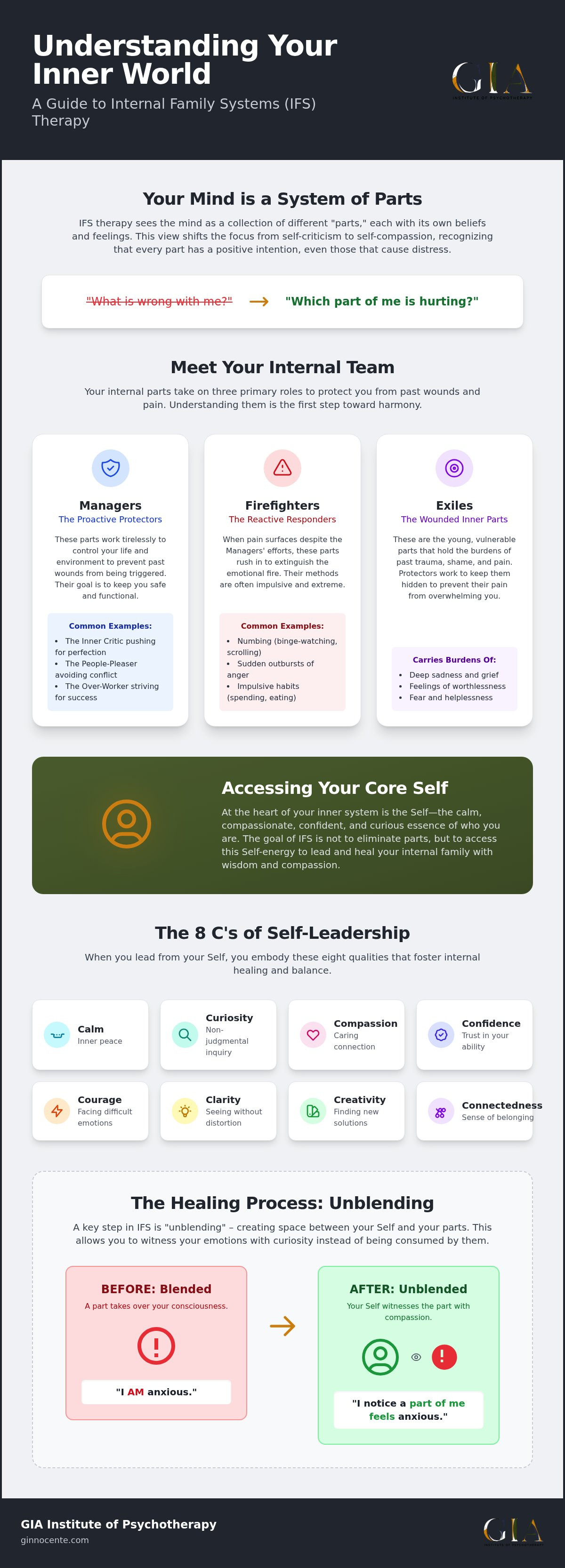
Have you ever said, "A part of me wants to take this risk, but another part is terrified"? We use this language naturally because it reflects our internal reality. Viewing yourself as a system of parts is a powerful shift that reduces deep-seated shame. It moves the conversation away from "What is wrong with me?" and toward a more compassionate inquiry: "Which part of me is hurting right now?" This perspective allows you to witness your internal conflicts without being consumed by them. By acknowledging these different voices, you create space for healing, and self-blame begins to melt away. You aren't broken; you're simply a complex system in need of leadership.
Evidence-Based Healing in New Jersey
Residents across the state are increasingly turning to Internal Family Systems therapy NJ to address complex trauma and persistent anxiety. This interest isn't just a trend; it's rooted in the intersection of IFS and modern neuroscience. Research suggests that when we approach our internal "parts" with the qualities of the Self, we actually support the brain's capacity for emotional regulation and resilience. This restorative journey provides a roadmap for long-term health, helping individuals in communities like Ocean City and Linwood rewrite their internal narratives. It offers a way to move beyond merely managing symptoms toward true, integrated transformation. Healing is possible when you have the right tools to navigate your inner world.
Understanding Your 'Internal Team': Managers, Firefighters, and Exiles
Imagine your mind as a household where every member is trying their best to keep things running smoothly. In Internal Family Systems therapy NJ, we view this "internal team" as a collection of parts that have taken on specific roles to protect you from emotional pain. These roles are rarely chosen by the parts themselves; instead, they are born out of past burdens or traumas that the system had to survive. It's essential to remember that no part of you is "bad." Even the parts that cause you frustration, shame, or confusion are simply stuck in outdated jobs they took on long ago to keep you safe. Exiles are the wounded parts we try to hide away to prevent their pain from overwhelming our daily lives.
The Protectors: Managers and Firefighters
Protective parts generally fall into two categories: Managers and Firefighters. Managers are your proactive guardians. They work tirelessly to keep you productive, socially acceptable, and in control of your environment. You might recognize them as the inner critic that pushes for perfection, the people-pleaser who avoids conflict, or the part that overworks to ensure you never feel "not enough." Their goal is to manage your life so that your deepest wounds are never touched.
Firefighters, on the other hand, are your reactive guardians. When an old pain is triggered and the Managers can no longer contain it, Firefighters rush in to douse the emotional flames. Their methods are often intense and impulsive because they act in a state of emergency. Common Firefighter behaviors include:
- Binge-watching or mindless scrolling to numb out from reality.
- Sudden outbursts of anger to push others away before they can get too close.
- Impulsive spending or eating to quiet internal distress.
While their tactics can be disruptive, their intent is always to save you from feeling an unbearable emotional burden. Learning to witness these protectors with curiosity is a central part of adult individual psychotherapy, where we honor their hard work while helping them find new, healthier ways to exist within your system.
The Exiles: Carrying the Burdens
Why do we lock away certain parts of ourselves? Exiles are the vulnerable parts that carry the weight of childhood neglect, rejection, or fear. Because their presence feels so raw, our protectors "exile" them to the basement of our consciousness to keep the system functioning. However, these parts don't disappear just because they're hidden. Instead, they manifest as sudden drops in self-esteem, unexplained anxiety, or a persistent feeling of loneliness that lingers even when you're with others.
The ultimate goal of Internal Family Systems therapy NJ is not to keep these parts locked away, but to safely approach them from a place of compassion. By unburdening the Exiles, we allow them to return to their natural state of playfulness, trust, and creativity. When the wounded parts are finally healed and seen, the protectors no longer have to work so hard. This shift allows your entire internal team to move from a state of constant high alert to a state of restorative harmony.
The 8 Cs of Self-Leadership: How Healing Happens
If your internal parts are the members of a complex team, the "Self" is the compassionate leader at the head of the table. In Internal Family Systems therapy NJ, we understand that the Self is not just another part of your personality. Instead, it is the seat of your consciousness, a steady and undamaged core that exists within every person. The goal of every IFS session is to help you access this Self-led state so you can witness your parts without being overwhelmed by them. When you bring the presence of your Self to a wounded part, the transformation is profound. It's like a parent finally hearing a distressed child; the child begins to settle because they are no longer alone in their pain.
Your therapist acts as a collaborative guide in this journey. They help you navigate the internal noise to find that quiet, centered space. By blending traditional talk therapy with modern neuroscience, this approach allows you to regulate your nervous system from the inside out. You aren't just talking about your problems; you're actively changing how your internal system relates to itself. This restorative process is what makes Internal Family Systems therapy NJ so effective for those seeking deep, lasting change.
The Qualities of the 'Self'
How do you know when you are "in Self" rather than being "blended" with a part? When you're blended, you feel like you are the anxiety or the anger. When you're in Self, you feel a sense of distance and clarity. We describe this state through the 8 Cs: Calmness, Curiosity, Compassion, Confidence, Courage, Clarity, Connectedness, and Creativity. Curiosity is the primary tool for internal exploration. When you can look at a difficult part with genuine curiosity rather than judgment, the part feels safe enough to share its story. This shift from "Why am I doing this?" to "I wonder what this part is trying to do for me?" is where the healing begins.
Self-Leadership in Daily NJ Life
The beauty of IFS is that its benefits extend far beyond the therapist's office. You can use the 8 Cs to navigate the unique stresses of life in South Jersey, whether you're dealing with the seasonal rush in Ocean City or the daily grind of commuting toward Philadelphia. When you lead from Self, you don't react impulsively to a stressful email or a family conflict. Instead, you respond with clarity and confidence. This internal leadership naturally improves your external relationships. There is a powerful ripple effect: when your internal family heals and finds harmony, your external family dynamics often follow suit. By rewriting your internal narrative, you create a more peaceful and connected life for yourself and those you love.
What to Expect in an IFS Therapy Session
Entering a session for Internal Family Systems therapy NJ feels less like an interrogation and more like a collaborative exploration. The rhythm is steady, patient, and deeply intentional. Instead of a clinical expert telling you what's wrong, your therapist acts as a skilled guide who walks alongside you. A central goal is the process of "unblending." This simply means creating enough breathing room between your core Self and a specific emotion so you can observe it without being consumed by it. If you've ever felt "flooded" by anger or "paralyzed" by fear, unblending provides the space needed to understand those feelings instead of just reacting to them.
Many people worry that if they acknowledge their "parts," they might lose control or become overwhelmed. In reality, the opposite happens. By giving each part a seat at the table, you actually strengthen your internal leadership. You aren't giving these parts the steering wheel; you're simply listening to their concerns so they don't have to scream for your attention. This methodical approach ensures that the healing journey remains safe and manageable. If you're ready to begin this work, you can explore our adult individual psychotherapy or specialized youth services to find the right path for your family.
The 6 Fs of Finding a Part
The journey often follows a specific clinical sequence known as the 6 Fs: Find, Focus, Flesh out, Feel toward, Befriend, and Fear. This process bridges the gap between your mind and your body. We start by "finding" where a part lives as a physical sensation. Do you feel a tightness in your jaw or a heavy weight in your chest? By tracking these somatic markers, we use modern neuroscience to ground the emotional work. The most transformative step is "befriending." When you approach a difficult protector with genuine warmth, its defensive walls begin to soften. You realize the part isn't an enemy; it's an exhausted guardian.
A Safe Harbor for Your Story
Healing requires an environment that feels like a safe harbor. We ensure that every session is a non-judgmental space where all parts of you are welcome. For younger clients, we often integrate Expressive Arts or Play Therapy to help them externalize their internal world in a way that feels natural and safe. This isn't a quick fix. It's a patient, restorative process. Whether you're an adult or a parent seeking help for a child, the timeline is dictated by your own internal system's readiness to trust and open up. We move at the pace of your internal safety, ensuring that every step forward is steady and secure.
Finding Internal Family Systems Therapy in NJ: The GIA Approach
Choosing a therapist is a deeply personal decision, especially when you're looking for a specialized approach like Internal Family Systems therapy NJ. At GIA Institute of Psychotherapy, we believe that local expertise matters. We understand the unique rhythm of life in South Jersey, from the quiet winters in Ocean City to the vibrant energy of Margate and Linwood. Our team doesn't just apply a model; we build a relationship. We see IFS as a collaborative journey where we help you navigate your internal landscape with patience and care. By choosing a provider who understands your community, you're finding a partner who is truly invested in your long-term well-being.
A Holistic Path to Well-being
Our approach is built on the idea that healing is restorative, not just corrective. We don't just focus on managing symptoms. Instead, we help you find the best parts of yourself. To do this, we blend IFS with other evidence-based tools like EMDR and DBT. This specialized clinical toolkit allows us to address trauma and anxiety from multiple angles. For example, while IFS helps you lead your internal team, EMDR can help process the somatic burdens those parts carry. We provide this comprehensive care for everyone, offering adult individual psychotherapy as well as specialized individual therapy for children and teens. Our commitment is to provide authentic, relatable care that honors your unique story.
Begin Your Healing Journey Today
Taking the first step toward therapy can feel daunting, but it's one of the most significant ways you can advocate for your own health. In IFS work, the "fit" between you and your therapist is essential. You need to feel safe enough to let your protective parts step back so you can reach the wounded parts underneath. We invite you to reach out and see if our steady, calming presence feels right for you. Starting your journey is simple and intentional. You can schedule an intake to discuss your specific needs and begin the process of internal unburdening. Contact GIA Institute of Psychotherapy to learn more about our IFS services and discover how we can help you lead your life from a place of calm, confident Self.
Step Toward Your Most Integrated Self
Healing isn't about silencing the parts of you that feel difficult or overwhelming. It's about recognizing that every part of your internal system has worked tirelessly to keep you safe. By embracing the 8 Cs of Self-leadership, you can move from a state of internal conflict to one of deep, restorative harmony. You've learned how your managers and firefighters protect you, and how your core Self can finally offer the compassion your exiles have long needed. If you're ready to rewrite your internal narrative, Internal Family Systems therapy NJ offers a clear, evidence-based path forward.
At GIA Institute, we blend modern neuroscience with compassionate parts work to support adults, teens, and children throughout South Jersey. Whether you're in Ocean City, Linwood, or Margate, our steady and relatable presence is here to guide your collaborative journey toward wellness. You don't have to navigate these internal battles alone anymore. Schedule a Consultation for IFS Therapy at GIA Institute today and begin finding the best parts of yourself. A life led from a place of calm and clarity is waiting for you, and we're honored to walk beside you on that path.
Frequently Asked Questions
Is Internal Family Systems therapy effective for trauma and PTSD?
Internal Family Systems therapy NJ is highly effective for trauma and PTSD because it safely approaches wounded parts without overwhelming your system. By working with your "protector" parts first, you ensure that the trauma processing doesn't lead to a crisis. This methodical approach is why it's recognized as an evidence-based practice. It allows you to unburden past pain while staying grounded in your calm, confident Self, leading to restorative and lasting emotional relief.
How is IFS different from other types of talk therapy?
Unlike traditional talk therapy that might focus on changing thoughts or behaviors from the outside, IFS works directly with your internal sub-personalities. It views the mind as a system of parts rather than a single unit. This perspective reduces shame because you realize that you aren't "bad," you simply have parts that are stuck in difficult roles. It's a collaborative journey where the therapist helps you become the compassionate leader of your own internal team.
Do I need a specific diagnosis to benefit from IFS therapy in NJ?
You don't need a formal psychiatric diagnosis to benefit from this work. Many residents in communities like Linwood or Margate seek Internal Family Systems therapy NJ for personal growth, relationship clarity, or navigating life transitions. Because IFS is non-pathologizing, it focuses on your inherent health and the "Self" that is already whole. Whether you're dealing with a specific clinical condition or just a harsh inner critic, the goal is internal harmony and self-leadership.
Can Internal Family Systems be used for children and teenagers?
Absolutely, and it's often a very natural fit for younger clients. Children and teenagers naturally understand the concept of having different "parts" of themselves. At GIA Institute, we often blend IFS with Play Therapy or Expressive Arts to help kids externalize their internal world. This approach helps them build emotional regulation skills and self-compassion early in life, providing a restorative foundation for their growth into adulthood within our South Jersey community.
How long does it typically take to see results with IFS?
The timeline for healing is unique to every individual's internal system. Some clients feel a sense of relief and clarity within the first few sessions as they learn to "unblend" from overwhelming emotions. However, deep unburdening of long-held traumas is a methodical and patient process that requires building trust with your protective parts. We move at the pace of your internal safety to ensure that the changes you make are stable, integrated, and permanent.
Can I do IFS therapy online if I live elsewhere in New Jersey?
While our physical roots are in South Jersey communities like Ocean City and Egg Harbor Township, we offer flexible options for residents across the state. Telehealth allows you to engage in Internal Family Systems therapy NJ from the comfort of your own home. This ensures that even if you're outside our immediate shore area, you can still access specialized clinical support that blends neuroscience with compassionate, authentic care for your internal family.
Is IFS a recognized, evidence-based modality?
Yes, IFS is a fully recognized and evidence-based modality. It earned this status through rigorous review by the Substance Abuse and Mental Health Services Administration (SAMHSA). The model is grounded in modern neuroscience, showing how our internal "parts" relate to the brain's emotional regulation centers. This clinical authority ensures that when you engage in Internal Family Systems therapy NJ, you're using a proven framework that has helped thousands of people achieve lasting internal clarity and peace.
What should I look for in a qualified IFS therapist in NJ?
Look for a practitioner who has specific training in the IFS model and who feels like a relatable, steady presence. A qualified therapist should act as a guide who honors your agency rather than an authority figure who simply diagnoses you. In the South Jersey area, it's also helpful to find someone who understands our local culture and community dynamics. The right fit is someone who makes your internal parts feel safe enough to finally speak.


