

PTSD symptoms can resurface after treatment, but that doesn’t mean recovery has failed. For people seeking PTSD treatment in Upper Township, NJ, psychotherapy can offer ways to process trauma, respond to triggers, and rebuild a sense of safety. EMDR and other approaches may help, with the right fit shaped by each person’s experiences and needs.
Could a difficult day or a returning memory undo the progress you’ve made? It can feel that way, especially when symptoms interrupt daily life, but renewed distress can also be a reason to revisit support and coping strategies. This guide explains how therapy may support PTSD recovery, how EMDR and other psychotherapy approaches work, and what to consider if symptoms return. You’ll also learn what can shape treatment, so you can approach the next step with more clarity and less pressure.
Key Takeaways
- Trauma-focused cognitive behavioral therapy can help people work through trauma-related thoughts and build coping strategies.
- Symptoms returning after treatment doesn’t erase progress; recognizing changes can help you decide when to revisit support and coping tools.
- EMDR uses bilateral sensory input to support processing of difficult memories and emotions; learn what a session may involve and how it differs from other approaches.
- Different psychotherapy approaches offer different paths through recovery. Understanding their focus can help you discuss a treatment approach that fits your needs.
How does therapy help with PTSD recovery?
PTSD therapy can help people understand trauma responses, process distressing memories, and strengthen daily functioning. Cognitive behavioral therapy (CBT) focuses on noticing trauma-related thoughts and practicing coping strategies. For example, someone who avoids driving after a traumatic event can explore the fear and plan manageable steps with a therapist.
For PTSD treatment in Upper Township, NJ, therapist matching can start with a few questions: Do you want individual or family support? Are trauma-focused approaches a priority? Would in-person or virtual sessions fit daily life better? An initial conversation can clarify your goals, comfort, and therapy options. A therapist can also consider concerns such as depression and how symptoms affect work, sleep, or relationships.
In Cape May County, community mental health services are another route to explore; each program sets its own access process and eligibility. Ask what type of therapy is available and whether it addresses trauma-related needs. New Jersey Behavioral Health describes exposure therapy as CBT that helps people safely face fears connected with trauma.
Insurance coverage for PTSD therapy in New Jersey depends on plan benefits and network participation, so coverage varies by policy and provider. Psychiatrists can prescribe medication; according to New Jersey Behavioral Health, antidepressants and anti-anxiety medicines may be used when appropriate to manage PTSD symptoms.
Urgent danger needs immediate help, not a routine therapy appointment. If someone can’t stay safe, seek emergency assistance.
Trauma-Focused Cognitive Behavioral Therapy (TF-CBT) applies CBT to trauma-related distress. Trauma-informed CBT may last from 8 to 25 sessions. Cognitive Processing Therapy (CPT) helps people identify “stuck points,” such as guilt or self-blame, and consider healthier perspectives. CPT and prolonged exposure therapy each take about three months. These timelines are guides, not a substitute for discussing personal goals and progress.
EMDR, or eye movement desensitization and reprocessing, uses bilateral sensory input, such as side-to-side eye movements, to support the processing of difficult memories and emotions. With each approach, treatment can focus on easing distress and building coping tools, one step at a time.
Can PTSD come back after treatment?
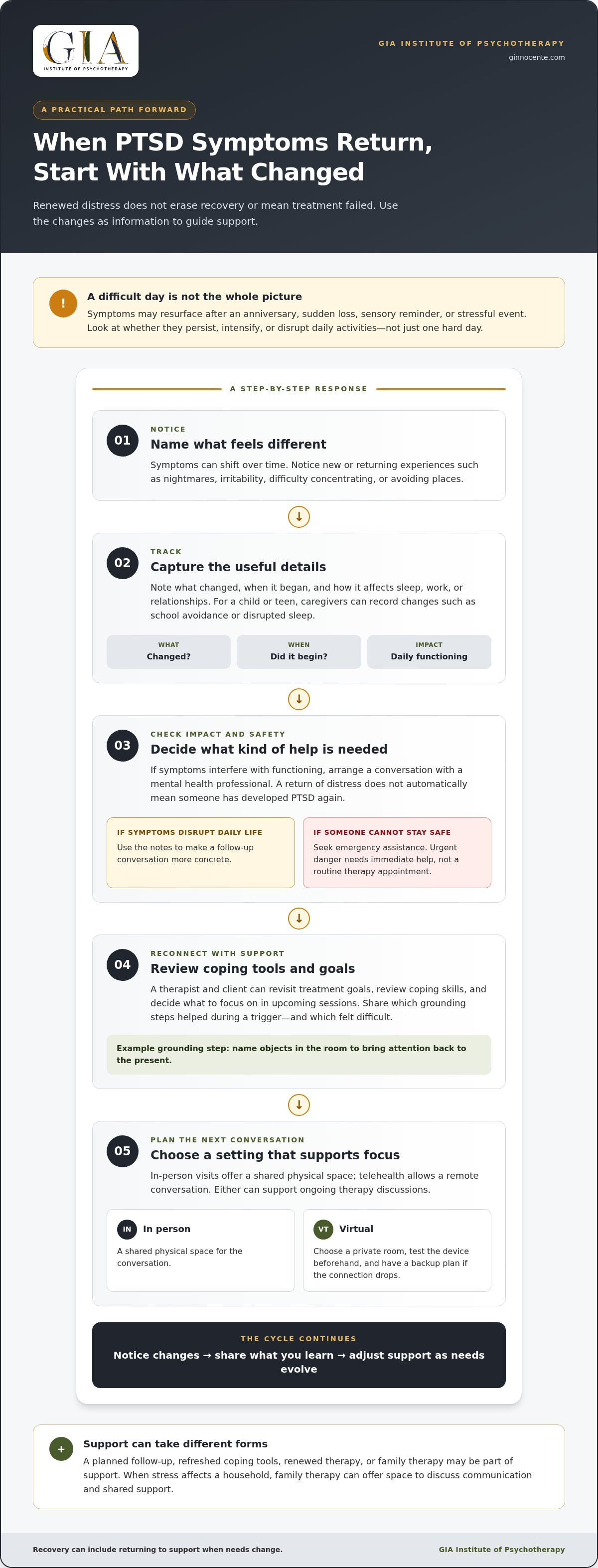
Yes, PTSD symptoms can return after treatment. A difficult anniversary, sudden loss, or sensory reminder can bring emotional distress back, even after a period of improved functioning. That doesn’t erase recovery or mean earlier treatment failed. It signals that current needs deserve attention.
Symptoms can also shift over time. Someone who once avoided crowded places might later notice nightmares, irritability, or difficulty concentrating after a stressful event. Track what changed, when it began, and how it affects sleep, work, or relationships. These details make a follow-up conversation more concrete.
In-person and virtual care offer different settings for that conversation. In-person visits provide a shared physical space, while telehealth lets someone meet remotely. For a virtual appointment, choose a private room, test your device beforehand, and have a backup plan in case the connection drops. The setting should support focused discussion of traumatic memories and emotional responses.
Both formats can support ongoing therapy conversations, including work with cognitive behavioral therapy strategies. Someone practicing grounding between visits, for example, can describe which steps helped during a trigger and which felt difficult. The therapist and client can review coping skills, revisit treatment goals, and decide what to focus on in upcoming sessions.
A return of distress doesn’t automatically mean someone has developed PTSD again. Note whether symptoms persist, intensify, or disrupt daily activities rather than judging recovery by one difficult day. If symptoms interfere with functioning, arrange a conversation with a mental health professional. For a child or teen, caregivers can share specific changes, such as school avoidance or disrupted sleep.
Support can include a planned follow-up, refreshed coping tools, or renewed therapy. When stress affects a household, family therapy can provide space to discuss communication and shared support. A clear next step helps turn renewed symptoms into information for care, rather than a reason to dismiss earlier progress.
Eye movement desensitization and reprocessing (EMDR)
EMDR is a psychotherapy approach for processing distressing memories linked with trauma. It uses bilateral sensory input, such as side-to-side eye movements, while a person brings a difficult memory to mind. The aim is to help the brain process thoughts, feelings, and sensations connected with that experience. EMDR is therapy, not medication, and sessions focus on mental and emotional responses rather than prescribing medicine.
A session begins with a conversation about the memory or trigger affecting the person now. For example, a loud bang may bring back fear from a past traumatic event. The therapist and client identify what comes up, then use bilateral input while the person focuses on the memory. The client can describe changing thoughts or feelings as the process unfolds. This helps the therapist follow the person’s response and adjust the pace.
Preparation matters. Before focusing on traumatic memories, discuss what feels manageable, what feels overwhelming, and how to pause. A grounding strategy, such as naming objects in the room, can help bring attention back to the present. The therapist can also identify goals related to anxiety, sleep, or relationships. These concrete markers make it easier to discuss how treatment affects daily functioning.
EMDR doesn’t require recounting every detail of a traumatic event aloud. Still, the person remains involved and can share what feels useful or difficult. The therapist can explain the evidence for the approach and how progress will be discussed. A person might track whether a familiar trigger feels less disruptive over time. That observation can guide conversations about next steps without treating one session as a measure of healing.
Because each person responds differently, treatment pace and focus can vary. Consider whether the therapist explains the process clearly, welcomes questions, and helps you feel able to pause. EMDR may be one option among psychotherapy approaches. Discussing its purpose, your concerns, and the changes you hope for can help connect treatment to the life you want to regain.
Psychotherapy approaches for PTSD
Psychotherapy for PTSD isn’t one single method. In New Jersey, the approach can be matched to the symptoms affecting daily life, the person’s goals, and how they prefer to work with difficult memories. A useful starting point is to ask what each method focuses on, then discuss which approach feels relevant.
Cognitive behavioral therapy (CBT) helps people identify trauma-related thoughts and practice coping strategies. Cognitive Processing Therapy (CPT) focuses on “stuck points,” such as self-blame, and considers healthier perspectives. CPT and prolonged exposure therapy each take about three months. Exposure therapy is a form of CBT that involves safely facing fears connected with trauma, according to New Jersey Behavioral Health.
Trauma-informed CBT may last from 8 to 25 sessions. That range can help set expectations, but the method’s focus matters more than a session count alone. Someone whose PTSD symptoms center on self-blame may want to discuss CPT. Someone avoiding reminders may ask how exposure-based work approaches fears safely and gradually.
EMDR uses bilateral sensory input, including side-to-side eye movement, while a person focuses on difficult memories. Brainspotting uses focused eye positions to access and process deeply rooted trauma. These approaches differ in how they direct attention, so you can ask what a session involves and how to signal a need to pause.
Supportive talk therapy offers space to discuss experiences, gain insight, and receive emotional support. It may help someone identify which PTSD symptoms affect relationships, sleep, or work, then connect those concerns with coping goals. To compare approaches, consider whether you want structured work on thoughts, gradual engagement with avoided reminders, or a supportive space to explore experiences.
For PTSD treatment in Upper Township, NJ, bring one example of a distressing thought, memory, or avoided situation to an initial discussion. Ask how the approach addresses that concern and how progress will be reviewed. Explore psychotherapy support for trauma recovery as a next step toward finding a path that fits.
GIA Institute of Psychotherapy: Adult Individual Psychotherapy
GIA Institute of Psychotherapy offers Adult Individual Psychotherapy for adults seeking space to discuss trauma-related distress and its effects on daily life. You might bring concerns about intrusive memories, avoidance, anxiety, or changes in relationships, then work collaboratively with a therapist to identify meaningful goals and practical strategies. Therapy can also explore how depression or life transitions interact with emotional well-being.
Individual therapy may be a helpful next step when symptoms feel difficult to manage alone or interfere with functioning. Sessions provide a setting to talk through concerns at a pace that supports reflection and personal agency. For a child or teen, Individual Therapy for Children and Teens may be a better fit; Family Therapy or Couples Counseling can address shared relationship concerns.
If you’re ready to discuss your needs, contact GIA Institute of Psychotherapy or visit ginnocente.com.
Choose a Next Step That Feels Manageable
Starting support doesn’t require having every detail figured out. Begin with one clear concern, such as a memory that keeps intruding, a situation you’ve started avoiding, or the strain trauma has placed on family life. Naming what feels hardest can make an initial conversation more focused and personal.
For PTSD treatment in Upper Township, NJ, GIA Institute of Psychotherapy offers Adult Individual Psychotherapy, Individual Therapy for Children and Teens, and Family Therapy. These options provide different settings for addressing personal concerns or challenges affecting loved ones. The first step can simply be sharing what has been difficult and what you hope might change.
If you’re ready to explore support, contact GIA Institute of Psychotherapy at a pace that feels right for you. Reaching out is a meaningful beginning, and you can take the next step one conversation at a time.
Frequently Asked Questions
How long does trauma therapy take?
Trauma therapy may take several months to a year or more. The timeline depends on individual needs, symptom severity, and the therapy approach. Someone working through distress that affects several areas of daily life, for example, may need a different pace than someone focusing on a specific concern. Reviewing progress and goals during treatment helps keep the work connected to what matters in everyday life.
What is the difference between PTSD and normal stress after a traumatic event?
PTSD involves symptoms that last more than one month and cause significant distress or interfere with daily functioning. After a traumatic event, a person may feel upset or unsettled, but the duration and impact of symptoms matter. Persistent distress that disrupts work, relationships, or ordinary routines deserves attention. A qualified mental health professional can assess symptoms and determine whether they fit PTSD.
When should I seek treatment for trauma?
Consider seeking professional support when trauma-related distress persists, feels hard to manage, or interferes with everyday activities. Repeated nightmares that affect rest, avoiding necessary errands, or difficulty staying connected with loved ones can be reasons to talk with a therapist. You don’t need to wait until every part of life is affected. Describe what has changed and what you’d like help addressing.
How Can Treatment Help?
Treatment can help you identify personal goals and work toward changes you can notice in daily life. You might focus on returning to a familiar activity, feeling more present during conversations, or handling a stressful reminder with less disruption. Tracking a goal between appointments can make progress easier to discuss. Therapy also offers space to explore what feels useful and adjust goals as needs change.
What are common signs of PTSD in adults?
Adults with PTSD may experience flashbacks or nightmares, avoid reminders, feel isolated, or have strong reactions to triggering sounds or sensations. Fear, anger, and sadness can also arise. Someone might avoid a route because it recalls a traumatic event or wake distressed after recurring nightmares. Symptoms vary, so the combination of changes and their effect on daily functioning matter.
What happens if trauma is left untreated?
Trauma-related difficulties can continue to affect daily life, including relationships and routines. New Jersey Behavioral Health notes that trauma and PTSD may contribute to substance use as a way to numb emotional pain or self-medicate, while substance use can worsen PTSD symptoms. If someone relies on alcohol or other substances to cope, sharing that pattern with a mental health professional can help clarify what support may be useful.


