

What if your shortest temper during the morning rush isn't a personal failure, but proof that your nervous system is running on empty? When you juggle demanding career deadlines with school drop-offs and endless household logistics, physical exhaustion quickly becomes silent depletion. You might find yourself snapping during a routine toddler tantrum, only to spend your evening trapped in quiet guilt and feeling emotionally disconnected from your partner and kids. Stepping into dedicated therapy for parenting stress NJ provides can help you halt this exhausting cycle and reclaim steady ground.
In this guide, you'll discover how gentle, neuroscience-backed therapy helps you soothe an overwhelmed nervous system, uncover the root causes of sudden reactivity, and restore lasting peace at home. Ahead, we explore how identifying chronic burnout creates a judgment-free path toward emotional balance and deeper family connection.
Key Takeaways
- Recognize the clear distinction between standard parental fatigue and chronic nervous system depletion.
- Unpack the neuroscience behind emotional triggers to understand why certain behaviors provoke sudden reactivity.
- Discover how specialized therapy for parenting stress NJ families rely on untangles protective emotional patterns to restore calm.
- Practice accessible, body-based micro-interventions that steady your physical response during difficult parenting moments.
- Learn how creating a judgment-free space to process your feelings can transform the emotional climate of your entire home.
Understanding Parental Burnout: What Causes Chronic Parenting Stress?
Parenting is deeply demanding, but chronic depletion is not an inevitable tax you must pay for raising a family. Parental burnout develops when physical, mental, and emotional reserves are continuously drained without adequate opportunity for replenishment. Clinically speaking, parental burnout is the psychological and somatic collapse that occurs when prolonged, unrelenting caregiving demands trap the sympathetic nervous system in continuous survival mode. Across New Jersey, high-achieving suburban communities and fast-paced professional cultures often push parents to project effortless balance, turning normal vulnerability into isolated shame. Seeking specialized parenting stress support helps untangle these heavy social pressures from your authentic caregiving values.
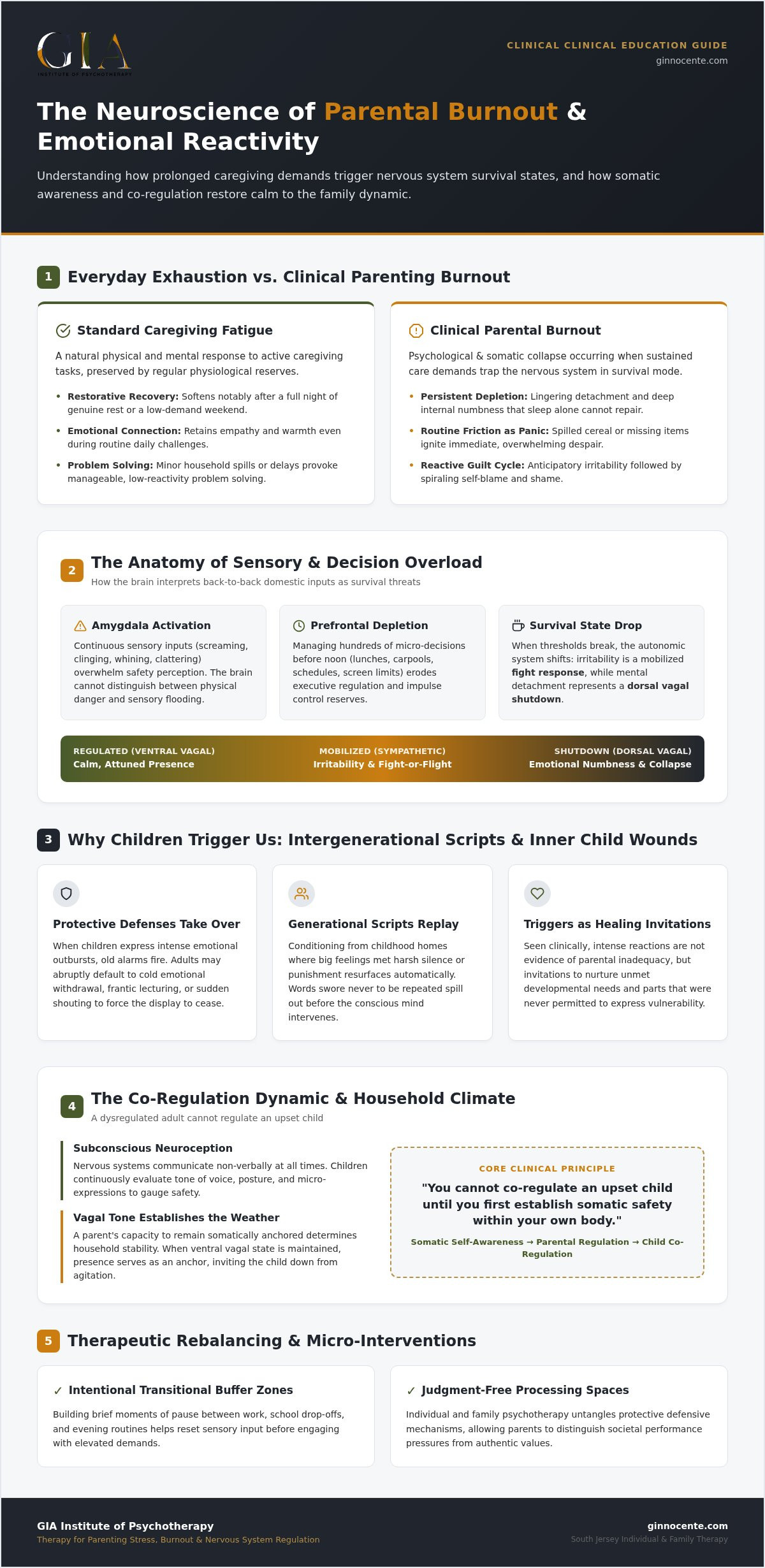
Everyday Exhaustion vs. Clinical Parenting Burnout
Healthy caregiving tiredness softens after a night of genuine rest or a restorative weekend. Clinical burnout feels entirely different; it creates a lingering emotional detachment and deep internal numbness that sleep alone cannot repair. When your reserve runs dry, mornings unravel quickly:
- Routine friction ignites panic: A spilled bowl of cereal or lost sports jersey triggers immediate, overwhelming despair rather than gentle problem-solving.
- Persistent irritability sets in: You find yourself bracing for your children's voices before they even enter the room.
- Guilt follows every reaction: Snapping at a slow-moving toddler or eye-rolling teenager leaves you spiraling in self-blame, convinced you are failing them.
The Neurobiology of Sensory and Decision Overload
Your brain is constantly calculating safety. When you experience hours of back-to-back sensory input, such as screaming, clinging hands, whining, and clattering dishes, your amygdala reads the environment as an active emergency. It cannot distinguish between physical danger and sensory flooding. Navigating hundreds of micro-decisions before noon regarding packed lunches, carpools, doctor appointments, and screen limits further erodes your prefrontal cortex's self-regulation reserves.
When this neural threshold breaks, your autonomic nervous system drops into fight-or-flight survival states. Irritability is simply a mobilized fight response, while mental numbness represents a dorsal vagal shutdown. Through gentle therapy for parenting stress NJ practitioners provide, you can learn to recognize these physiological survival responses without judgment, cultivating a calm nervous system that supports your entire home.
Why Do Our Children Trigger Us? The Neuroscience of Parental Reactivity
Few experiences rattle us quite like the explosive defiance of a child. During those loud moments, an emotional trigger functions as an internal nervous system alarm signaling historical vulnerability rather than present danger. Children's loudest behaviors often mirror back our own unmet developmental needs and early emotional wounds. You cannot co-regulate an upset child until you first establish somatic safety within your own body, making self-awareness essential for family harmony.
Intergenerational Patterns and the Wounded Inner Child
Automatic reactions rarely start in the present moment. If you grew up in a home where expressing big feelings was met with harsh silence, banishment, or anger, your internal defense systems learned that messy emotions threaten belonging. When your child throws themselves onto the floor in tears, your system sounds the alarm:
- Protective defenses take over: You might suddenly default to cold emotional withdrawal, frantic lecturing, or intense shouting to make the display stop immediately.
- Generational scripts replay: Phrases you swore you would never repeat spill out before your conscious mind can intervene.
- Triggers become invitations: Viewed through a healing lens, these fiery reactions aren't proof of failure, but invitations to nurture the parts of yourself that were never allowed to fall apart.
The Science of Co-Regulation in the Family Dynamic
A dysregulated adult cannot regulate an upset child. Our nervous systems communicate non-verbally through neuroception, constantly reading micro-expressions, posture, and tone of voice. Your vagal tone dictates your capacity to remain anchored during turbulence, essentially establishing the emotional weather of your household. When your ventral vagal system remains online, your presence signals genuine safety, naturally inviting your child's agitated state back down to calm.
Building intentional buffer zones during tense transitional hours can soften chronic conflict. Stepping away for three slow, physical breaths before responding to an evening homework battle or bedtime stall creates the tiny pause needed to separate your past from their present. If you find your emotional fuses consistently overwhelmed by routine power struggles, exploring compassionate therapy for parenting stress NJ families trust can provide a safe harbor to untangle these old roots and bring lasting peace back into your home.
Evidence-Based Modalities: How Psychotherapy Calms the Stressed Parent
No two households carry the exact same burdens, and no single clinical technique resolves every layer of caregiving fatigue. Restoring steady balance requires approaches that look beyond generic advice to target underlying somatic distress, unhealed memories, and automatic behavioral reflexes. Engaging in specialized therapy for parenting stress NJ clinicians offer provides a structured roadmap to unwind chronic tension across mind and body.
| Therapy Modality | Primary Focus | Core Parenting Benefit |
|---|---|---|
| Internal Family Systems (IFS) | Inner parts and emotional self-leadership | Calms inner critical voices, guilt, and protective anger |
| Dialectical Behavior Therapy (DBT) | Distress tolerance and somatic regulation | Prevents yelling during high-friction sensory overloads |
| Cognitive Behavioral Therapy (CBT) | Cognitive restructuring and core beliefs | Dismantles catastrophic thinking and unrealistic standards |
| EMDR Therapy | Bilateral desensitization of traumatic memory | Neutralizes visceral fight-or-flight alarms sparked by family chaos |
Internal Family Systems (IFS) for Compassionate Self-Leadership
IFS conceptualizes the psyche as an internal family system comprised of protective parts led by your core Self. When your toddler screams, an anxious perfectionist part might panic about being judged, while a fiery firefighting part takes over to yell and force compliance. Therapy helps untangle these protective roles, guiding you to lead from genuine Self-energy characterized by curiosity and compassion rather than reactive fear.
DBT Skills for Emotional Regulation and Distress Tolerance
Dialectical Behavior Therapy offers tangible emergency brakes when sensory thresholds snap. Clinicians teach actionable distress tolerance interventions, including temperature changes and paired muscle relaxation from TIPP protocols, to cool heated physical escalation quickly. Embracing radical acceptance allows you to acknowledge messy developmental stages as temporary states rather than emergencies, preserving your emotional energy for meaningful connection.
EMDR and Somatic Processing for Parental Anxiety
Unprocessed birth trauma, postpartum emergencies, or terrifying pediatric illnesses can lock a parent's nervous system into perpetual vigilance. Eye Movement Desensitization and Reprocessing (EMDR) gently targets these unresolved neural pathways. By desensitizing stored somatic memories, therapy for parenting stress NJ residents rely on helps the brain realize danger has passed, allowing you to stay anchored during ordinary bedtime battles and messy developmental play.
Practical Regulation Strategies for Overwhelmed New Jersey Parents
When you are managing a bustling home, elaborate self-care routines often feel completely out of reach. Weekend wellness retreats or hour-long meditation rituals simply do not fit into evenings filled with sports gear, laundry, and homework struggles. Meaningful emotional balance comes from accessible somatic micro-practices woven directly into your daily routine. By introducing deliberate moments of physical decompression, you shift your autonomic system away from survival mode and back into grounded engagement.
Somatic Micro-Practices for High-Stress Moments
Small physical interventions can reset your internal state in under sixty seconds. You do not need to leave the room to change your physiology; you only need to interrupt the neurological momentum of the stress response:
- The physiological sigh: Take two short, sharp inhales through your nose, followed by a long, unforced exhale through your mouth. Doing this twice immediately reduces autonomic arousal.
- Grounding through your feet: Press both feet flat into the floor during sudden emotional flare-ups. Feel the solid surface supporting your weight to draw attention away from racing thoughts.
- Cool water temperature reset: Splashing cold water on your wrists or face stimulates the mammalian dive reflex, slowing a rapid heart rate before addressing sibling conflict.
Managing Atlantic and Cape May County Life Pressures
Living along the South Jersey coast introduces distinct rhythms that complicate family schedules. The quiet winters in Ocean City, Margate, and Linwood often give way to chaotic summer transitions, shifting commutes, and high seasonal demands. Juggling these regional patterns alongside competitive youth athletics and rigorous school expectations can push parents toward silent exhaustion. Creating healthy boundaries helps protect the calm within your home:
- Protect transitional spaces: Spend five silent minutes in your car in the driveway after commuting along Route 9 or the Expressway before walking through your front door.
- Limit digital intrusions: Silence school grading apps and extracurricular group messages after 7:00 PM to stop evening panic over upcoming assignments.
- Filter outside expectations: Give your family permission to decline non-essential weekend tournaments when your collective energy is clearly running low.
Cultivating these boundaries restores emotional safety across your household. Discover gentle therapeutic support by exploring clinical counseling in Galloway. If your daily efforts still leave you feeling chronically drained, choosing specialized therapy for parenting stress NJ practitioners offer can give you the personalized tools needed to protect your peace.
Starting Your Healing Journey: Individual and Family Therapy in South Jersey
Reaching out for therapeutic care is an act of courage, not an admission of defeat. When you carry the weight of an entire family, seeking a dedicated clinical space protects your home's long-term emotional foundation. Many caregivers carry hidden shame, fearful that voicing their exhaustion, resentment, or grief makes them bad parents. In truth, confidential therapy offers a steady container where you can set down those heavy burdens without fear of judgment. Providing specialized therapy for parenting stress NJ families depend on, local clinicians serve communities throughout Galloway, Egg Harbor Township, Linwood, and Upper Township, turning parental depletion into relational resilience.
What to Expect in Collaborative Parental Therapy Sessions
Beginning therapy is not an interrogation; it is a gentle, collaborative partnership. Your initial sessions focus on mapping your unique nervous system sensitivities and family ecosystem. From there, your therapist helps you craft practical interventions adapted to your daily life:
- Developmental alignment: Creating tailored response strategies matched to your child's specific developmental stage, whether navigating toddler separation anxiety or adolescent individuation.
- Somatic awareness: Learning to catch physical cues of rising stress before fight-or-flight reactions hijack your parenting intentions.
- Balanced pacing: Blending reflective personal insight with concrete, actionable boundary tools you can apply the very same evening.
Integrating Couples Counseling and Family Support
Parenting stress rarely remains isolated within one person. Chronic fatigue often spills into the partnership, sparking repetitive disputes over discipline, division of domestic labor, and conflicting family values. Integrating couples counseling helps partners move away from mutual blame. Drawing on Emotionally Focused Therapy (EFT), clinicians help couples decode the panic beneath defensive withdrawal, rebuilding warm teamwork so parents face daily household friction as an aligned unit.
When tension has settled deeply into daily communication patterns, shifting into systemic family sessions allows everyone to be seen and heard. Healing the parental unit naturally softens distress across the entire home, ensuring that your investment in your own emotional well-being ripples forward as a lifelong gift of security for your children. Take the first step toward reclaiming peace by exploring individual and family therapy tailored to your family's unique needs.
Reclaiming Balance and Connection in Your Home
Parental depletion doesn't have to define your caregiving journey. When you recognize that intense reactivity stems from nervous system overwhelm rather than personal inadequacy, you open the door to genuine emotional repair. By integrating evidence-based modalities like IFS, DBT, and EMDR, you can soothe old survival triggers and replace reactive yelling with grounded co-regulation. Small somatic shifts practiced during daily routines protect your peace and transform the emotional climate of your entire household.
You don't have to carry the mental load alone. Convenient South Jersey therapeutic care offers a deeply empathetic, non-judgmental environment honoring your family system across Atlantic and Cape May counties. Dedicated therapy for parenting stress NJ clinicians provide serves as a safe harbor where you can release heavy burdens and restore true relational warmth. Begin your journey to calm with compassionate family psychotherapy and rediscover the joy of connecting with the people you love most.
Frequently Asked Questions
How do I know if I need professional therapy for parenting stress?
You should consider professional support when routine caregiving exhaustion turns into persistent dread, emotional detachment, or daily explosive anger. If standard rest no longer recharges your patience and you feel constantly trapped in survival mode, your nervous system is asking for help. Engaging in specialized therapy for parenting stress NJ practices offer provides clinical guidance to untangle severe depletion before physical health or family relationships suffer lasting strain.
Will a therapist judge my parenting or report my family if I admit I am overwhelmed?
Therapy is a safe, confidential harbor designed specifically to hold difficult truths without judgment or moral criticism. Expressing feelings of burnout, resentment, or sensory overwhelm is entirely normal and never a reason for state intervention. Clinicians are mandatory reporters only in situations involving active, credible danger of child abuse, neglect, or imminent self-harm. Admitting you are exhausted simply signals you care deeply about finding healthy balance.
Can therapy for parenting stress help if my spouse and I disagree on discipline?
Yes, dedicated clinical support helps couples uncover the emotional beliefs driving their divergent parenting philosophies. Clashing discipline styles often stem from unexamined childhood adaptations rather than intentional stubbornness. Using Emotionally Focused Therapy (EFT) principles, couples counseling untangles defensive gridlock, validates both partners' safety needs, and builds a cohesive parenting approach so you can manage difficult moments as an aligned team rather than adversaries.
How can I fit therapy sessions into my chaotic schedule as a working parent in NJ?
Fitting care into a packed family routine starts by treating clinical support as an essential health appointment rather than an optional chore. Many South Jersey parents schedule recurring midday sessions or coordinate dedicated times around hybrid work schedules. Securing support close to home in areas like Galloway, Linwood, or Egg Harbor Township eliminates painful travel delays and helps integrate nervous system care into regular weekly logistics.
What is the difference between parent coaching and licensed psychotherapy?
Parent coaching focuses primarily on behavioral strategy, communication tips, and organizational household habits. Licensed psychotherapy goes substantially deeper by addressing the clinical neurobiology of parental stress, trauma histories, and emotional triggers. Psychotherapists utilize evidence-based modalities like EMDR, Internal Family Systems (IFS), and DBT to rewire reactive nervous systems, providing lasting internal healing that behavioral tip sheets cannot achieve alone.
Can individual therapy for parents improve my child's behavior at school and home?
Individual parental therapy profoundly improves child behavior through the powerful biological mechanism of co-regulation. Children lack fully mature prefrontal systems and instinctively match the somatic state of their primary caregivers. When therapy for parenting stress NJ clinicians provide helps you maintain an anchored, calm presence during friction, your regulated state diffuses power struggles and encourages emotional stability across classroom and domestic settings.
How does therapy address the intense guilt I feel after losing my temper?
Therapy helps dismantle toxic guilt by examining the physiological root causes of sudden reactivity with deep self-compassion. Instead of treating outbursts as moral failures, your therapist guides you to recognize the sensory flooding that hijacked your rational brain. You learn to replace shame spirals with prompt, authentic relational repair, transforming regret into a meaningful opportunity to model accountability and resilience for your children.


