

A therapist’s gender can affect your comfort, but it does not determine whether therapy will help. A women's mental health counselor in Margate, NJ, may be a good fit when their experience and approach suit your needs, whether you prefer a woman therapist or have no gender preference. You can choose based on what helps you feel safe enough to speak openly.
It’s understandable to want clear answers before taking a first step, especially when you’re weighing personal comfort, postpartum concerns, or insurance coverage. This guide explains how a therapist’s gender may shape your experience, what to consider when seeking postpartum support, and which insurance details can affect access to counseling.
You’ll also find practical ways to consider specialties, approach, and fit when looking for care in Margate. There’s no need for a perfect checklist. The goal is to help you feel more grounded as you decide what kind of support could meet you where you are.
Key Takeaways
- Therapist gender can shape your comfort, but shared understanding, relevant experience, and a sense of trust matter too.
- Postpartum mood changes deserve compassionate attention; learn what support can look like and how local care options may differ.
- Review your insurance benefits and in-network options to understand how coverage may affect access to counseling.
- Birth trauma, postpartum OCD, and intrusive thoughts are worth discussing with a qualified counselor, without judging yourself for what you’re experiencing.
- Compare counselors by their specialties and approach, then consider whether individual therapy or support involving family could fit your needs.
Postpartum depression and anxiety
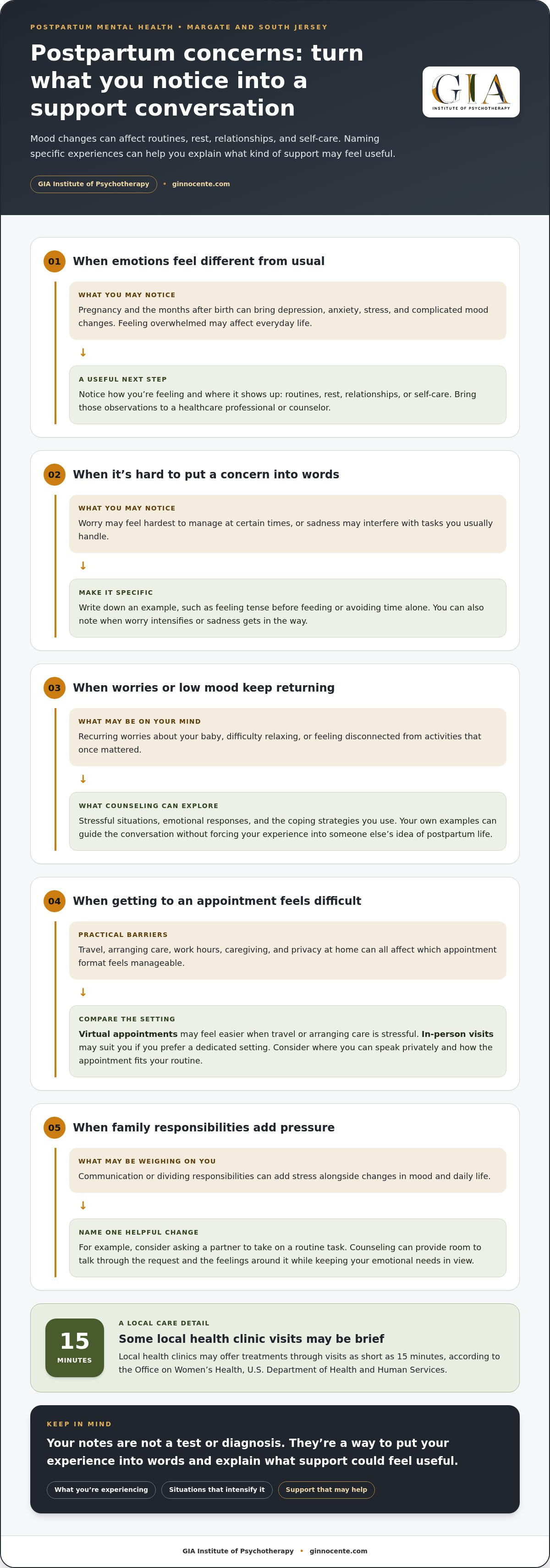
Pregnancy and the months after birth can bring depression, anxiety, stress, and complicated mood changes. Counseling gives you space to describe what feels different and explore support that fits your daily life.
Postpartum Mood Concerns
Perinatal mood and anxiety disorders can involve emotional concerns during pregnancy or after birth. Rather than judging yourself for feeling overwhelmed, notice what you’re experiencing and how it affects routines, rest, relationships, or self-care. For example, note when worry feels hardest to manage or sadness interferes with tasks you usually handle.
Bring those observations to a conversation with a healthcare professional or counselor. A specific example, such as feeling tense before feeding or avoiding time alone, can make it easier to explain what support you want. Local health clinics may offer treatments through visits as short as 15 minutes, according to the Office on Women’s Health, U.S. Department of Health and Human Services.
Depression and Anxiety Counseling
Counseling for anxiety and depression can help you explore stressful situations, emotional responses, and the coping strategies you use. You might discuss recurring worries about your baby, difficulty relaxing, or feeling disconnected from activities that once mattered. These examples can guide a conversation around your concerns without forcing them into someone else’s idea of postpartum life.
When considering a counselor, look at their experience with pregnancy-related transitions and whether their communication style feels comfortable. Ask yourself whether you can speak openly about intrusive worries, family expectations, or changes in identity. Virtual appointments may feel easier when travel or arranging care is stressful, while in-person visits may suit you if you prefer a dedicated setting.
To make a first conversation more focused, note the concerns you want to raise, what situations intensify them, and what kind of support would feel useful. Include practical details, such as whether stress rises during nighttime routines or after family conversations. This isn’t a test or diagnosis. It’s a way to put your experience into words.
Support can also involve people close to you. If communication or dividing responsibilities adds pressure, consider what specific change would help, such as asking a partner to take on a routine task. Counseling gives you room to talk through that request and the feelings around it, while keeping your emotional needs in view.
There’s no single script for postpartum depression or anxiety. Naming one concern, choosing a next step, and finding a setting where you can speak honestly can help you begin seeking support with greater clarity.
Counseling services in Margate City and other New Jersey communities
In Margate City, begin your counseling search with your needs, not just a town name. Decide whether you prefer in-person sessions, virtual appointments, or flexibility between them. Then consider what you want to address, such as anxiety, relationship changes, or personal growth. These details can turn a broad search into a clearer sense of fit.
South Jersey communities have different travel patterns and daily routines. If you live in Margate City, you might weigh an in-person appointment in Somers Point against virtual care that reduces travel. Consider transportation, work hours, caregiving, and privacy at home. A suitable plan accounts for these realities instead of assuming one appointment format works for everyone.
Women-centered counseling may address experiences that shape emotional well-being, including family expectations, caregiving, identity, and major life transitions. Before choosing, note the topics you most want to discuss and the skills you hope to build. You might want help setting boundaries at work or communicating needs with family. This can make your first conversation more specific.
For in-person visits, consider how traveling from Margate City to Somers Point fits your routine. If you prefer virtual care, think about where you can speak privately and how an appointment fits around work or family responsibilities. These practical details can help you choose a manageable format.
Residents of Ocean City, Linwood, Ventnor, Egg Harbor Township, Upper Township, and Galloway can also weigh travel distance, appointment format, and specialty. Don’t choose only by the closest address. Consider whether the counselor’s experience matches your concerns. Priorities such as feeling comfortable discussing relationships or getting support through a transition can help you compare options thoughtfully.
Your counseling journey should leave room for changing needs. Start by identifying one concern, one preferred appointment format, and one practical limit, such as travel or scheduling. Then use those points to guide your search across Margate City and nearby South Jersey communities. For another perspective on making counseling feel tailored to your goals, explore approaches to women-centered counseling.
Insurance coverage and in-network providers
Insurance details can affect which counseling options fit your budget and care preferences. Start with your member portal or the benefits phone number on your insurance card. Look for outpatient mental health care, then note whether your plan distinguishes between in-network and out-of-network clinicians. A provider in a general directory, for example, may not participate in your specific plan.
Next, review the terms that determine what you pay. A deductible is the amount you pay toward covered services before some benefits begin. A copay is a set amount for a covered visit, while coinsurance is a portion of the allowed charge. Your plan documents explain which terms apply to outpatient counseling and how they work together.
In-network care means seeing a provider who participates in your plan’s network. Out-of-network care follows different benefit terms, and some plans require you to submit claims yourself. Before scheduling, use the insurer’s provider search and match the counselor’s name and practice details. Review your benefits for visit limits, referral requirements, and any authorization process.
Ask the insurer specific questions and write down the answers and call date. For example, ask whether individual outpatient therapy is covered, whether you need a referral, and what copay or coinsurance applies. Also ask whether virtual appointments follow the same benefit rules as in-person sessions. These details help you compare options without guessing.
Insurance directories can help filter options, but they don’t measure therapeutic fit. Once you understand your network, compare counselor specialties, approach, and appointment format. Someone dealing with anxiety might prioritize relevant experience, while someone facing relationship stress may value an approach that addresses communication. Coverage and meaningful care both matter.
Sliding-scale filters can help you find counselors who adjust fees based on financial circumstances. Search directories for “sliding scale,” then review the counselor’s eligibility process and payment options. If you use insurance, clarify how a sliding-scale arrangement relates to your benefits before choosing a payment path. Keep notes to compare options clearly.
Before deciding, make a checklist: network status, expected copay or coinsurance, referral or authorization steps, and virtual-care coverage. Add the counseling focus you want and the appointment format that feels supportive. If you’re overwhelmed, ask the insurer one question at a time. A compassionate, practical approach can help you move toward care with greater clarity.
Birth trauma, postpartum OCD, and intrusive thoughts
A difficult birth can remain emotionally present after you leave the hospital. You might replay an emergency, feel distressed by medical reminders, or avoid discussing the delivery. Postpartum OCD and intrusive thoughts can also involve unwanted images or fears, such as worrying that something bad could happen while caring for your baby. These experiences deserve careful, compassionate attention, not shame.
Intrusive thoughts can feel alarming, especially when they involve a baby or caregiving. Having a thought is not the same as wanting it or acting on it. Still, describe the thought to a qualified mental health professional, including how often it appears and what you do afterward. For example, mention repeated checking, avoiding certain tasks, or seeking reassurance from loved ones.
A counselor can help you explore whether birth-related memories, anxiety, or repetitive behaviors are affecting daily life. You don’t need to arrive with a label or diagnosis. Start with what you can name: a specific trigger, a routine you’ve changed, or a moment when distress becomes intense. That gives the conversation a concrete place to begin.
When looking for support, ask about experience with postpartum concerns, birth trauma, and obsessive-compulsive symptoms. A provider who discusses these topics without judgment may help you feel safer sharing difficult details. Ask how sessions are structured and whether the approach suits your needs. If comparing counselors, “specialize” should mean relevant training or experience, not simply a broad interest in women’s mental health.
Keeping a brief note between appointments can help. Record the situation, the thought or memory, your emotional response, and what you did next. For instance, note whether a hospital-related sound brings back a birth memory or prompts repeated checking. This can support a focused discussion without requiring you to recount everything at once.
Healing and growth don’t require you to minimize what happened. A dedicated space to talk can help you understand your responses and consider practical ways forward. If you’re struggling to care for yourself or your baby, tell a trusted healthcare professional plainly. If you believe you may act on a thought or someone faces immediate danger, seek urgent local help now. Clear, direct words help others understand what support is needed.
Counselor specialties and experience
A counselor’s specialty should relate to the concern you want to address. Anxiety during a life transition, for example, may call for different conversations than conflict with a partner. Start by describing your main concern in one sentence. Then look for a counselor whose stated focus aligns with that need, rather than relying on a broad title alone.
Experience matters when it relates to your situation. Consider whether the counselor works with concerns such as trauma, grief, relationship stress, or changes in family life. If you’re dealing with a specific experience, ask how it informs their approach. A clear explanation can help you decide whether their perspective feels relevant and respectful.
Credentials and clinical experience are related, but they answer different questions. A license identifies professional qualifications, while a specialty describes areas of focus. Read profile details carefully and look for concrete terms rather than general claims. For instance, compare a stated focus on postpartum concerns with a general description of supporting adults through stress.
- Write down the concern you most want to discuss, such as panic before work or ongoing grief.
- Identify what you hope to change, like setting boundaries or communicating more directly.
- Note preferences that affect comfort, including therapist gender, session format, or cultural understanding.
- Prepare a question about the counselor’s experience with your specific concern.
During an initial conversation, notice whether the counselor listens closely and explains their approach plainly. You might ask how sessions could address recurring conflict, anxious thoughts, or a difficult transition. A useful answer connects the counselor’s experience to your example while leaving room for your goals and questions.
Fit also depends on how you work together. Some people value practical strategies between sessions; others want time to explore patterns and emotions. Consider whether the counselor welcomes feedback and adapts as your needs develop. If a conversation feels rushed or unclear, note what would help you feel more understood next time.
Choosing support is a personal decision, not a test you need to pass. Use your priorities, questions, and first impressions to guide the next step. If you’re ready to explore counseling approaches that may fit your concerns, review women’s counseling options.
GIA Institute of Psychotherapy: Adult Individual Psychotherapy
GIA Institute of Psychotherapy offers Adult Individual Psychotherapy for adults seeking support with anxiety, depression, or life transitions. Sessions can make room to explore emotional patterns, consider practical strategies, and work toward personal goals. The approach blends traditional therapy with neuroscience and expressive modalities, including Expressive Arts.
If your concerns affect family relationships, Family Therapy or Couples Counseling can provide a setting to work through shared challenges. Individual Therapy for Children and Teens supports younger family members with their own needs. The right format depends on who needs support and what you hope to address.
If individual counseling feels like a helpful next step, visit GIA Institute of Psychotherapy to learn more.
Take a Thoughtful Step Toward Support
Choosing a women's mental health counselor in Margate, NJ, can start with one honest question: what would you like to feel or handle differently? You don’t need a complete plan before starting. One concern you’re ready to discuss is enough to guide the next conversation.
GIA Institute of Psychotherapy offers Adult Individual Psychotherapy, Individual Therapy for Children and Teens, and Family Therapy. These options support individuals and families working through emotional concerns and life transitions. Start with a conversation about what’s weighing on you and what kind of support feels right.
Reaching out is a choice, not a commitment to have every answer today. If you’d like to learn more about beginning that conversation, contact GIA Institute of Psychotherapy. Your next step can be small, considered, and centered on what matters to you.
Frequently Asked Questions
Does it matter what gender my therapist is?
It matters if a therapist’s gender affects how comfortable you feel sharing personal experiences. Some people prefer a woman therapist for conversations about pregnancy, identity, or relationships; others prioritize listening style, cultural understanding, or clinical experience. You can share your preference during an intake conversation. For example, explain whether you’d feel more at ease discussing a sensitive subject with a woman, a man, or a therapist of any gender.
Is therapy different for men and women?
Therapy should respond to the individual, not assume that all men or women experience concerns alike. A counselor may explore how family roles, relationships, life transitions, or social expectations affect someone’s well-being. Two people facing work stress, for example, may want different support based on their responsibilities and goals. GIA Institute of Psychotherapy offers Specialized Programs for Men and Women, while keeping therapy centered on each person’s concerns.
What concerns can therapists help with?
Therapists can support people working through anxiety, depression, trauma, grief, stress, relationship difficulties, and life transitions. An adult might want help managing anxious thoughts, while a family seeks more constructive ways to communicate. GIA Institute of Psychotherapy provides counseling for adults, children, teens, couples, and families. Therapy focuses on each person’s needs and goals.
Why work with a licensed therapist near you?
A nearby therapist can make in-person appointments easier to fit around work, caregiving, or school routines. When comparing clinicians, review their license, relevant experience, and approach to concerns such as anxiety or relationship strain. Consider whether their communication style helps you speak openly. For someone balancing a busy schedule, a location that reduces travel can make attending sessions more manageable.
What women’s mental health counselors are located in Margate City, NJ?
A women’s mental health counselor in Margate, NJ, may offer local or virtual options, depending on the practice. GIA Institute of Psychotherapy’s in-person office is in downtown Somers Point, and its virtual counseling serves New Jersey residents. Its service area includes Margate, Ocean City, Linwood, Ventnor, Egg Harbor Township, Upper Township, and Galloway. This gives local residents an in-person option nearby, as well as virtual care within New Jersey.
Which therapists in Margate specialize in women’s mental health?
GIA Institute of Psychotherapy offers Specialized Programs for Men and Women, and its intake process helps match each person with an appropriate therapist. When describing your needs, name the concern you want to address, such as anxiety during a major transition or relationship stress. Sharing your preferences and goals helps clarify what therapeutic support may fit, beyond a broad label alone.
Do Margate counselors treat anxiety, depression, trauma, postpartum concerns, or relationship issues?
GIA Institute of Psychotherapy provides counseling for concerns including anxiety, depression, trauma, and relationship issues, as well as support through life transitions. Someone struggling after a difficult change, for example, might use therapy to explore emotional responses and develop practical strategies. The practice offers individual psychotherapy, Couples Counseling, and Family Therapy, with support centered on individual needs or shared relationship concerns.
Which women’s mental health counselors in Margate accept new patients?
GIA Institute of Psychotherapy’s intake process begins with a client contact form and a scheduled 15-minute intake call. The call helps match a prospective client with an appropriate therapist. To start, describe the concern you want help with and any preferences that matter, such as individual or family support. This process gives the practice a clear picture of your needs as you explore beginning therapy.


